

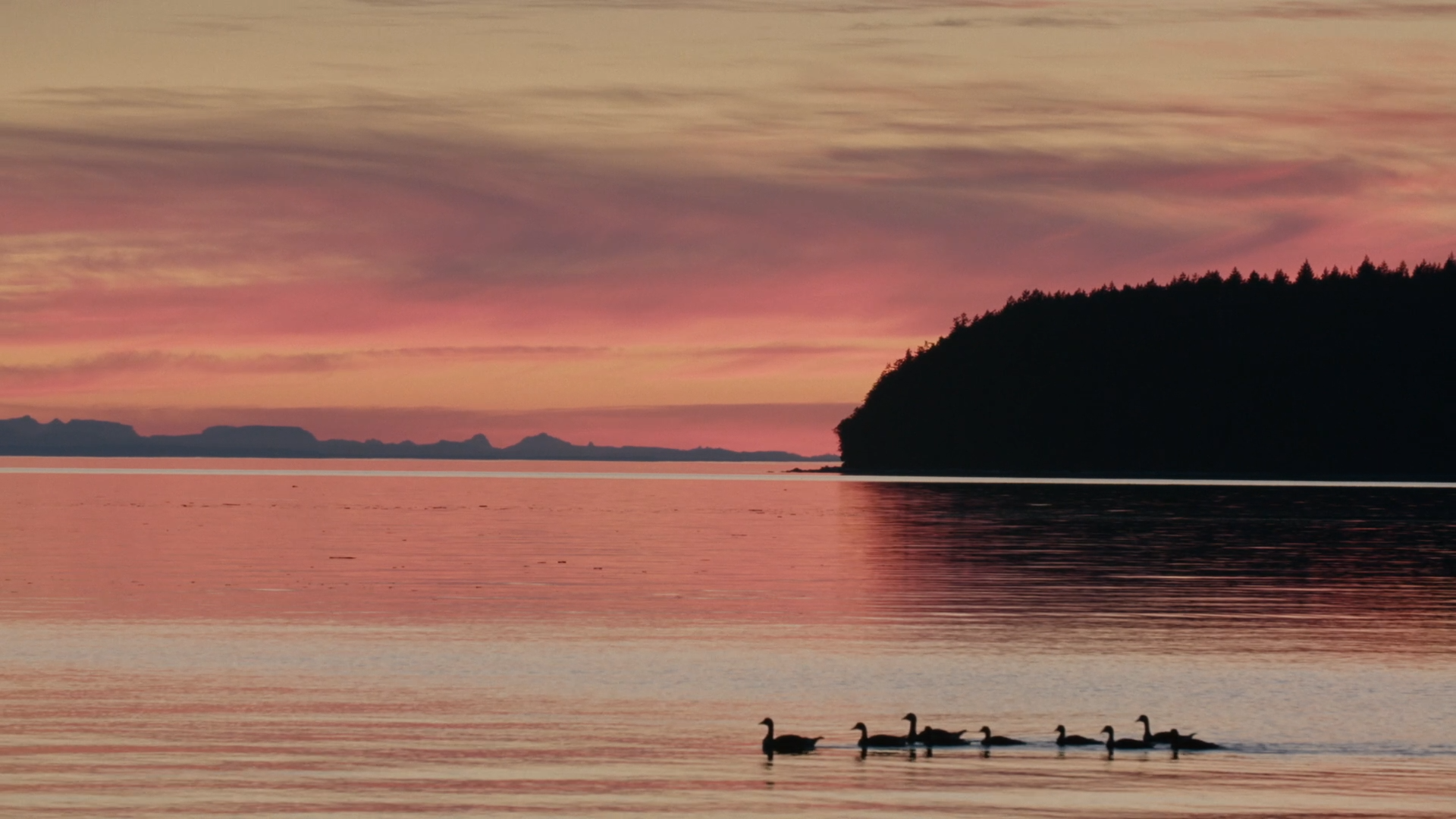
The film opens not with the debate but with the land.
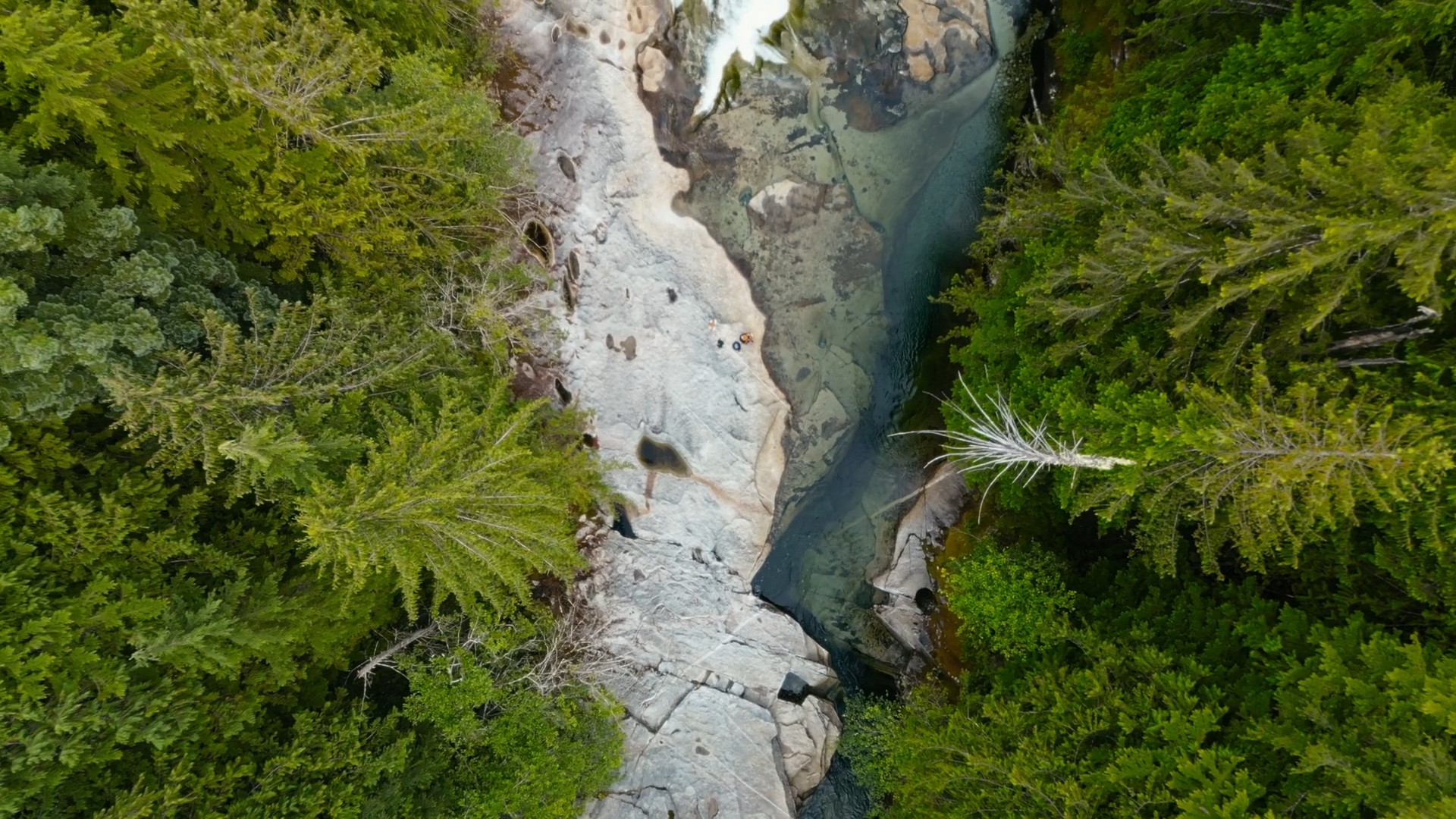
Water laps against the shoreline as ʔayʔajuθəm (Ayajuthem) immersion teacher Koosen Pielle narrates place names: “Tisôsm means milky waters from the herring spawn. Xwéxwekwe, little sandy beach or Gibson’s Beach. Kwethayken, a rock at the mouth or Myrtle Rock. Xwôkwnes, still water. The orca whales stop by in this bay.”
“Language is so intertwined with the landscape here,” Pielle continues. “The sounds came from the landscapes, the shapes of the mountains, the way that our audio bounces back to us. It all comes from the land.”
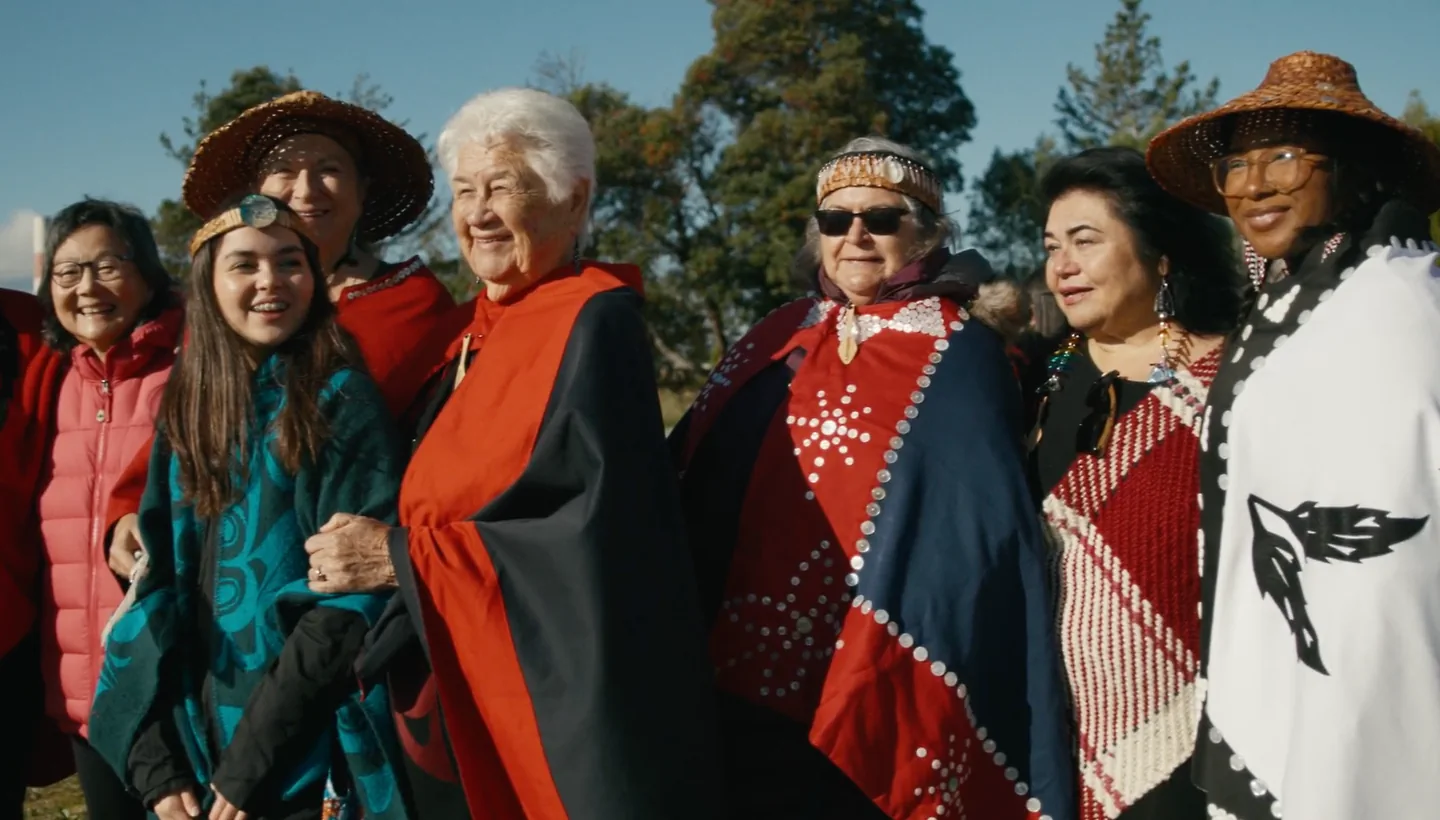
Language, names, and what they signify, are at the heart of təm kʷaθ nan (Namesake), a new documentary film featured in Vancouver’s Doxa film festival, beginning April 30. Created by filmmakers from the Tla’amin Nation and collaborators, the film explores what happened when Chief John Hackett brought forward a request on behalf of the nation to remove “Powell” from the name of the small coastal city of Powell River. The name refers to Israel Wood Powell, B.C.’s first superintendent of Indian Affairs, who played a role in establishing residential schools and enforcing the potlatch ban. From that starting point, the central question comes into focus: what happens when a name doesn’t reflect the complex entirety of a place? Or when it causes harm?
Before Namesake introduces conflict, it establishes something more fundamental: that names are not simply labels but also relationships. They hold memory, observation, and belonging. They are, as the film suggests, a way of understanding the world.
The nation’s goal was not simply to change a name but to begin a process—one that could lead to something more reflective of the region’s history and a more respectful relationship between communities. The request presented a choice. It could be seen as an invitation: to acknowledge harm, learn about Indigenous place names, and move forward with honesty and cooperation. Or it could be seen as a demand—something imposed, a change that would disrupt the status quo.
For a city and nation that signed one of the province’s first community accords in 2003—grounded in reconciliation and mutual understanding—the request might have seemed like a natural next step. Instead, it revealed how differently history, identity, and belonging can be understood.
Namesake follows what happens next, not as a linear account but as an unfolding dialogue within the community. The nation hired filmmaker Claudia Medina to document the sessions as a sort of archive.
But the story quickly outgrew documentation. “I’d seen a news article about the renaming request, and I immediately felt it was something important to capture—not just the moment, but the conversations it could open,” camera operator, sound recordist, editor, and writer Angela Kendall told me over Zoom.
A chance meeting at the farmers market revealed that Medina and t̓agəm Eileen Francis were thinking the same thing. The project took shape from there.
Rather than a conventional timeline, Namesake unfolds through the cycle of 13 moons, rooted in Indigenous seasonal knowledge. “The 13 moons—each season, each moon, there’s an activity that goes along with it,” co-director Francis explains. “I wanted a sense of showcasing the passage of time. And it became a really subtle way to teach culture.”
This decision quietly shifts the film’s centre of gravity. Time is no longer measured by meetings, conflicts, or public process but by seasonal returnings—of herring, salmon, and ceremony. The land remains constant, even as the debate intensifies.
Filming the deepening conflict meant the crew entered spaces where the conversations around a name became contentious. Francis recalls a council meeting where a councillor mockingly invented a word that was supposed to sound like the Tla’amin language.
“It hit me in my heart,” she says. “My granny went to residential school and wasn’t allowed to speak her language. And he just made one up.”
Those moments required that the crew take care of themselves. “Community, friends, family—we would normally talk over it together afterwards if we had a rough day,” Francis explains. But balance was always nearby: a ceremony, an inspiring interview, or the quiet beauty of the forests, river, and sea.
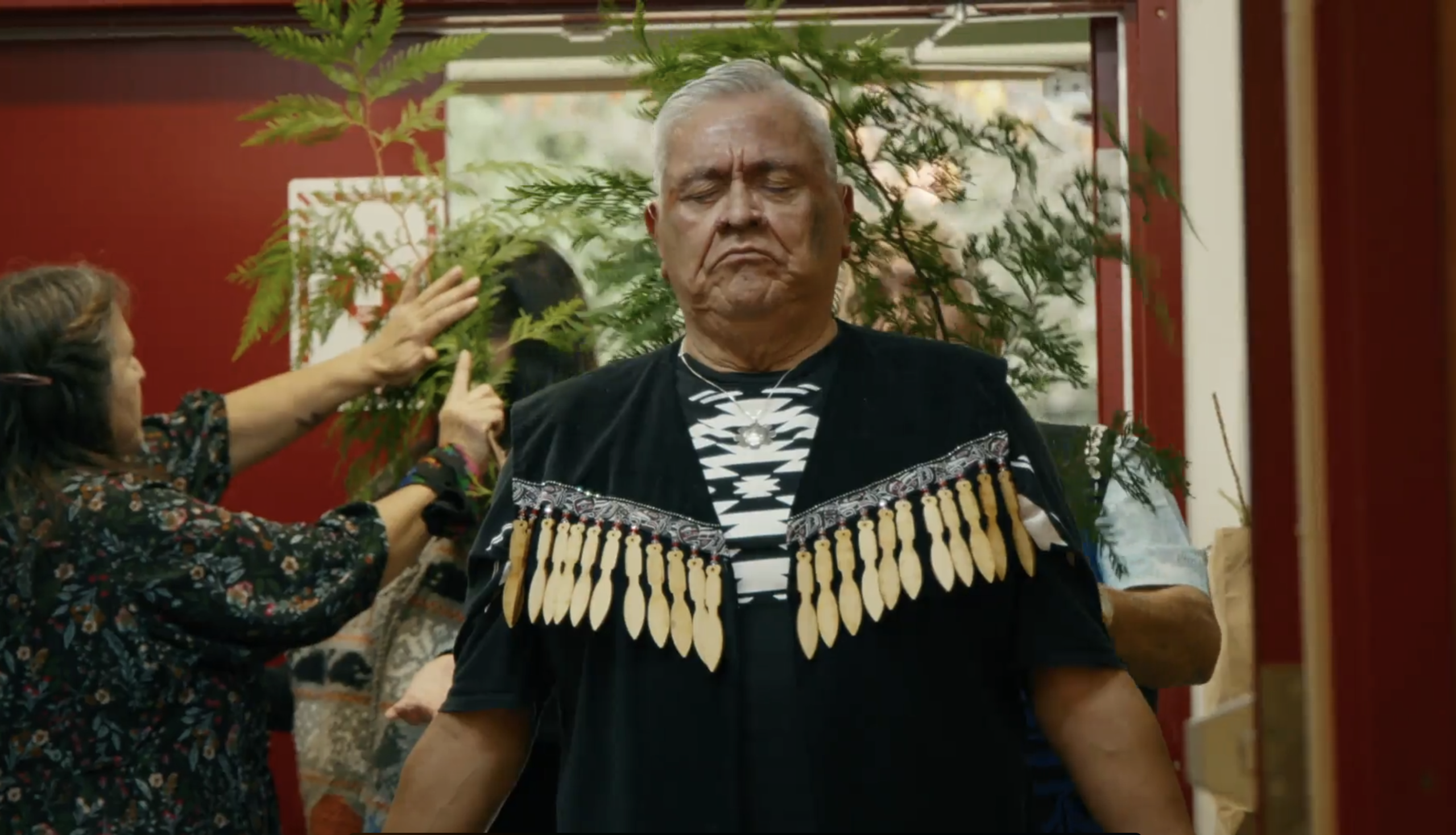
The conflicts also revealed what’s at stake. That the discussion wasn’t simply about what a place is called but also about whose language holds authority, and whose history has been dismissed or erased.
Throughout the film, these tensions are grounded in something tangible: the land itself. In one scene, co-director ƛɛsla Dr. Evan Adams recounts how his father insisted he spend time out on the land, learning where to fish and how to live in balance within his traditional territory.
“It’s called Taʔow. It’s our way,” Adams says of the trips where he gained knowledge by experiencing both the beauty and hardship of the landscape. “And he would say, ‘Oh, and over there, that’s where Raven fell from the sky.’” Early cuts of Namesake struggled to hold this complexity of names, connection, and place. There was too much context and too much history to explain. “We kept distilling,” Kendall says. “Until we had a balance where it felt truthful but not heavy handed.”
That same care shaped how the film approached the opposition voices. “I turned my camera on, and I was ready to hear something, understand what’s behind all this resistance,” Kendall says.
What emerged was often anger—sometimes repetitive, sometimes hostile. “We needed enough to tell that part of the story,” Adams says. “But not so much that the negativity took over.”
Instead, the filmmakers made a deliberate choice about what to include and whose voices to focus on. Adams explains that because much of the renaming opposition was limited to a few loud voices, the film crew felt their anger could easily drown out the rest of story. He explains they wanted the film to make space for a more nuanced view.
In doing so, Namesake shifts away from confrontation and toward something more revealing: how people choose to respond when asked to consider different perspectives and experiences.
“[What] started to come through was the beauty of our allies,” Adams says.
At its core, the film contrasts two ways of understanding names. In a colonial framework, names often commemorate individuals: they are markers of authority, legacy, or ownership. In an Indigenous framework, names emerge from relationships—from what’s observed, what’s lived, and what is understood over time.
“The ego versus the non-ego,” Kendall reflects. “The celebration of a place versus a person.”
For Francis, this understanding is personal. Her own name, t̓agəm, given after years of observation by elders including her grandmother, means “sun and moon.” When she asked why she was given it, her great-aunt, an elder, told her: “The sun and moon mean everything to life. You meant everything to your granny.”
It is a sweet explanation, but it carries the film’s central idea: that naming, at its best, is an act of care.
Though rooted in one community, Namesake resonates far beyond the West Coast. Across Canada and around the world, communities are grappling with the names that shape their landscapes—and the histories those names carry.
“We knew that this is a small-town story,” Kendall says. “But there’s universal themes. This is happening all over the world—and it’s going to continue to happen.”
The film doesn’t resolve the question it raises. It does not decide what Powell River should be called. Instead, it returns us to where it began: the land, the language, and the relationships that endure between them. A name, Namesake suggests, is never just a name. It is a record of how we see a place—and of whether we are willing to see it more fully.
In that sense, the film is less about renaming than about reckoning: with history, with belonging, and with the responsibility of listening across difference. And like all meaningful reckonings, it resists a tidy ending.
The film təm kʷaθ nan (Namesake) will screen as an official selection of Hot Docs in Toronto at the TIFF Lightbox on April 29 and April 30. It will also screen as an official selection of the Doxa Documentary Film Festival in Vancouver on May 2 at 2:45 p.m. and May 3 at 8:50 p.m. Info and tickets at doxafestival.ca.