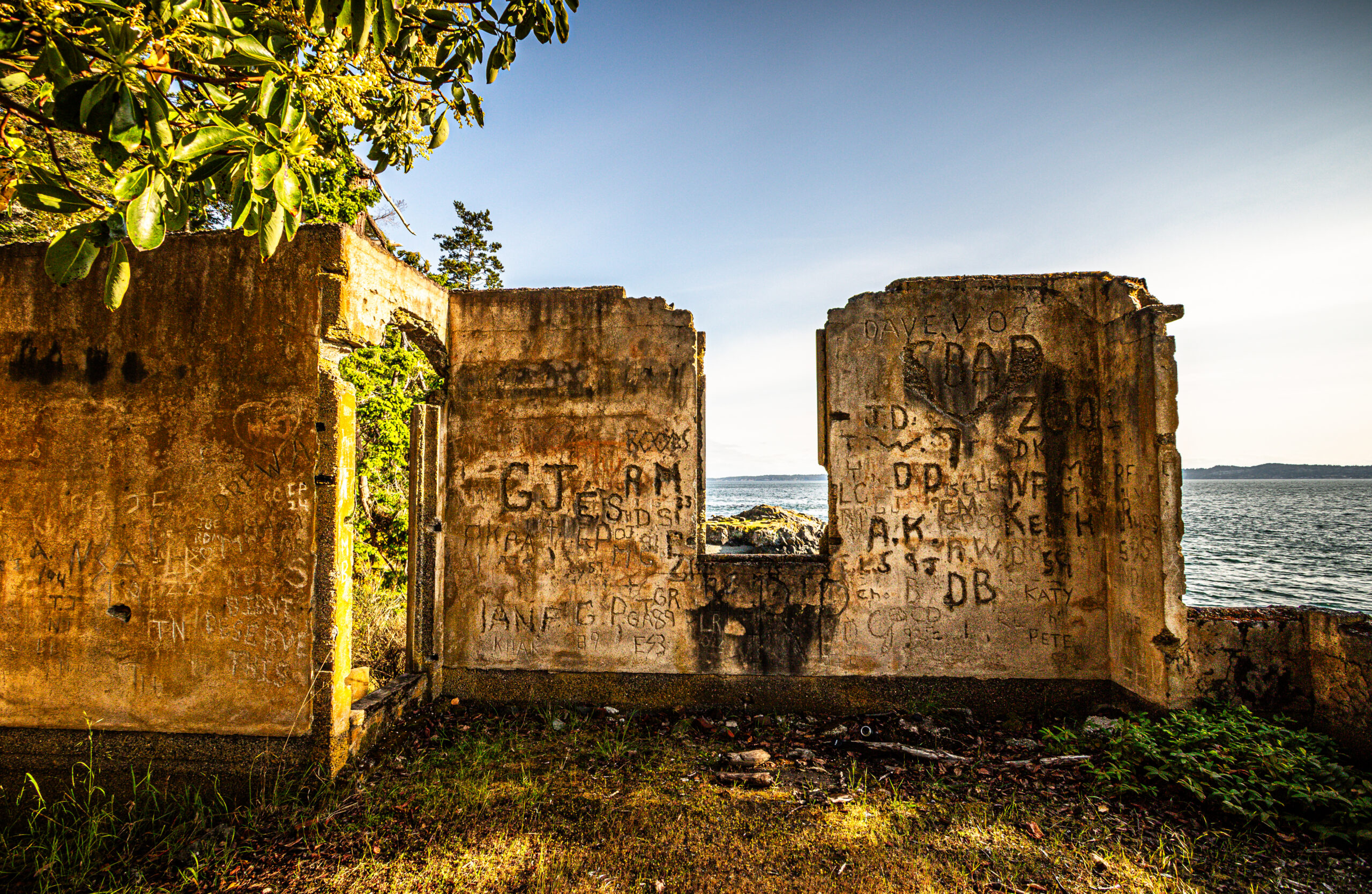


The story you are about to read is based on an unconfirmed but repeated report of an individual who may have escaped the D’Arcy Island leper colony in 1890.
The newspaper excerpts, although taken from various times throughout the era of the colony, are all real and quoted precisely.
This was a much darker place back then.
The first of the lights that, 100 or so years later, would spatter the coast with yellows and whites, and reds and greens, and guide cruise ships bound for Alaska, and oil tankers for Asia, and cargo carriers for Australia, were still a decade away.
There were some small fishing boats out there, oil lamps flickering in the shifting air, and the stars, which, in the skies of the 1890s, were many more and much brighter. To the south, a dull orange above black hills, was the faint glow of the city.
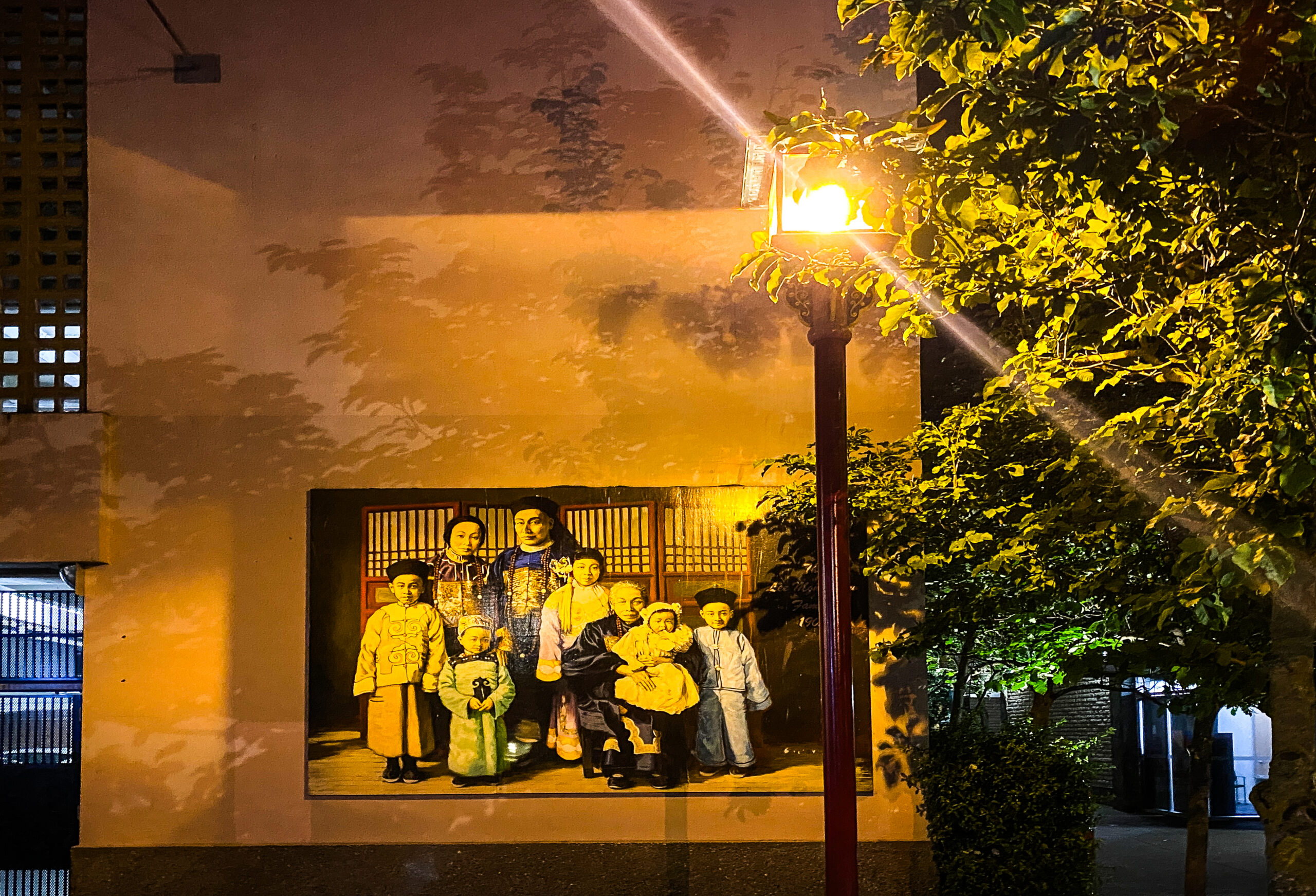
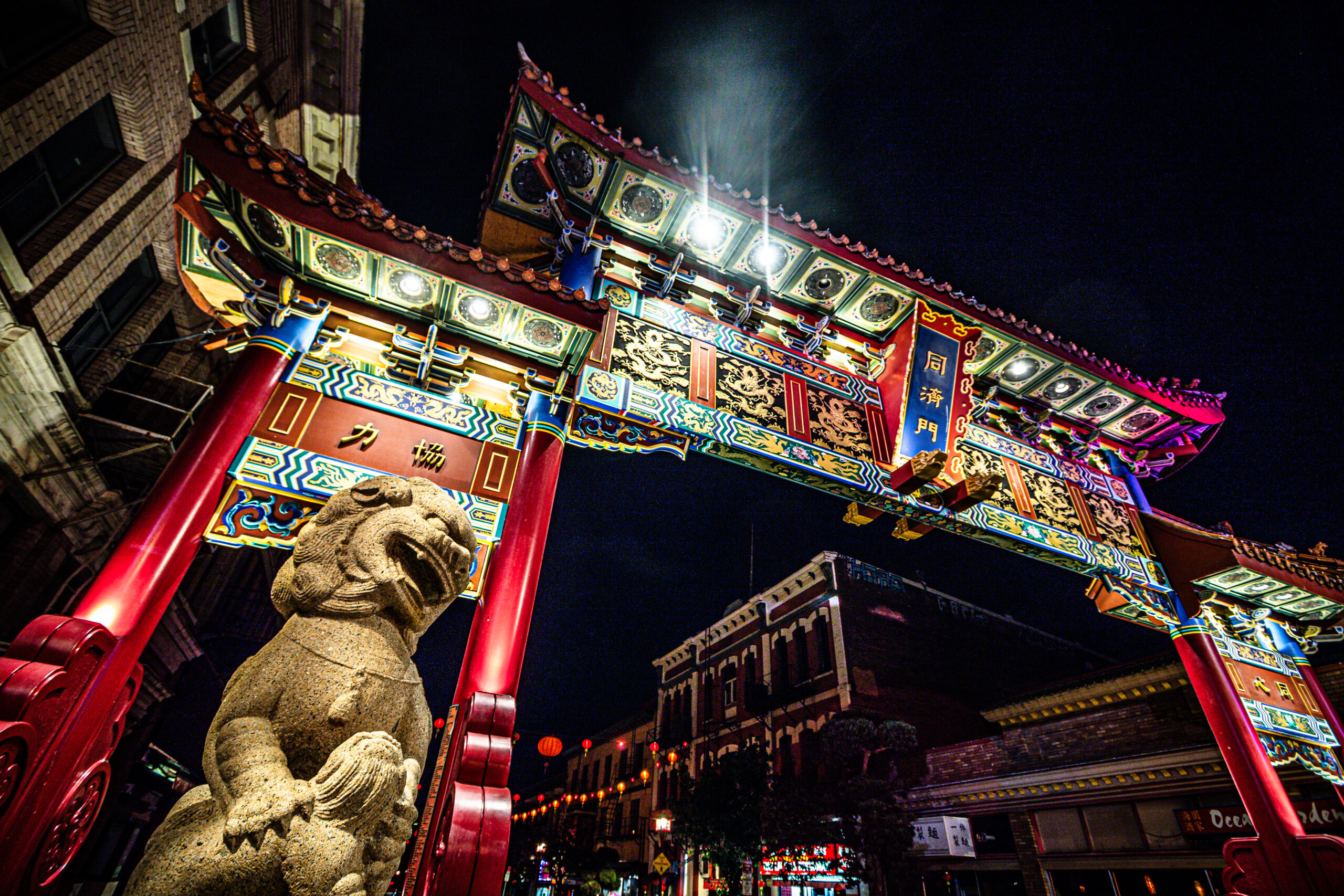
Victoria’s Chinatown.
That’s where they’d found him, the authorities, in Victoria’s Chinatown. This was Canada’s first, and it had established itself over the decades as a bastion for Sino labourers come to work the opium factories, stop on their way to the mainland to pan for gold in the Fraser, or throw their labours at the construction of the Canadian Pacific Railway.
Huddled there in a small, dilapidated room, the disease chipping away at him, like weather on the earth, rubbing out his fingers and toes, erasing his nose and his lips.
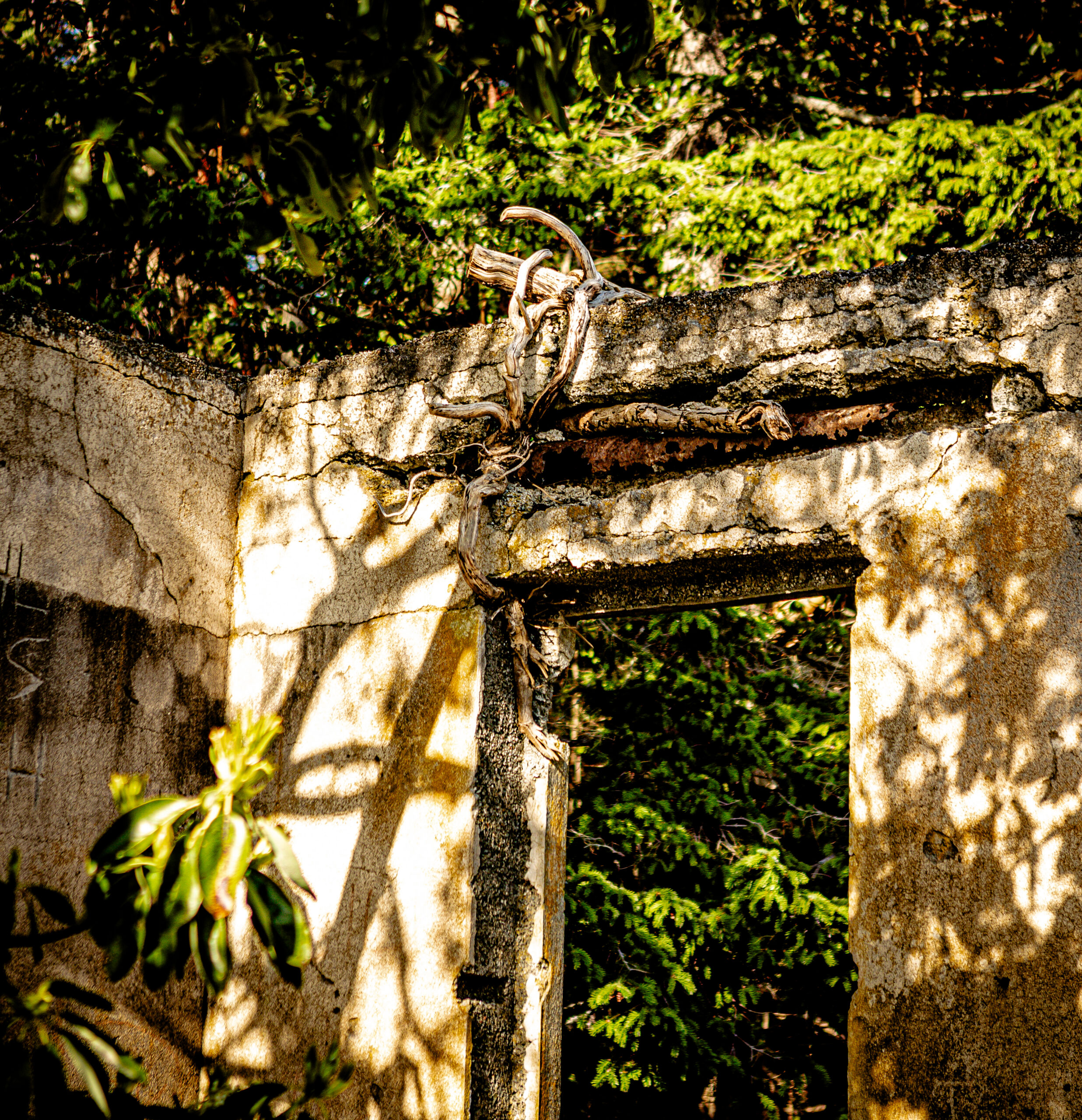
Ruins of caretaker’s cabin by day.
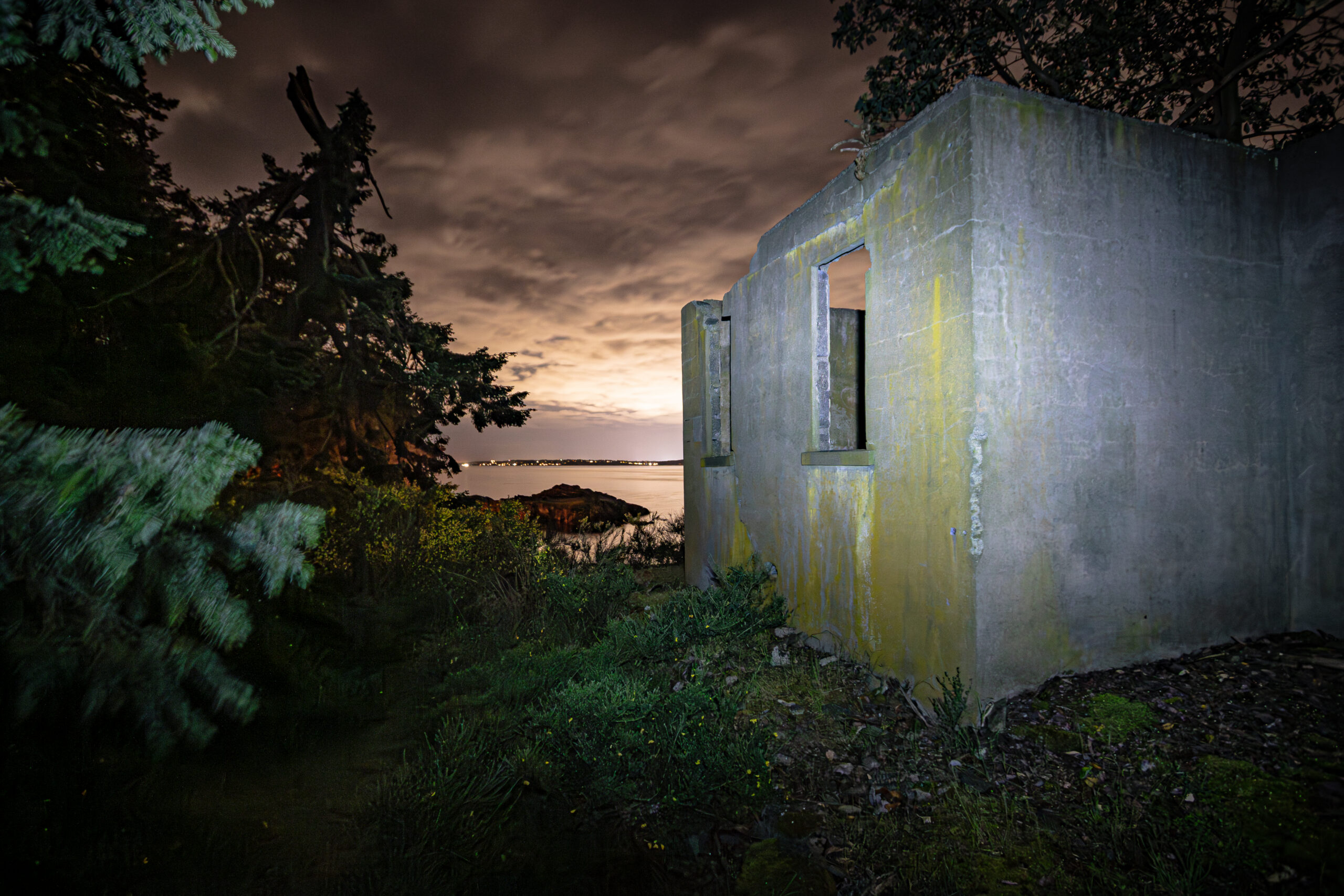
The caretaker’s cabin by night.
They’d taken him from there, dropped him here, to live alone, at least for now, on this tiny island in Haro Strait, the breezy stretch of water separating British Columbia’s Southern Gulf Islands from Washington State’s San Juans.
He may have been the first, but he would not be the last.
“For the protection of the public,” the newspaper said.
But otherwise, it was dark, and the small boat that would—or should—be here soon, would be dark too. She should be out there somewhere, pulling on oars, straining to see, and looking for him as he looked for her.
Only months ago, he’d left Canton, made his way to the coast and boarded one of the steamers owned and operated by the railroad company, bringing goods and labour across the Pacific, and often, disease.
He’d arrived in Victoria and paid his head tax, a fee—levied only on the Chinese—to stem the flow of new arrivals now the railway was finished, and the need for cheap, disposable labour wasn’t what it used to be. Fifty dollars was a lot of money in the 1890s, certainly for a peasant from provincial China.
“If we fail to Canadianize the Oriental, he will not fail to Orientalise us,” the newspaper said.
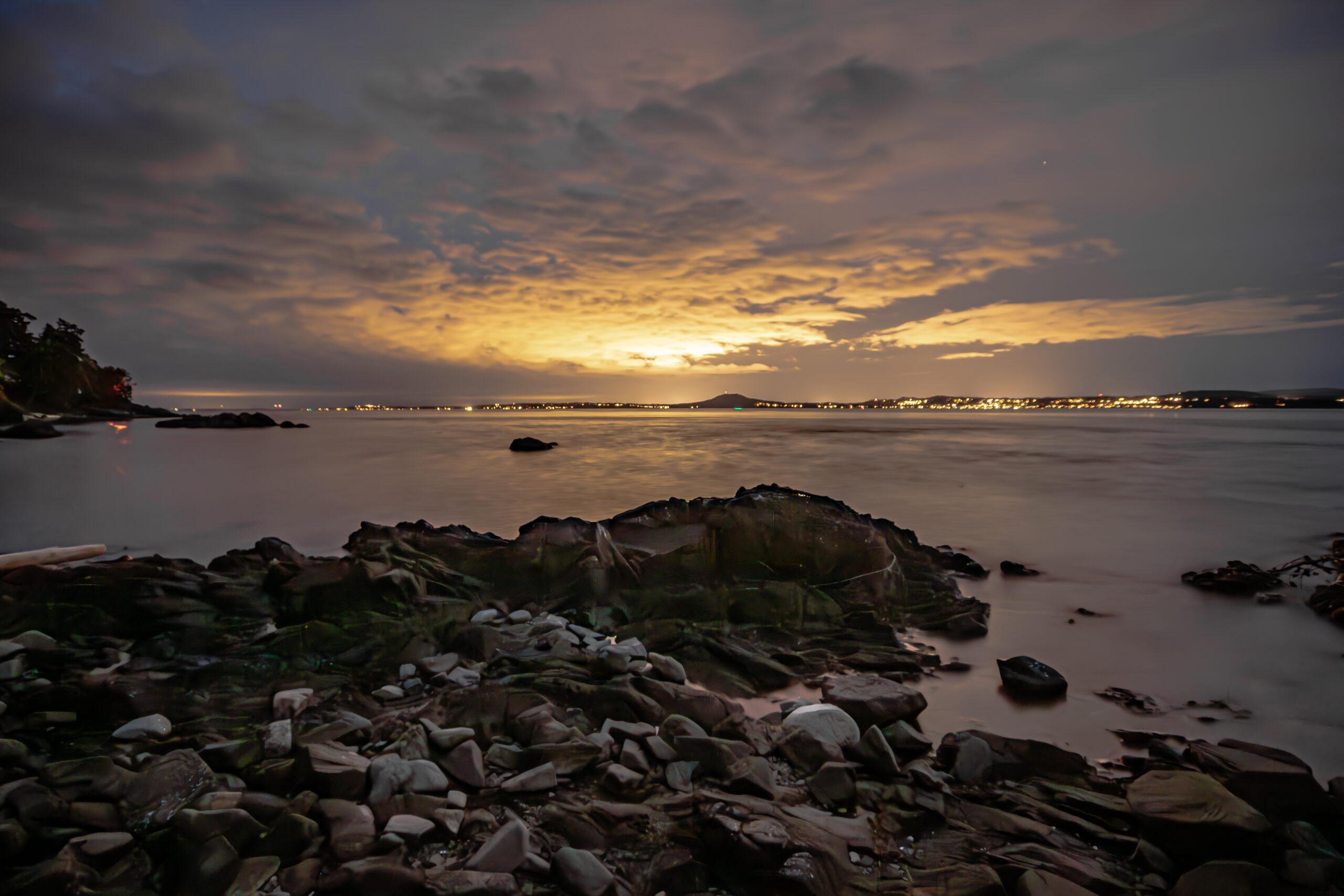
View of Victoria from D’Arcy Island.
His wife was still over there, under that faint orange glow of the southern Vancouver Island sky.
She’d loved him, tended to his wounds, fed and bathed him—even chased away the rats that while he slept would otherwise gnaw on his unfeeling toes—and she’d helped hide him from those they knew would cast him out.
But if they did find him, and took him away, she’d come for him. She told him he should watch every night for a boat that she would find and that she would bring to the tiny island, and in that boat they would both escape.
And he believed her, and on this night, just as he had on every night for these last long weeks, he sat and stared out into the darkness.
She would come. She was coming.
He looks down over the beach.
Soon, and every three months for years to come, just there, where driftwood bobbed in the moonlight over pebbles rubbed smooth by the waves, a supply ship would arrive with food and clothes, with chess sets and coffins, and sometimes opium, and occasionally a doctor, who would offer no treatment but would make medical observations, and, when coercion was required, false promises of returns to China.
“The only breaks in the terrible, hopeless monotony of the lepers’ living death,” the newspaper said.
They would almost all be Chinese here on the tiny island in the middle of the strait. Only once would a white man be sent, a German, it was thought, or maybe he was Russian. Nobody knew or cared. He’d be shunned, and, unwanted amongst the unwanted, last only a few weeks, and be buried out back with the rest, by anyone who could still use a shovel.
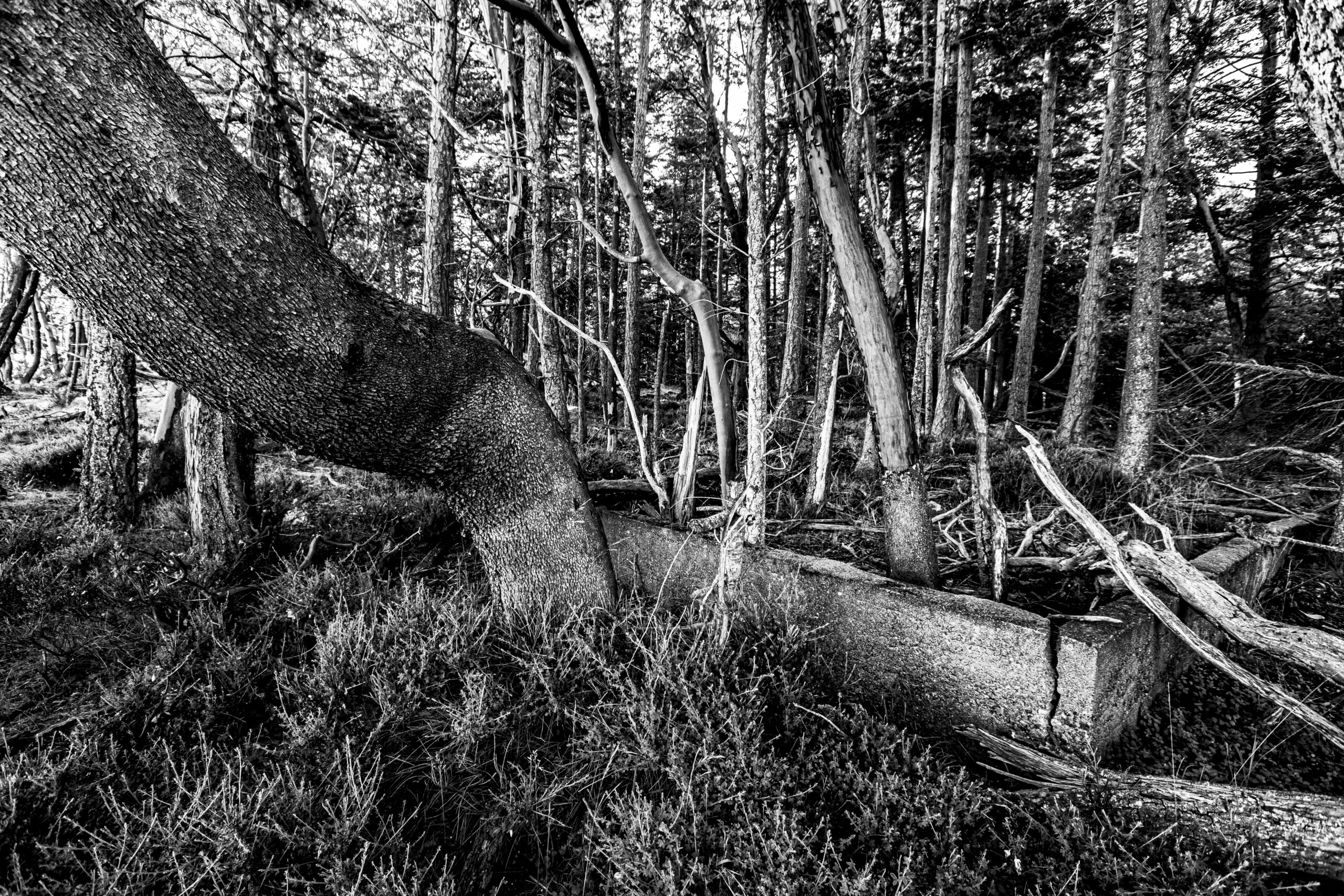
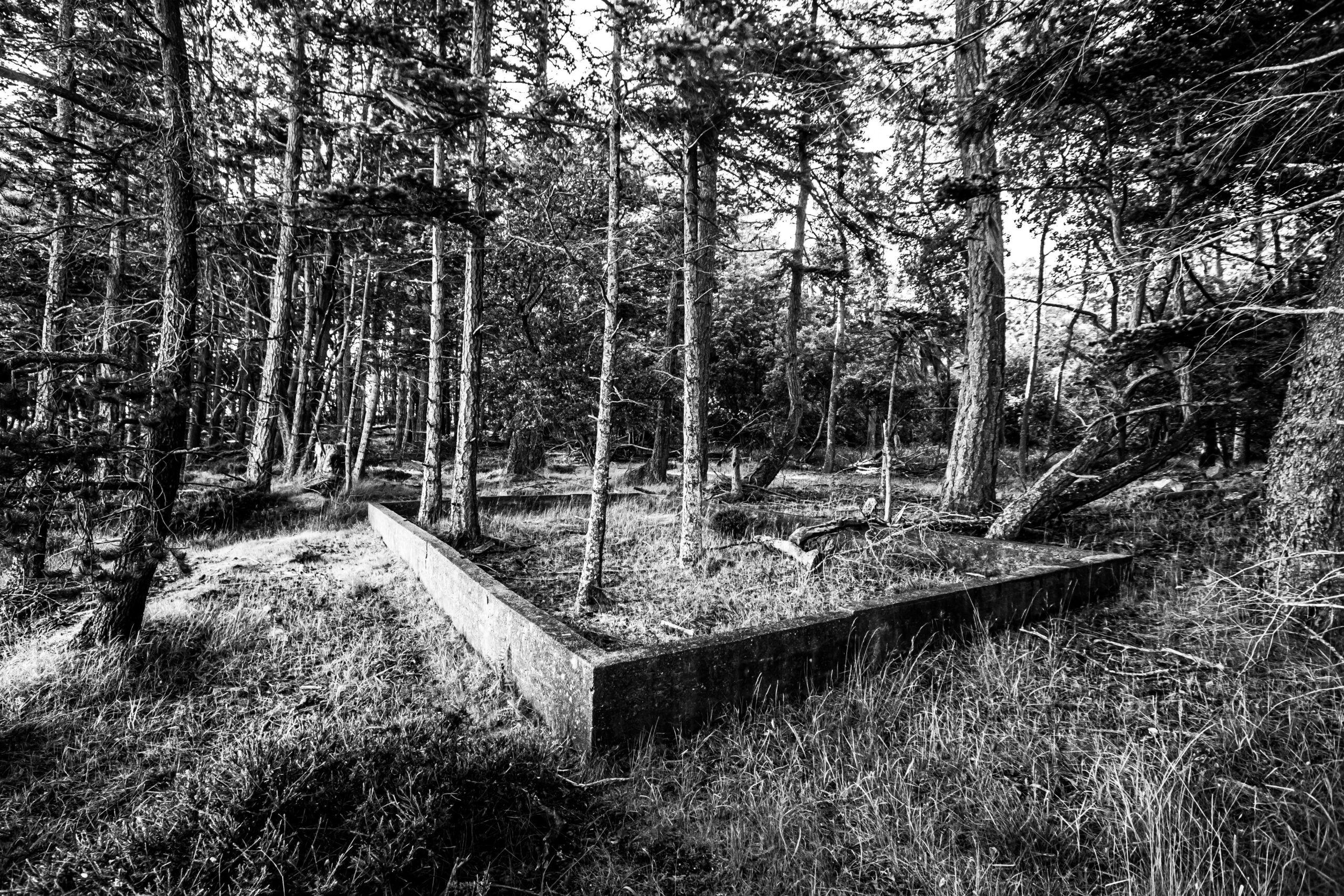
Foundation of the former lazaretto.
White lepers were sent to that big hospital out east, where there was running water, cooked meals, and medical attention. Heck, your relatives could visit you at that big hospital out east. “Trackadee,” or something, they called it.
Meanwhile, the lepers of D’Arcy Island would raise chickens and pigs, catch fish, fetch water from the bog, and grow apples in an orchard and onions and potatoes in a vegetable garden.
“In which the lepers take their chief pride,” the newspaper said.
And a caretaker would live on the other side of the island, close enough to keep watch, but a comfortable distance from the rot. He’d help them clear ground and put in pits, and dig a drainage ditch where they could do their business, where the tide would come and go and flush it away.
One day, one of the men would drop a hot coal in the grasses, and a fire would start, and, unable to escape on hobbled feet, the man would be burnt in that fire.
“Old and feeble Chinaman,” the newspaper said.
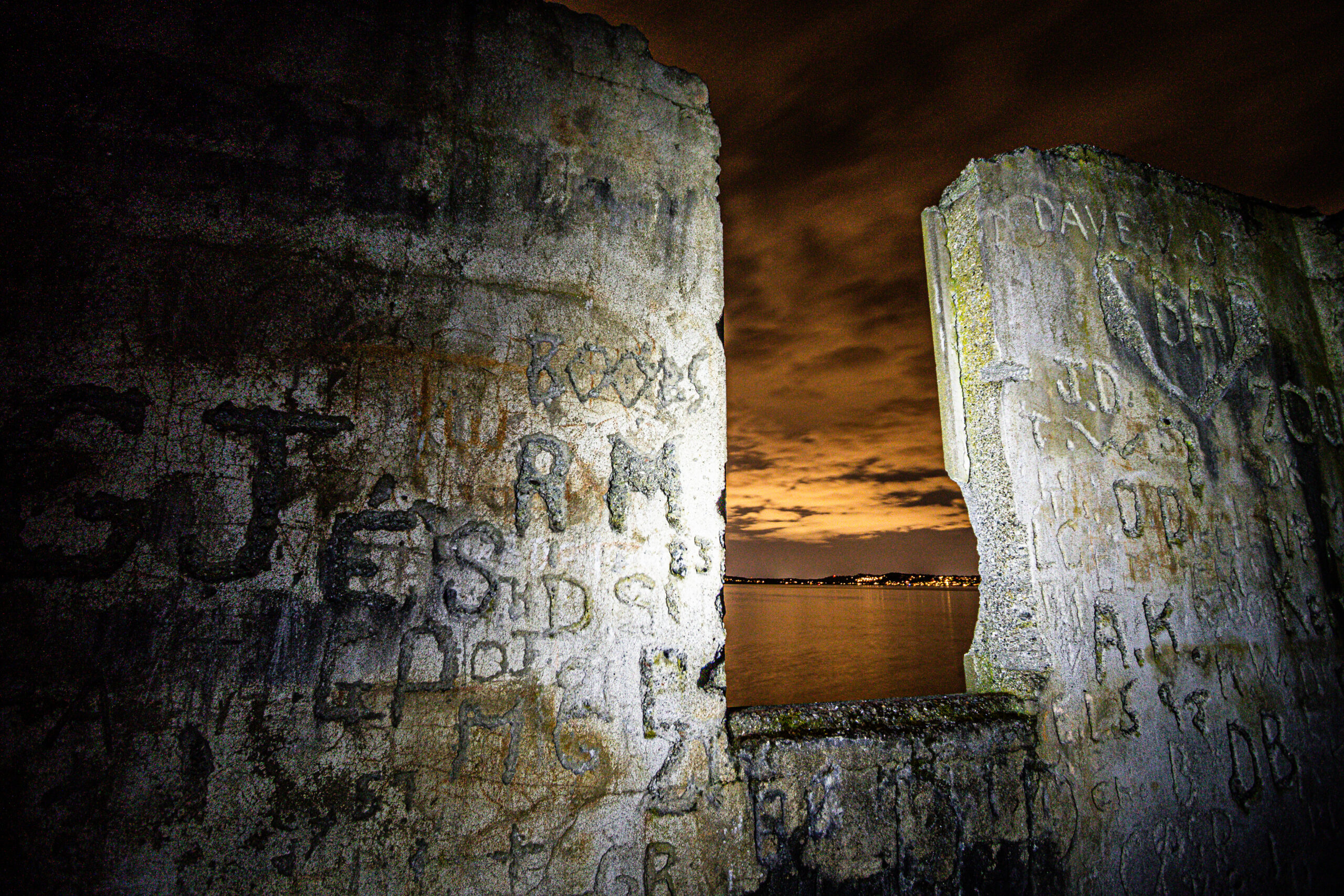
Ruins of caretaker’s cabin by night.
The year 1906 would bring some reformations and improvements, but it wasn’t until 1924 that all lepers, regardless of race, would be sent to proper facilities on nearby Bentinck Island.
But he didn’t know that then.
What he knew was that he wanted to see his wife, and to leave this lonely, empty, outdoor jail.
He lifts his eyes from the beach to the water, and there, a small sloop bobs among the driftwood.
“The health inspector, returning three months later, reported that his one and only patient was missing,” the newspaper said.
Read more community stories.