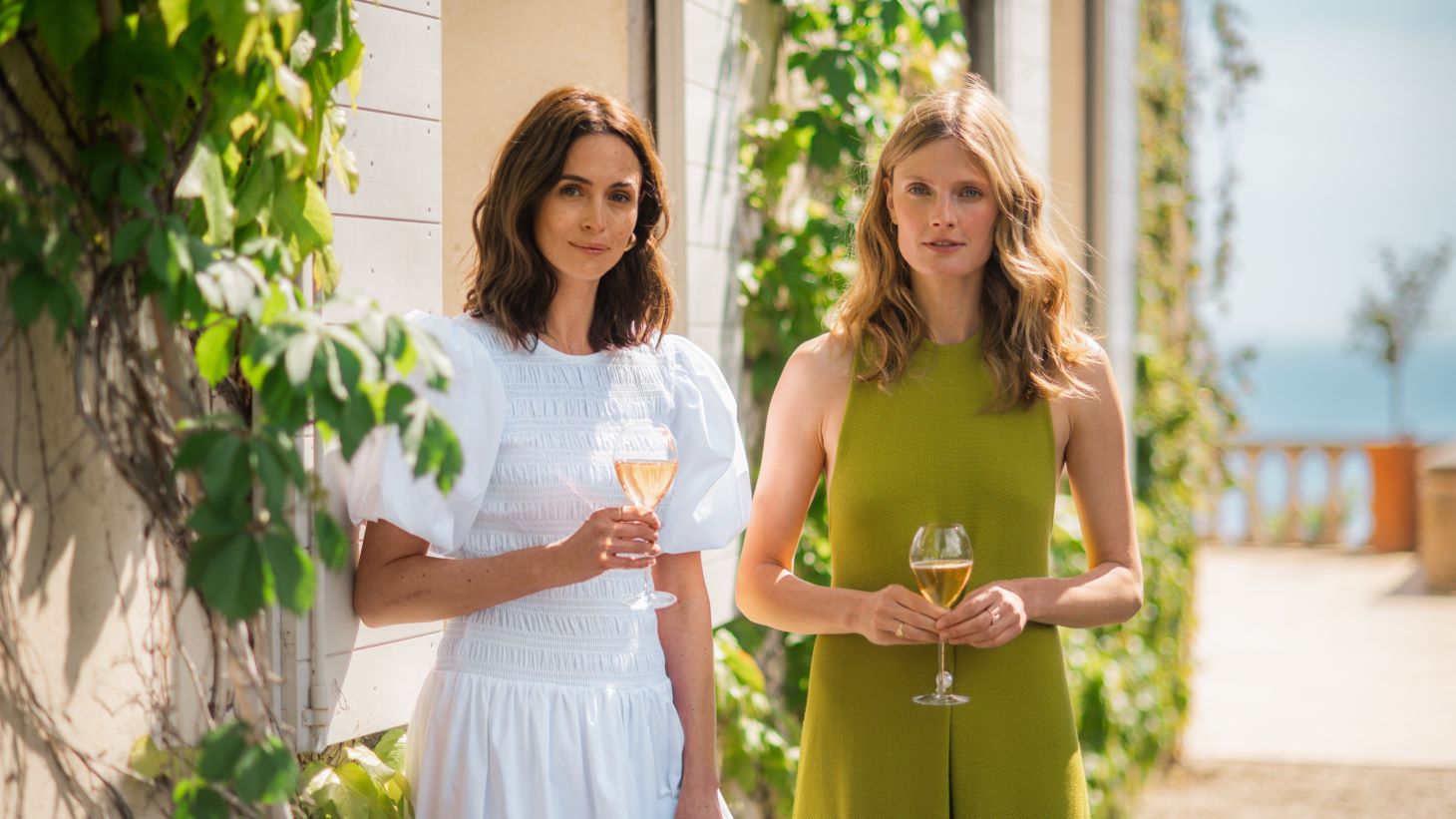


It’s one thing to create a palatable non-alcoholic wine, quite another to create one sophisticated and complex enough to be paired with a multicourse meal at a Michelin-starred restaurant. But that’s exactly what Maggie Frerejean-Taittinger and Constance Jablonski have set out to do with French Bloom, their collection of alcohol-free sparkling wine. With a shared pedigree that includes a connection to a heritage champagne house and an insider’s perspective of the world’s most exclusive restaurants and fashion events, to say the bar is high would be an understatement.
The co-founders met in New York City when Frerejean-Taittinger was leading the international expansion of the Michelin Guide and Jablonski was dominating the catwalks as a top model for brands such as Celine, Altuzarra, and Victoria’s Secret. They quickly bonded over the challenges of living their best personal and professional lives when alcohol was flowing freely at every turn.
“I became pregnant with my twins in 2019. At that time—really for the first time in my life—I realized how it could feel to be a bit excluded from the culinary experience or socializing when you don’t drink alcohol,” Frerejean-Taittinger says. As for Jablonski, “networking in fashion is often at after parties in the late evening, and Constance just felt like she couldn’t really keep up with everything that was expected of her in her career, her personal life, her regular travel, and feel her best while she was drinking alcohol every time she went out,” Frerejean-Taittinger explains.
 They launched their brand later that year, tapping Frerejean-Taittinger’s husband, Rodolphe Frerejean-Taittinger, to lead product development. What followed was some intense R&D, where Rodolphe put his expertise in champagne and cognac production to the test. Their grapes come from Limoux, a region in Languedoc known for the concentration and aromatic intensity of its grapes, which are harvested two to three weeks earlier than the regional norm to better capture their freshness and preserve their natural acidity. “We chose our terroir very intentionally,” Frerejean-Taittinger says, explaining that they dealcoholized wines from regions all over France before landing on Limoux.
“We found that when you remove the alcohol of wine, you essentially remove the backbone with it,” she says. Their big aha moment came with the realization that because a wine is going to lose about 60 per cent of its flavour during the dealcoholization process, they begin by building a stronger baseline upfront so they don’t have to course correct any metallic or aggressive taste notes. “The more you do before, the less you have to do after,” Frerejean-Taittinger says. Keeping in step with their all-natural approach (French Bloom is made completely of natural ingredients and without the addition of sugar, sulfites, or preservatives), they opted for a gentle, low-temperature vacuum distillation to achieve their zero per cent alcohol content.
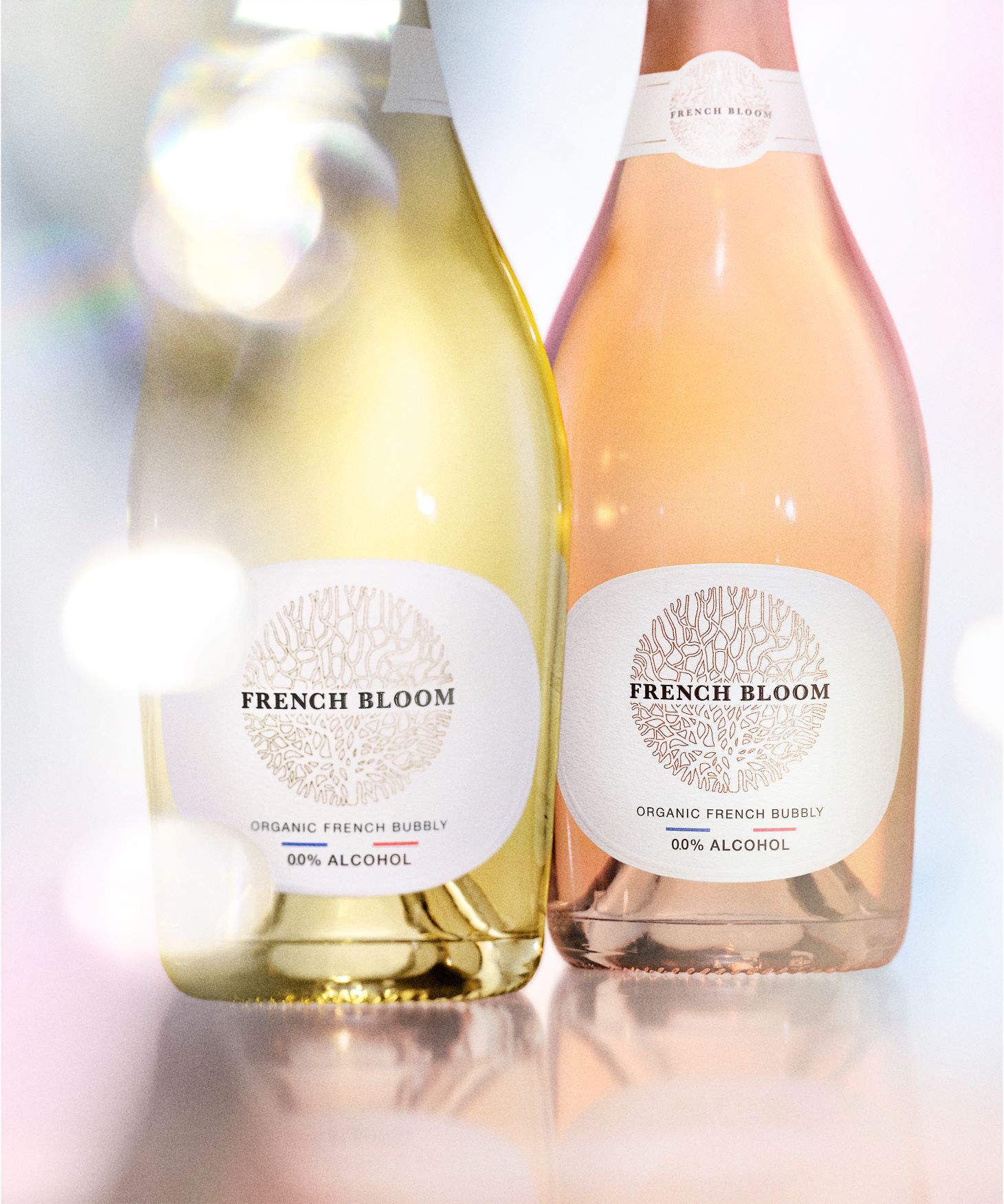
Today, French Bloom has four cuvées for every occasion and taste: Le Blanc, which has notes of spiced citrus, white flowers, and Granny Smith apples; Le Rosé, a chardonnay-pinot noir blend in which rose petals mingle with red berries and white peach; La Cuvée Vintage 2022 Blanc de Blancs, aged in French oak barrels; and L’Extra Brut Blanc de Blancs. “In my opinion, it’s my first cuvée that is what we set out to create, because it’s a wine of gastronomy. I would pair it with seafood, for example—a carpaccio of scallop is incredible or a tartare—but it can follow your whole meal,” Frerejean-Taittinger says. “It’s also the first to really speak to the wine critics. I think that they found what they’re looking for.”
Related stories:
- How B.C. Businesses Are Responding to the Growing Thirst for Alcohol-Free Spirits
-
Seedlip is a Pioneering Non-Alcoholic Spirit. But What Is It, Actually?
-
At Hacienda Patrón, Making Tequila Is Not Just a Business, It’s an Art
It’s clear the critics and some major players agree. In the four years since releasing its first bottles, French Bloom has blossomed around the world. Available in more than 60 countries, it is being poured at some of the most exclusive hospitality destinations, including The Beverly Hills Hotel, The Carlyle, and Le Meurice, and at the tables of Alain Ducasse and Anne-Sophie Pic. To sip at home, it can be purchased at leading retailers Harrods, Galeries Lafayette, Selfridges, and Erewhon, and in Canada at Holt Renfrew.
French Bloom has also caught the attention of Moët Hennessy, which acquired a minority stake in the company in 2024, and Formula 1, which signed a 10-year partnership with French Bloom as its official non-alcoholic sparkling wine partner. “F1 has changed so much in the last six or seven years,” Frerejean-Taittinger says, pointing to a survey launched earlier this year that found women account for three in four new F1 fans, with nearly half of all Gen Z respondents being women. “Who would have ever thought that we could use Formula 1 to recruit a younger, feminine client for French Bloom? But that just shows you how you know how quickly these things can move.”
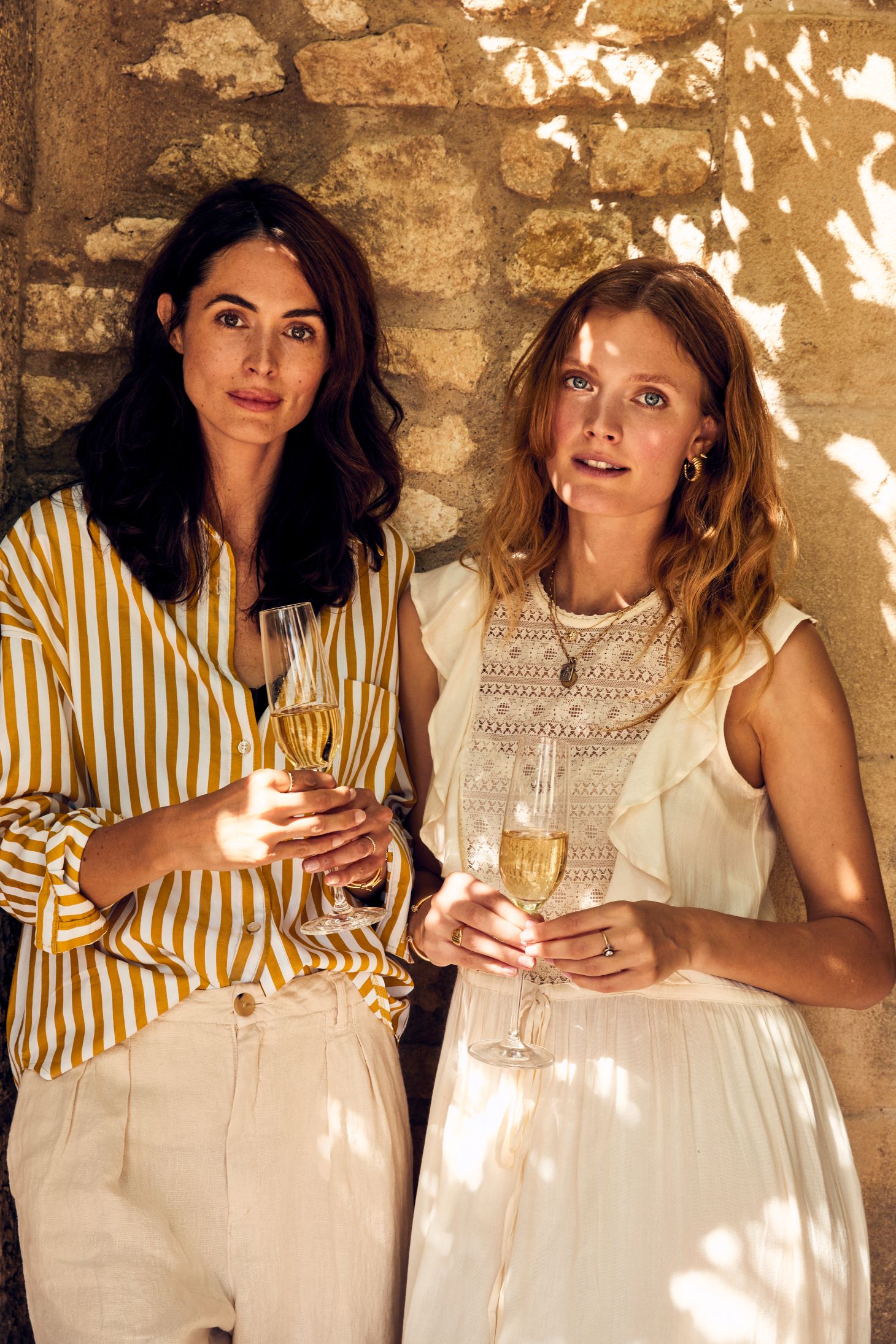
Change is indeed at the heart of French Bloom’s success. The brand caters to a consumer group Frerejean-Taittinger describes as “flexi-drinkers,” individuals who, when they drink wine and champagne, choose higher-quality vintages. And when they don’t, they expect to find that quality and overall experience in their non-alcoholic beverages. “It’s so rare in the luxury space to meet a need,” Frerejean-Taittinger says. “Often, in the world of luxury, you need to create the demand. But here, there was a real demand, and there wasn’t really anybody meeting the expectations of what people were looking for.”
French Bloom takes its name from its country of origin and the notion of personal blooming—evolving to become the best version of yourself through gathering with others and making self-affirming choices. With this mindful approach, Frerejean-Taittinger and Jablonski are serving an emerging demographic while reinventing the art of celebrating. “Our whole mission and purpose as a brand is to bring people together to make sure everybody feels like they can toast, whether or not they drink alcohol,” Frerejean-Taittinger says. “It’s a privilege, and we feel really grateful to be the right product at the right time.”
Read more food and drink stories.