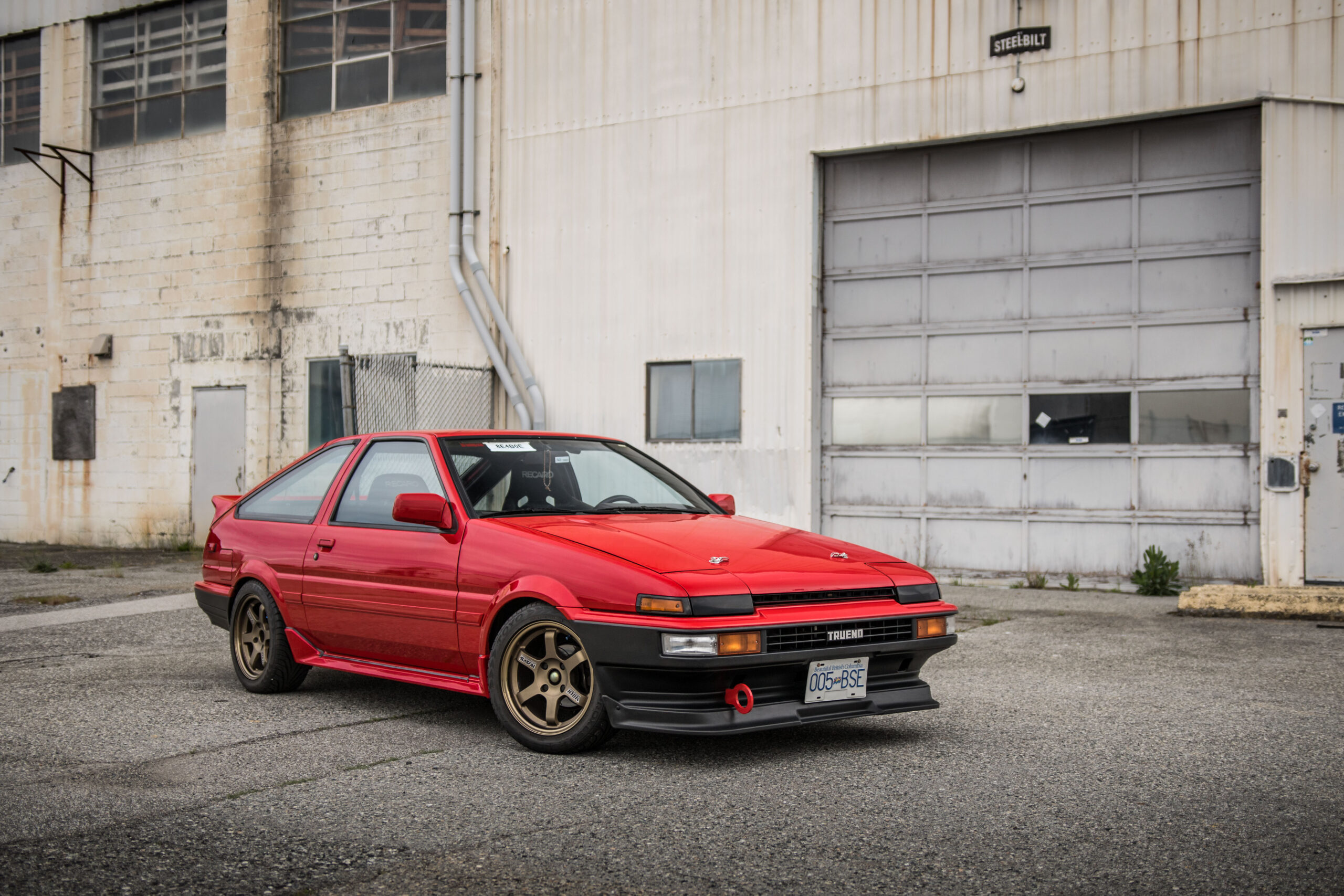


Of all the cars on the road, the Toyota Corolla is one of “them.” It’s the beige rolling roadblock, parked in the passing lane at 10 kilometres per hour below the limit, driver oblivious to the tailback behind. It’s the bedraggled commuter, scuffed and scratched, last washed before smartphones existed, always with a dented bumper. It’s the unlikeliest action hero, and yet it’s about to get its movie star moment.
You know actor Sung Kang from the Fast & Furious movies already, where he plays Han Lue, a laid-back, snack-chomping street racer. Lue was such a popular character that the franchise brought him back from the dead, and likewise Kang has long had a faithful following in the automotive enthusiast community. Now, he’s combining the two with Drifter, a feature film that he stars in, directed, and produced. His hero ride in the film? A 1980s Corolla hatchback.
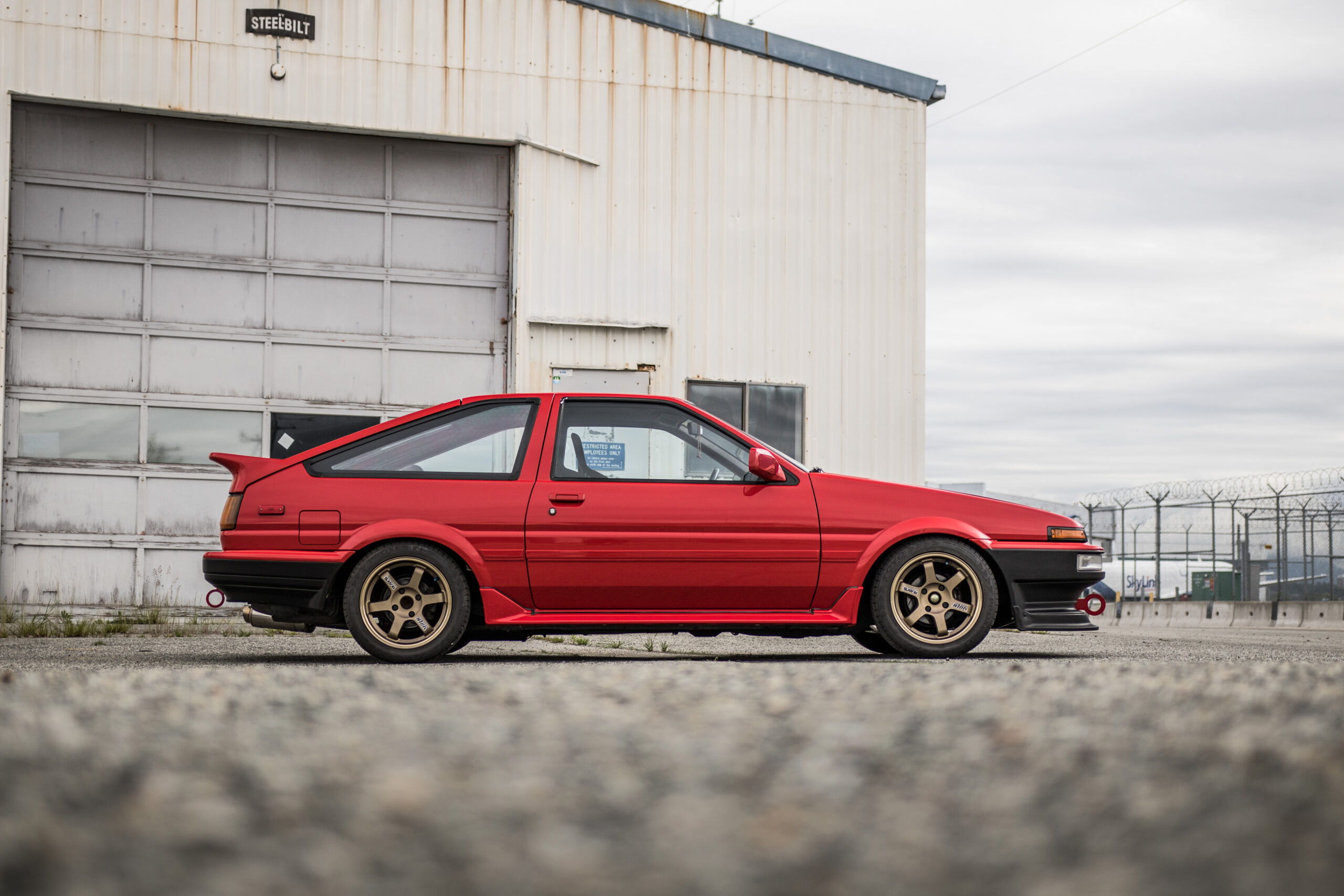
Everybody loves an underdog, but on paper at least, this choice shouldn’t make any sense at the box office. It’s as if Steve McQueen’s Frank Bullitt had driven a Ford Pinto: that iconic car chase through San Francisco would have been a lot less memorable. But here, putting a Corolla with pop-up headlights in the spotlight isn’t about creating a superstar where none existed. It’s just simply a nod to a car that, across the Pacific, casts a shadow as big as Godzilla.
First though, a little explanation of drifting culture, and how it’s become more mainstream. Drifting is to traditional motorsport as figure skating is to hockey: it involves sliding rear-wheel-drive cars around a track, often in tandem, looking to get points for style more than worrying about the results of the stopwatch.
Oversteering is nothing new, as any teenager trying to drive mom’s 1970s sedan in the snow would tell you. Learning how to compensate for the rear wheels spinning in low-traction situations used to be a rite of passage: feathering the accelerator, steering into the turn, getting a little thrill from the slide.
Drifting takes that same skill and cranks up the smoke machines. Instead of skinny bias-ply tires skittering in the wet, it has big horsepower to evaporate rubber into clouds of tire smoke, hydraulic hand brakes to lock up the rear tires and initiate a slide, and drivers unconcerned about scraping paint against the barriers.
Is drifting the fastest way to get around the track? Not in the least. Is it plenty of fun to watch and even more fun to do? You betcha. In an age when Formula One is always massaging the format so there is enough overtaking to keep people engaged, the sight of two Nissan Silvias sliding inches apart and even closer to the crash barrier doesn’t need amplification. If you’d like to try your hand at drifting, the Canadian arm of Drift Academy runs regular instructional courses right through until fall, rain or shine.
Cars have been sliding everywhere from Formula One to rally racing for decades, but the concept of drifting as a sport is uniquely Japanese. It can be traced to the early days of the Nissan Skyline when, in 1971, Kunimitsu Takahashi slid his car around the Fuji racing circuit in the pouring rain to a 50 victory for the nameplate.
In that case, drifting was actually faster, and Takahashi would gain the honorific “Drift Father” for his efforts. However, it was a young man in the spectating crowd who took drifting from racing technique to judged sport.
Known as the Drift King, Keiichi Tsuchiya grew up in rural Japan, driving the challenging canyon roads there late at night. Starting with less than legal street racing, he worked his way onto the circuit, where he soon proved his ability to outdrive much faster machinery using humble Toyotas.
You can spot Tsuchiya in a cameo role as a fisherman in The Fast and the Furious: Tokyo Drift, the first appearance by Kang as Han Lue. In the scene where Han is handing out lessons on how to properly drift a Mitsubishi Lancer Evolution, Drift King smiles wryly as the Mitsu negotiates a clean slide.
“Not bad,” he allows.
Tsuchiya’s breakout race came in the Fuji Freshman series in the mid-1980s, where he raced in a class for economy-oriented compact cars. After a little success with older Nissans and Toyotas, he managed to earn enough to buy a then-new fifth-generation Toyota Corolla. When, at one of the races, he was able to pass the more powerful Skylines in the rain like his hero Kunimitsu-san, Japanese enthusiasts sat up and noticed.
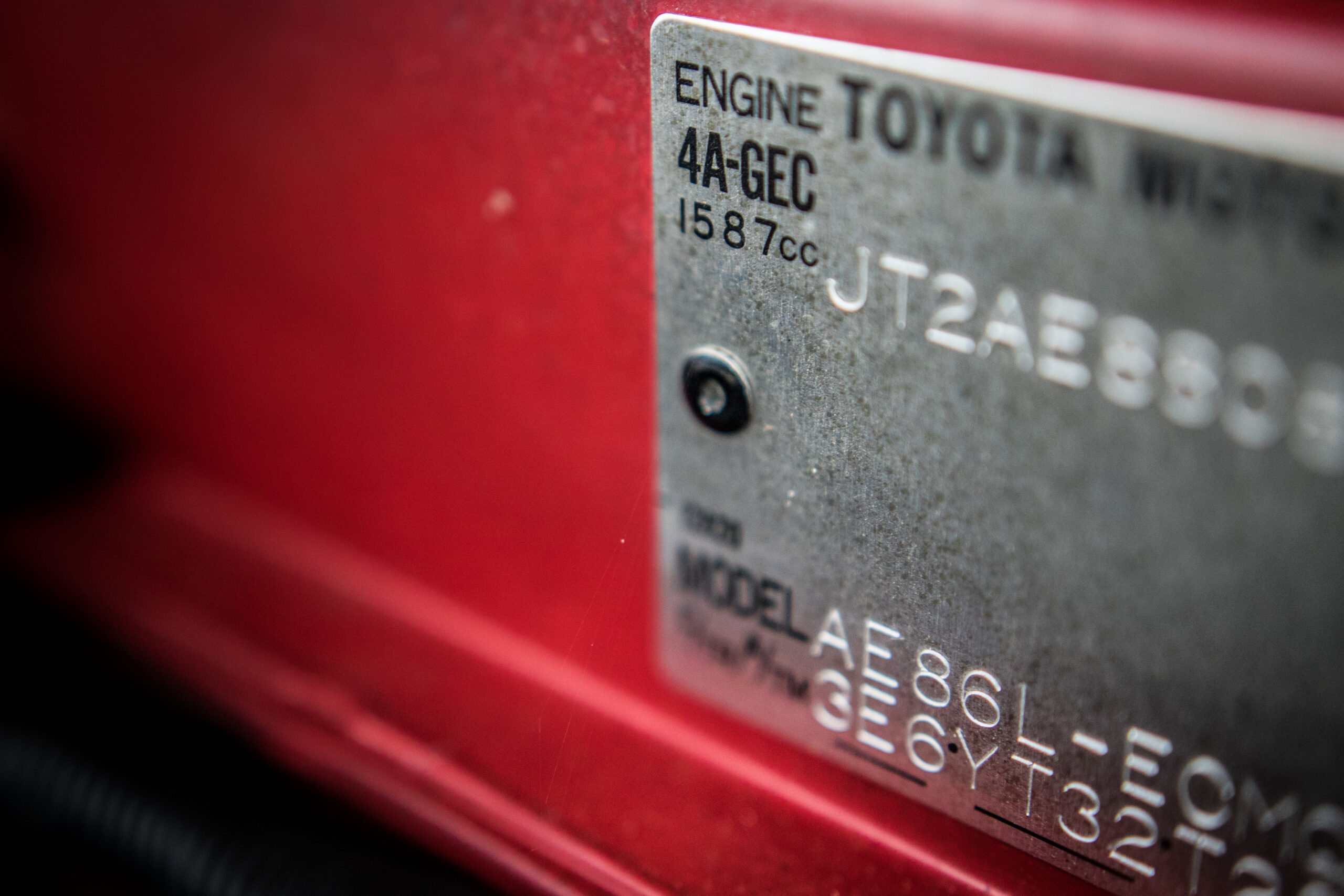
The Japanese nickname for this generation of Corolla is hachi-roku, or “eight-six,” a contraction of its chassis code: AE86. The car was sort of an accident of its time, caught between the rear-wheel-drive layouts of the past and the emergence of front-wheel drive as a modern compact layout, as in the contemporary Honda Civic.
These days, rear-wheel drive comes with prestige and a hint of performance. In the 1980s, it was Stone Age technology. The AE86 Corolla had a live rear axle on leafsprings like a Jeep, one foot stuck in the 1970s.
However, with a buzzy four-cylinder engine up front, a manual gearbox in the middle, and rear-wheel drive with a well-balanced chassis, there was something to be said for an old recipe cooked well. Like the rally-hero Ford Escort of the 1970s, the AE86 rewarded an experience driver with well-controlled and nimble slides, the joy of lightweight motoring. The power was very modest, but wringing every ounce of performance out of it taught you everything you needed to know. On this side of the Pacific, we got the car as the Corolla GT-S.
For a time, a Corolla GT-S was a bit of a secret handshake of a car. Modestly priced, thrifty to run, and dependable, it had all the usual Corolla attributes. At the same time, it was a driver’s car through and through, more fun than plenty of others that theoretically outclassed it according to the numbers on the spec sheets.
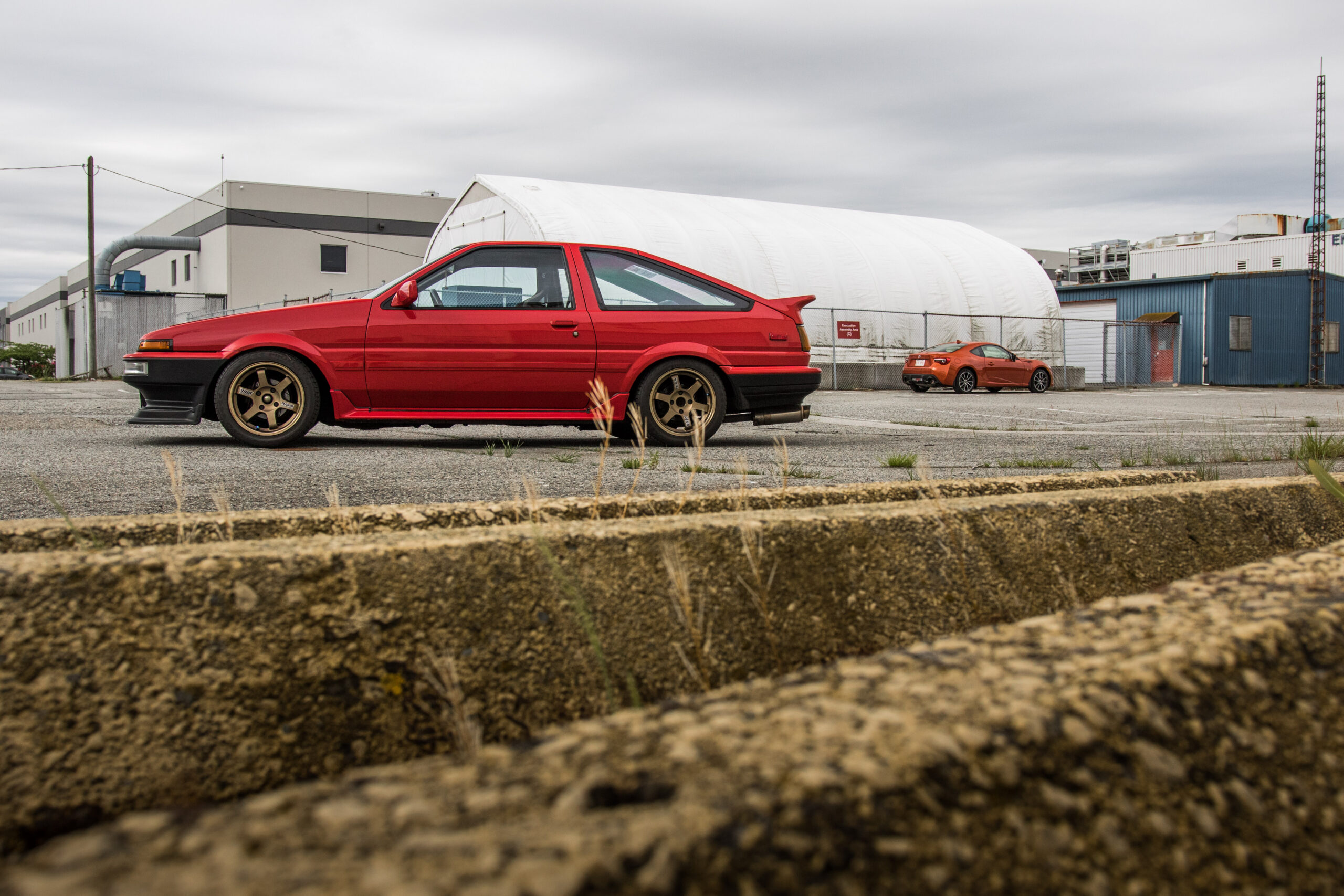
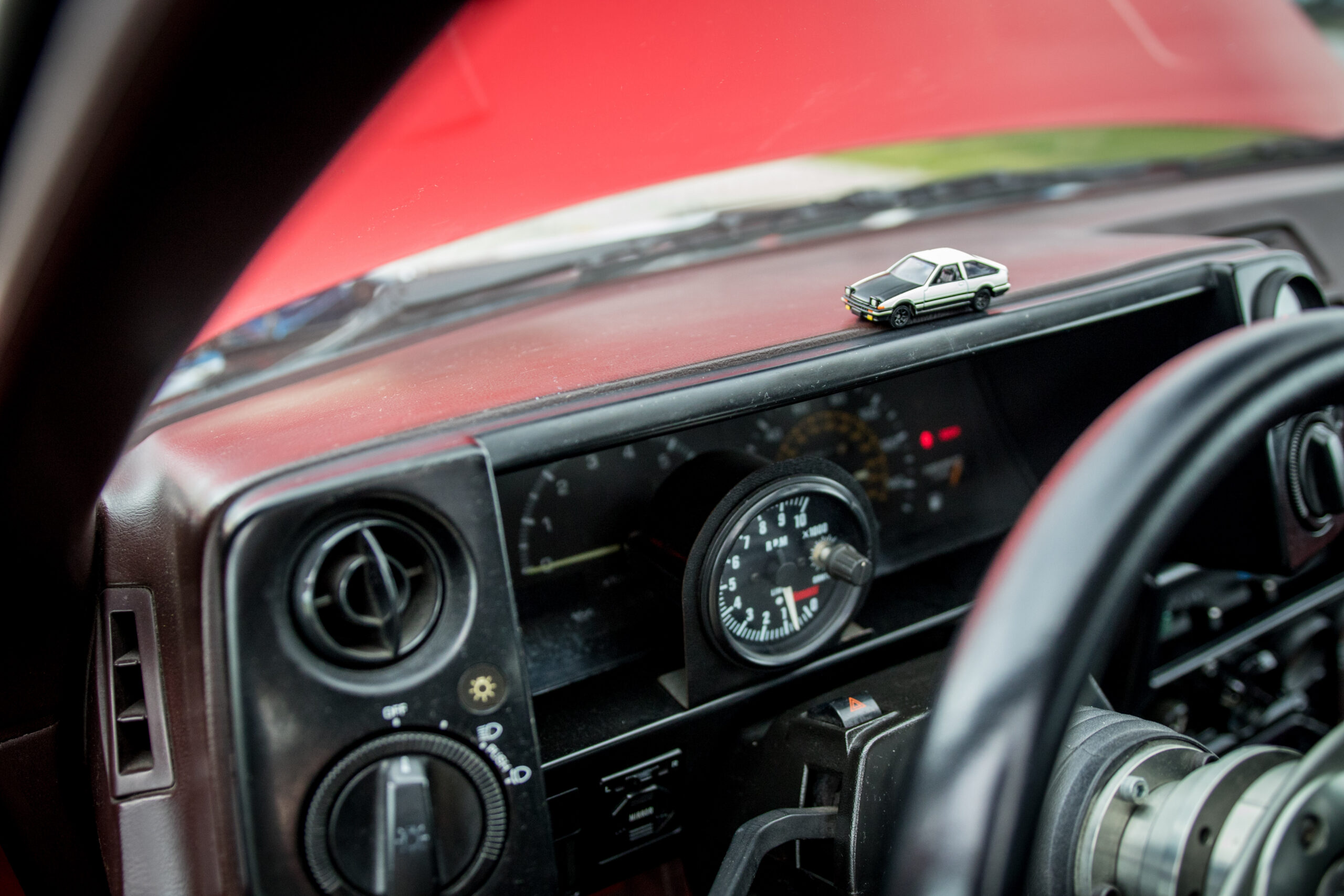
Then, animation came calling. Back across the Pacific in Japan, a manga author named Suichi Shigeno penned a bestselling illustrated stories about a disaffected teenager learning to drive a Corolla with preternatural skill. The car, a black-and-white Corolla with pop-up headlights, wore the name of the family tofu shop on its side and regularly beat up on the best Japanese performance cars of the era in fictional late-night street racers.
The manga was called Initial-D, and when it was released as an animated series, Tsuchiya was called in for his input in adding realism to the way the cars behaved on-screen. The popularity of the series exploded, first in Japan and then in Hong Kong and beyond, turning a humble black-and-white Toyota into the equivalent of The Dukes of Hazzard‘s orange General Lee Charger.
The Lower Mainland’s close ties with Hong Kong, in the days when both were part of the British Commonwealth, led to B.C.’s early adoption of the Initial-D phenomenon. Not only were tuners snapping up used examples of the Corolla GT-S and modifying them, but there were even Initial-D arcade games in Burnaby’s Metrotown mall.
As car culture became more widespread, the Initial-D Corolla became a global phenomenon. Toyota even released a special black-and-white version of the current GR86 to pay tribute to it.
Drifter is not a live-action version of Initial-D, but it is inspired by the phenomenon. Kang plays a loner janitor at a racetrack, forced to confront his past to achieve his dreams of being a professional drifter.
As for the Toyota Corollas in the movie, they play themselves. Small, scrappy, inexpensive to buy when new. A terrier-like tenacity, punching above their weight, more fun to drive than they have any right to be. Of all the driving hero cars that have ever existed, this generation of Toyota Corolla is perhaps the most unlikely of them all. But it has long proved that it is one of them too.
Read more transportation stories.