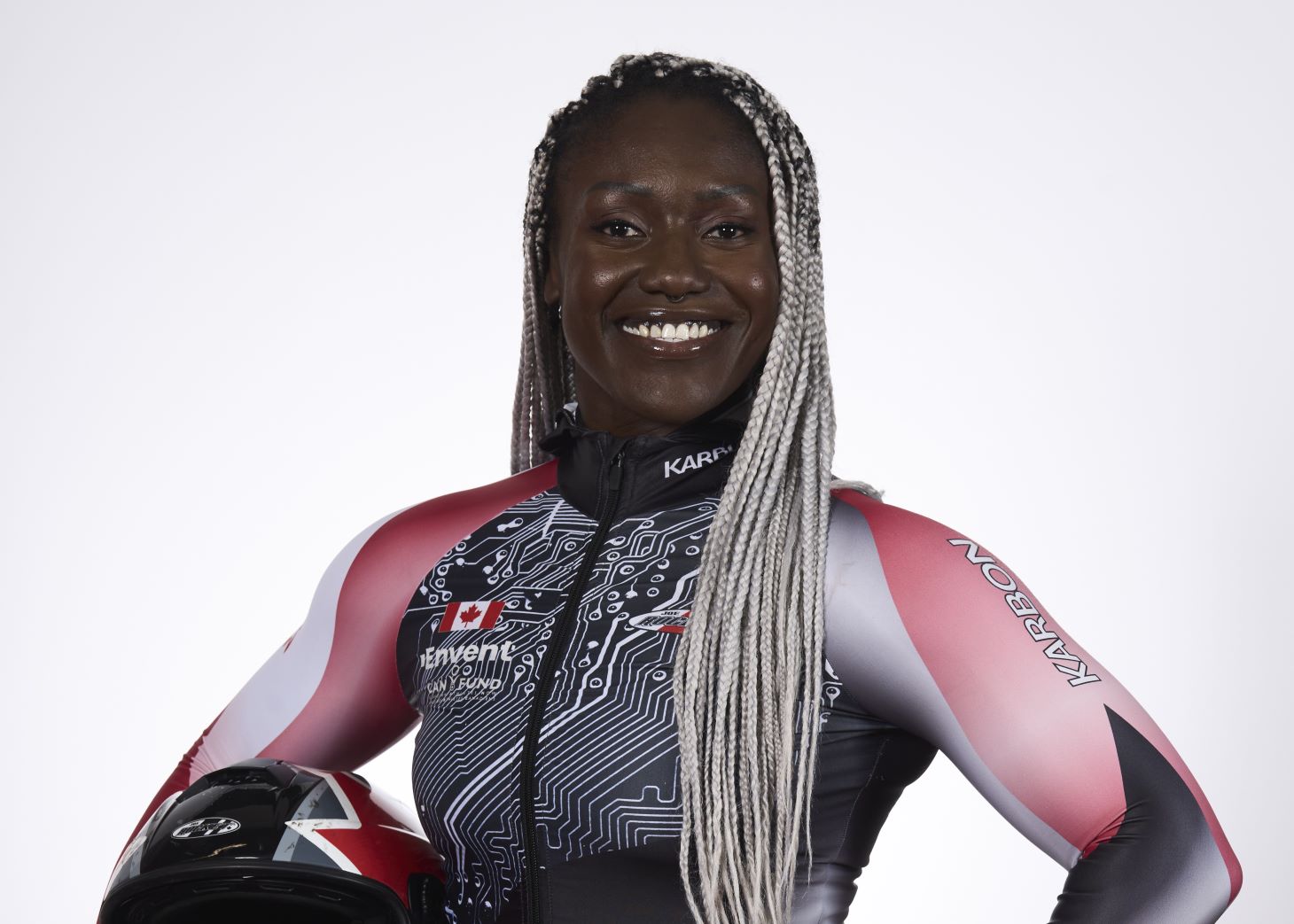


Cynthia Appiah is training for medalworthy bobsleigh races at the Milano Cortina Winter Olympics in February. And she’s prepared to look great doing it.
As many female athletes know, societal beauty pressures don’t pause on race day. At an event such as the Olympics, with cameras focused on an athlete, the strength of their performance and the aesthetic they project reach millions of viewers. For Appiah, it’s an opportunity to use self-expression to tell her story.
“As Olympic athletes, we only get a two-week spot every four years when all the attention is on us. The important thing you can do is to try and harness that as best you can and take control of the narrative,” she says. “I hope that my colourful hair shows that I’m a fun, outgoing person.”
On race day in Italy, she’ll apply a set of lashes before sliding on her bobsleigh helmet. Her eyes are one of the only things fans can see when she lifts her visor. Highlighting them lets viewers catch a better glimpse of what she’s feeling.
When Appiah began bobsleigh training in Calgary, her skin reacted to the dry air and high elevation. Protecting moisture became key. “I have naturally oily skin, and I come from Toronto where it’s a very humid environment,” she says. “I had to learn quickly how to keep myself moisturized without feeling like my skin was going to peel off from dryness.”
Now, she swears by a seven-step Korean skin-care routine that prioritizes hydration. The steps include double-cleansing and layering toner so the skin is prepared to absorb moisture. “In North America, toners are more like an astringent to clean any bits of dirt that’s left on your skin,” Appiah says. “Korean-style toners are meant to replenish some of the lost moisture from washing your skin.”
She looks for products containing niacinamide and hyaluronic acid for moisture, and azelaic acid for evening skin tone. During the fall and winter months, she adds a heavy moisturizer to guard against the cold and wind. Appiah is also serious about sun protection, no matter the weather.
Red light therapy, often used to improve skin’s appearance, is another wellness practice Appiah leans on for muscle recovery. “Our sport is high-intensity, and we need a lot of time to recover in between the training days,” she says. “Red light therapy and temp beds have been helping me get to the next training session refreshed and recovered.”
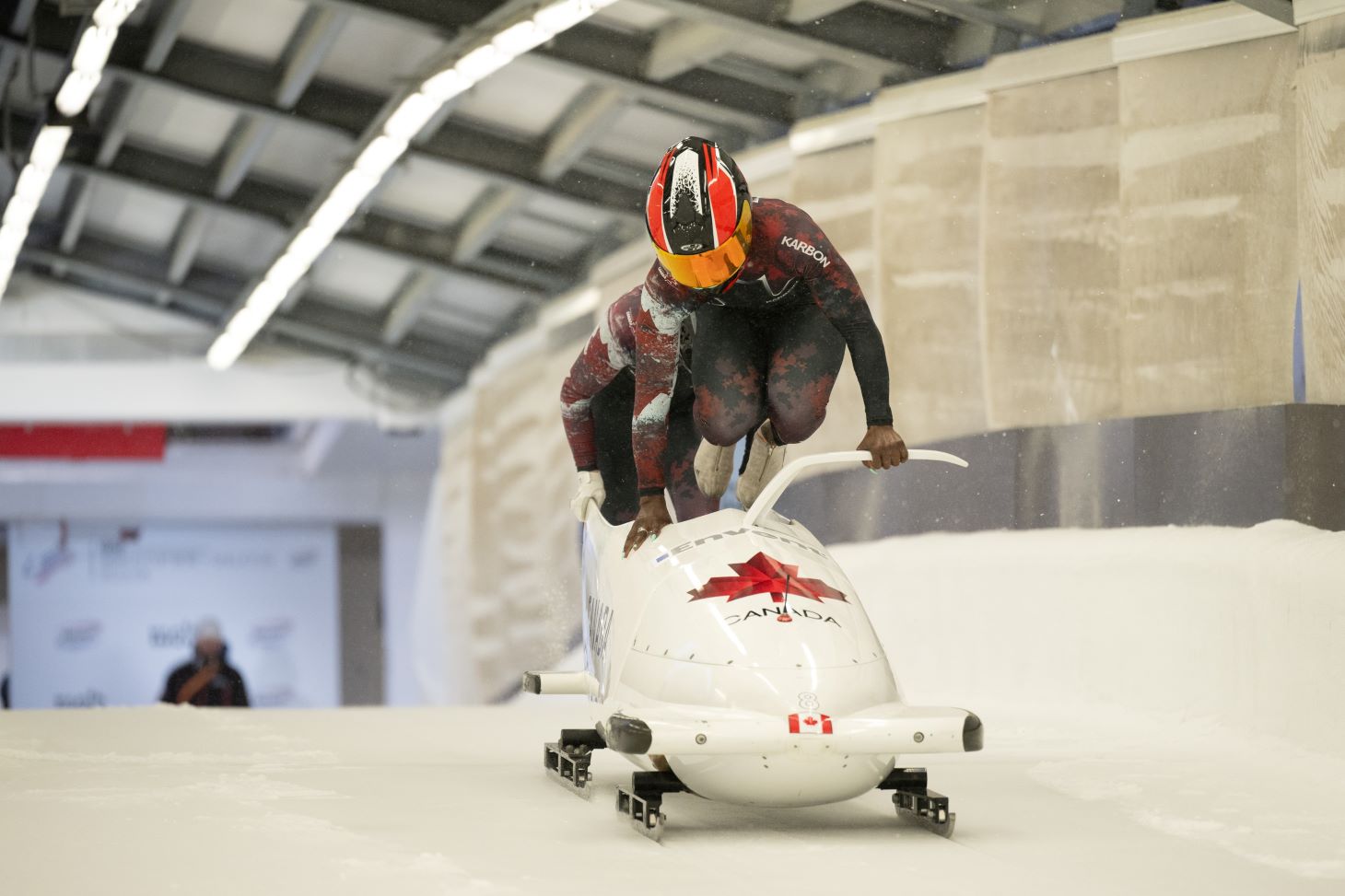
Appiah made her Olympic debut at the 2022 Beijing Winter Games as a pilot for both the monobob and two-woman bobsleigh events. She was also an alternate brakewoman at the 2018 PyeongChang Olympic Winter Games. With a silver medal finish in monobob at the World Cup last year, she is putting in the hours for a strong Olympic performance. “I’m looking to have some consistent runs, and hopefully that’ll lead to a medal,” she says.
Appiah came to bobsleigh in her early 20s after training as a shotput and hammer throw athlete in university. She recalls the moment a “switch was flipped,” when she realized she had the strength, speed, and power required for a winter sport. She says bobsleigh gave her a sense of purpose and a road to the Olympics.
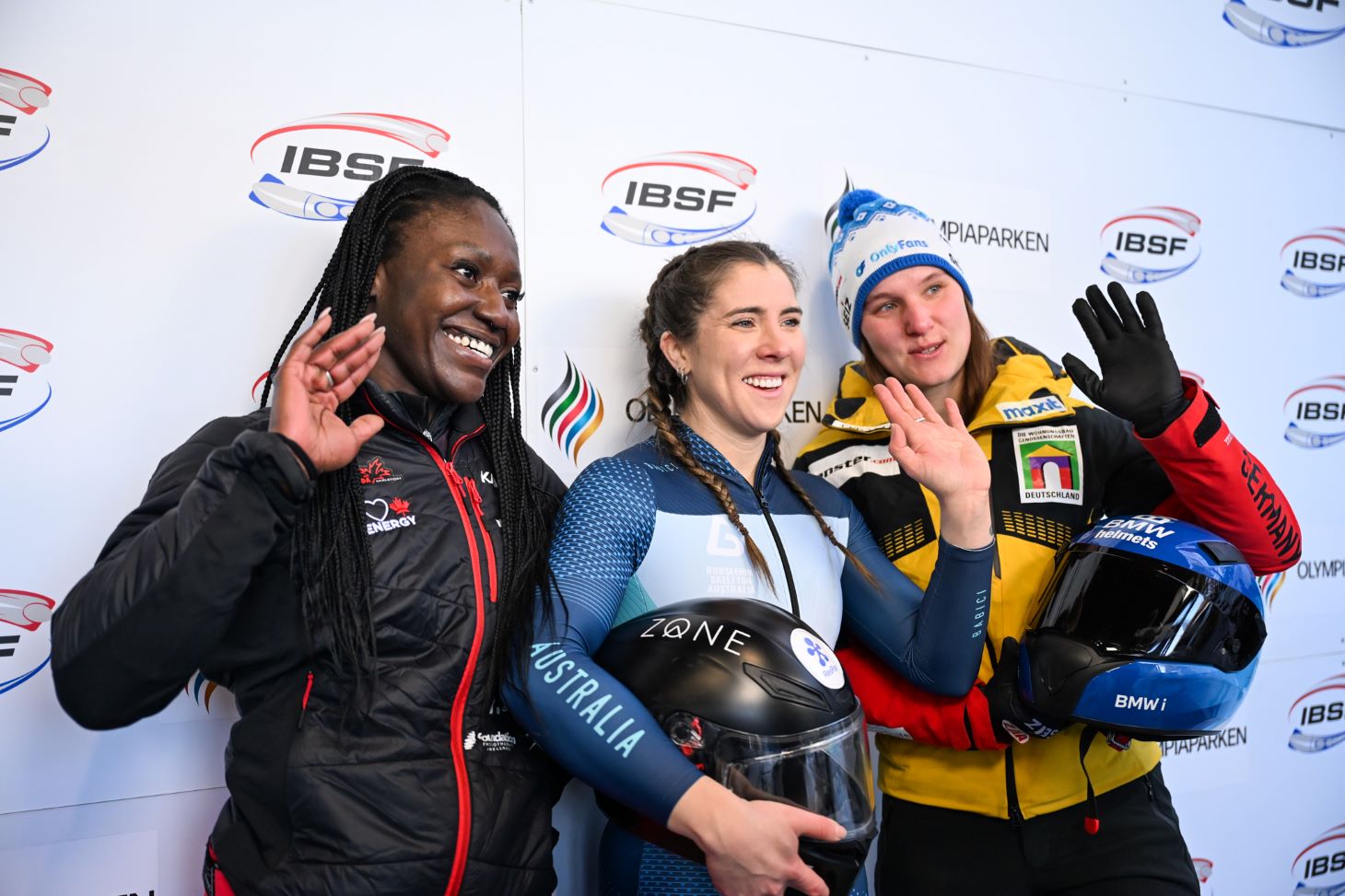
Appiah and her fellow athletes. Courtesy of IBSF-FLIKR.
Appiah’s parents immigrated to Canada in the late 1980s, and growing up there just wasn’t money for recreational sports. Even today, securing funding to continue competing is a challenge. “You hear these stories of kids starting when they’re three years old. And so it almost feels like the dream is over before you even have a chance to be cognitive of what the Olympics could be for you. Unless your parents are on the ball, it’s out of the picture by preschool,” she says. “Bobsleigh, we call it a second-career sport—a second chance to live out a dream.”
It’s an intense sport that demands both strength and bravery. “To convince anyone to wear a Lycra speed suit at -10° in a foreign country to go down, basically, an icy waterslide, takes a bit of bravery. I also think it takes a couple of screws being loose in your head. I will admit to that,” Appiah says, laughing.
Even today, after years of practice, she still gets nervous—until she starts the run, when she’s reminded why she’s there. “At the beginning of every new season, I still get butterflies. Why am I here? What am I doing?” she says. “And then, the second I get in my seat before that first corner, there’s a sense of calm that comes over, and I recognize what I’m doing. All that confidence comes back.”
The Milano Cortina Winter Olympics begin on February 6, 2026. Read more beauty stories.