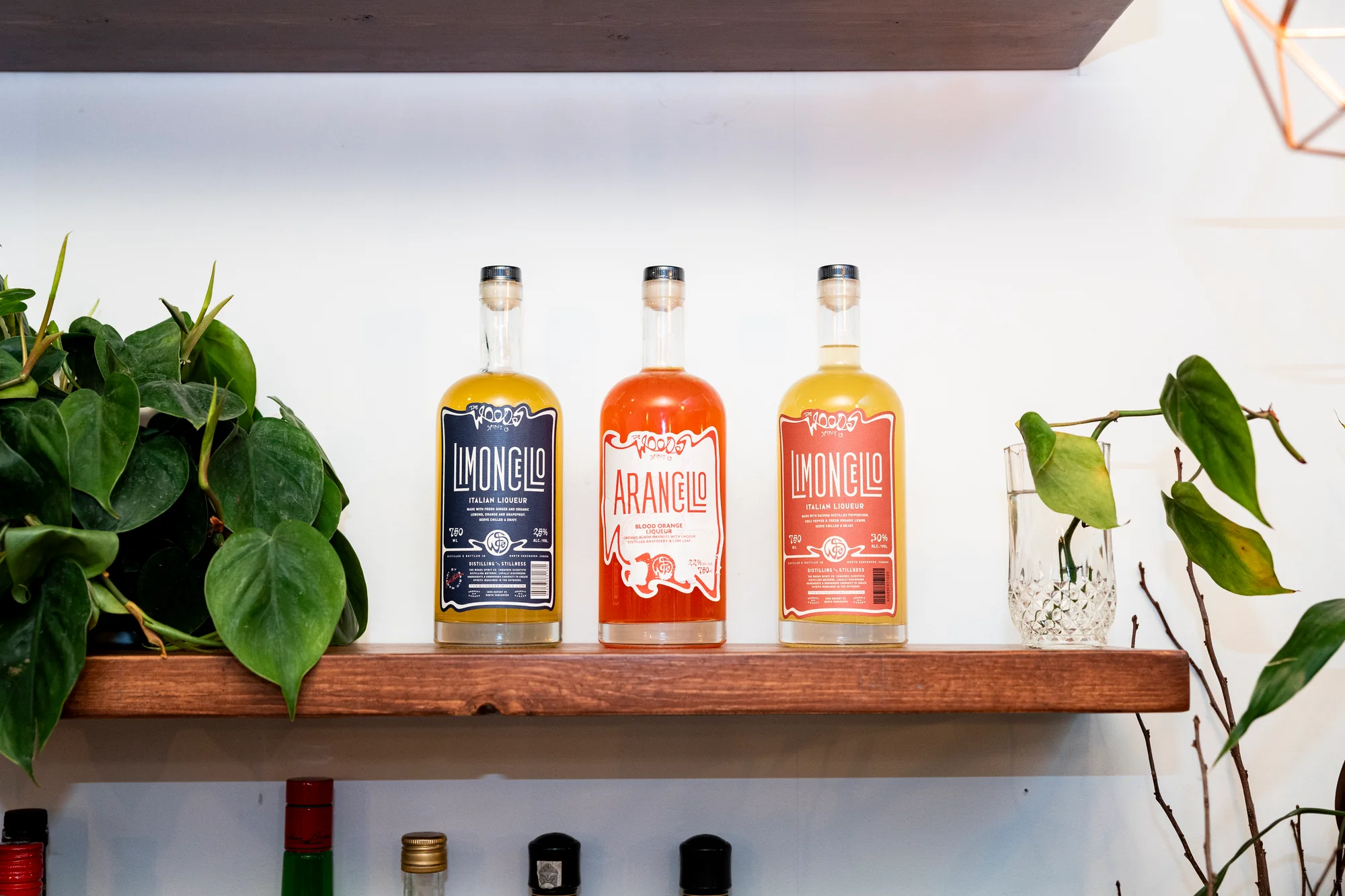


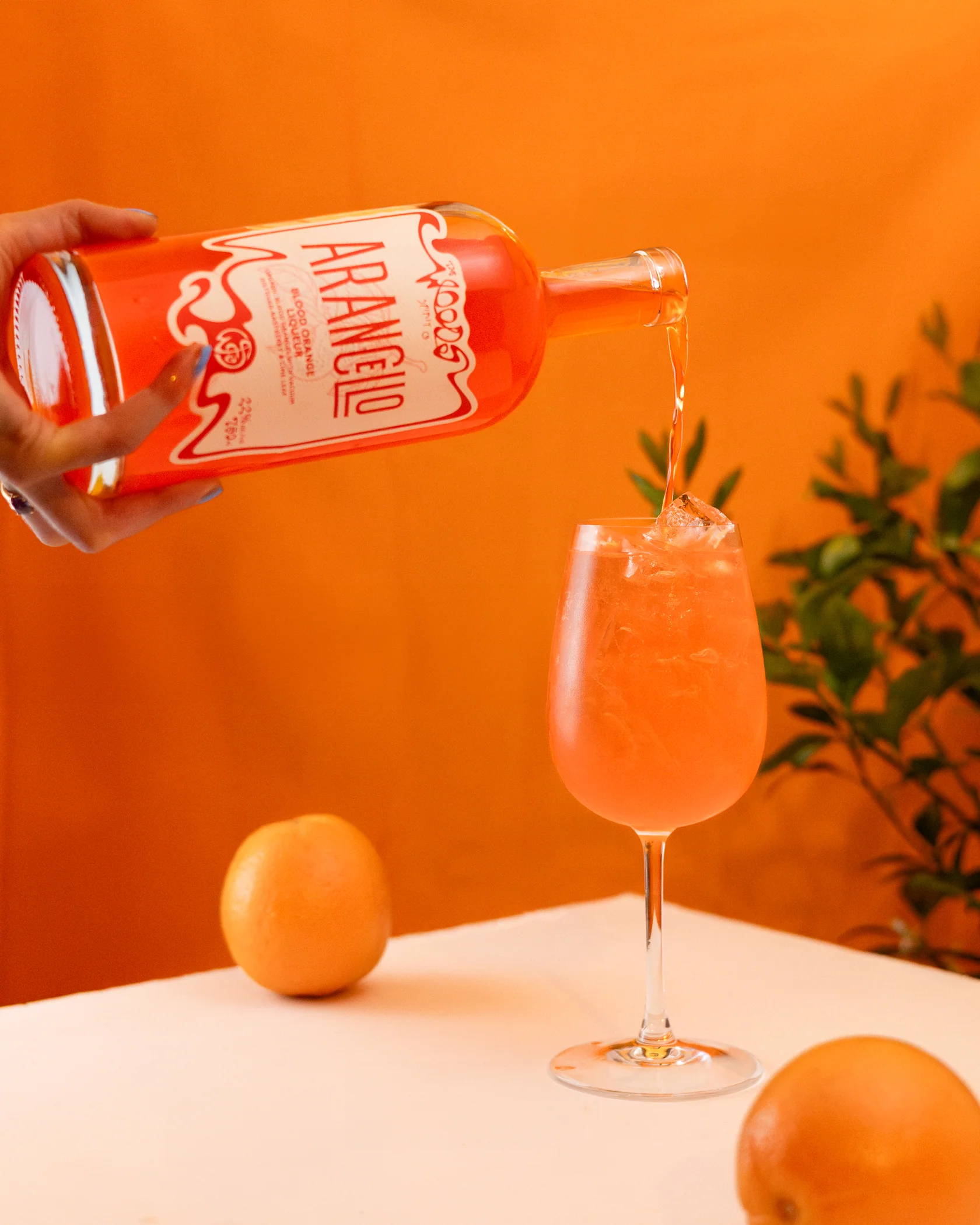
In June of last year, The Woods Spirit Co. launched a line of arancello and other citrus-infused liqueurs in keeping with the North Vancouver distillery’s Italian-inspired identity. The decision didn’t come from a boardroom or market research but through a more intimate and organic process. As owner and president Celia Chiang describes it, the idea evolved out of a conversation with her daughters.
“They said, ‘Mom, why do you make everything so bitter?’” she recalls.
She won them over—the blood orange liqueur especially stood out. “They’ve been telling their friends,” Chiang can now boast.
Chiang took over at The Woods in late 2023. She had previously owned flower shops in B.C. but sold those to spend time with her kids and take a break before setting off on her next venture. That was just before COVID-19 hit. Coming out on the other end of the pandemic, she started on the path that eventually led to The Woods.
“After COVID, I just realized that there was a bit of a gap in my learning, in terms of business and entrepreneurship, so I went back to school at almost 50, to SFU, and got my executive MBA,” she recalls. From there, she followed a previous interest in distilling and enrolled in a class with Sons of Vancouver, another North Van distillery but with a focus on whisky. That’s where she was turned on to The Woods Spirit Co., which she immediately loved. It would have been a dream to get involved somehow, she says.
As luck would have it, The Woods went up for sale soon after, and Chiang was able to make that dream a reality.
The distillery operates on a small scale, and products rotate into and out of production. Chiang is able to add a personal touch, as with crowdsourcing ideas from her family, but she’s also committed to the distillery’s Italian identity. “I think we will evolve, keeping some of those really amazing, wonderful traditions and products that we’ve had in the past but evolving some new types of products,” she explains.
The degree of competition, especially from large conglomerates with seemingly infinite resources, was a surprise to Chiang, but she talks like someone who is more than up to the task, and who welcomes the extra room to experiment. “Because we’re limited in human and financial resources, we have to think outside the box, but we also have to work within our box,” she says. “How can I embed a little bit of myself into it,” she muses. “I envision potentially some Asian heritage will move into some of our products, or femininity, because in this distillery world, it’s still very male dominated.”
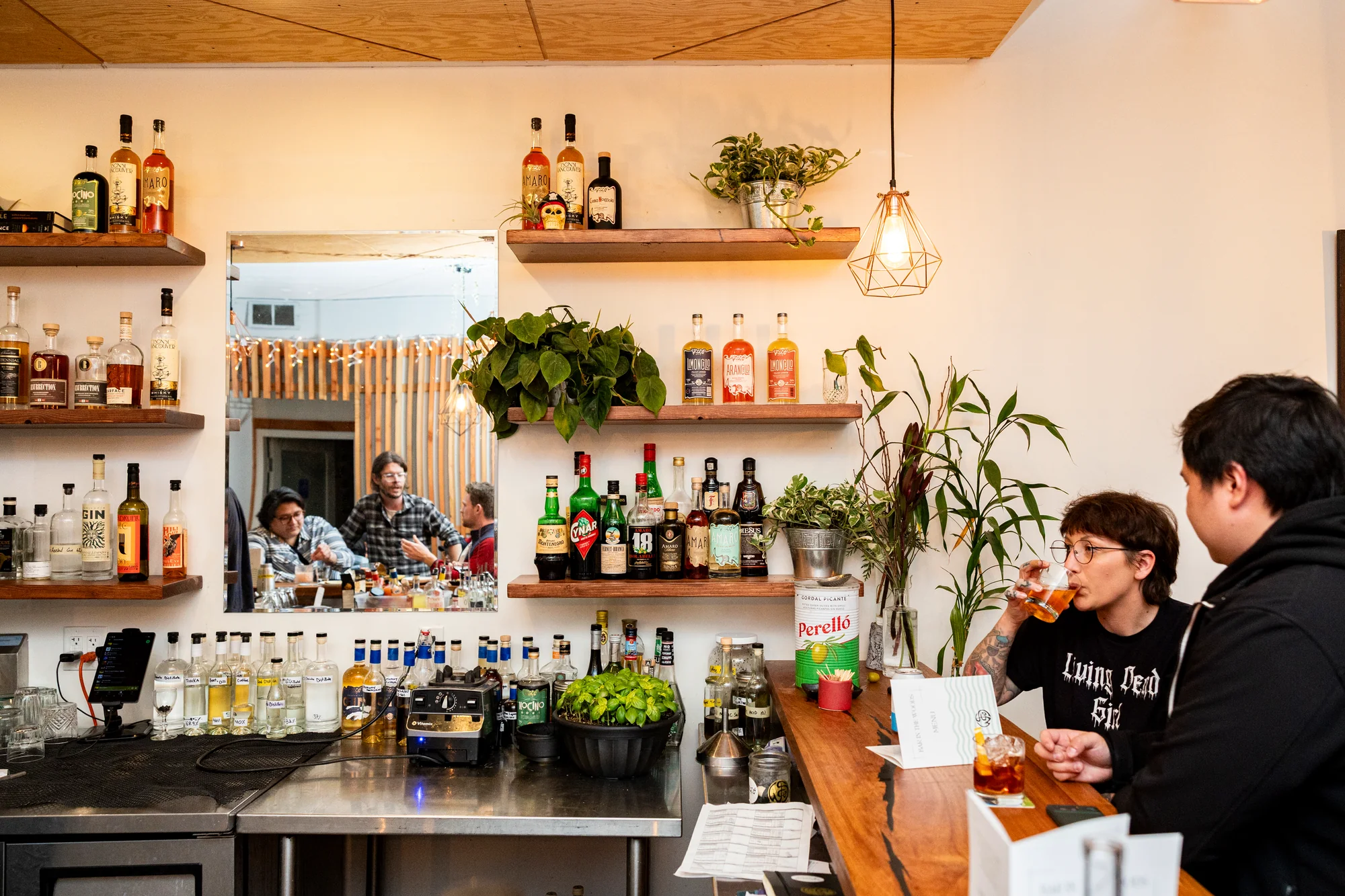
The Bar in The Woods at The Woods Spirit Co.
One way The Woods is leading the charge is by using vacuum distillation in making its products. Chiang gets excited when talking about vacuum distillation, and it’s easy to understand why. By reducing atmospheric pressure, vacuum distillation dramatically lowers the boiling point of compounds normally distilled at ambient pressure, meaning that edible ingredients (such as botanicals) aren’t blasted with heat.
It’s a process with many laboratory and industrial uses, but The Woods is one of only a handful of distilleries in the world that use it. The vacuum still had to be custom built from a bespoke design.
“When you’re boiling at 38 to 40 degrees, it really maintains the integrity of the botanical organic materials, and we’re using all natural botanicals for everything that we make,” Chiang explains. “You know, rhubarb, blue bitter orange, gentian, these types of things, when they’re boiled at low temperatures, their flavours are much more vibrant and fresh and punchy.”
Chiang serves me samples of The Woods gin made using both a traditional still and the custom vacuum still, and the difference is immediately noticeable. The vacuum still produces something crisp and light, with complex citrus and floral notes next to the more muted and slightly acidic flavour of its counterpart. It must be a thrill to experiment with flavours using such a tool.
The smaller production scale also comes with its drawbacks, no doubt. Chiang notes that the support of independent retailers such as Legacy Liquor Store in the Olympic Village neighbourhood is crucial to keep prices competitive. Where BC Liquor imposes huge markups even on smaller, local producers, she can keep margins more manageable with some indies and by selling directly to customers at local farmers markets.
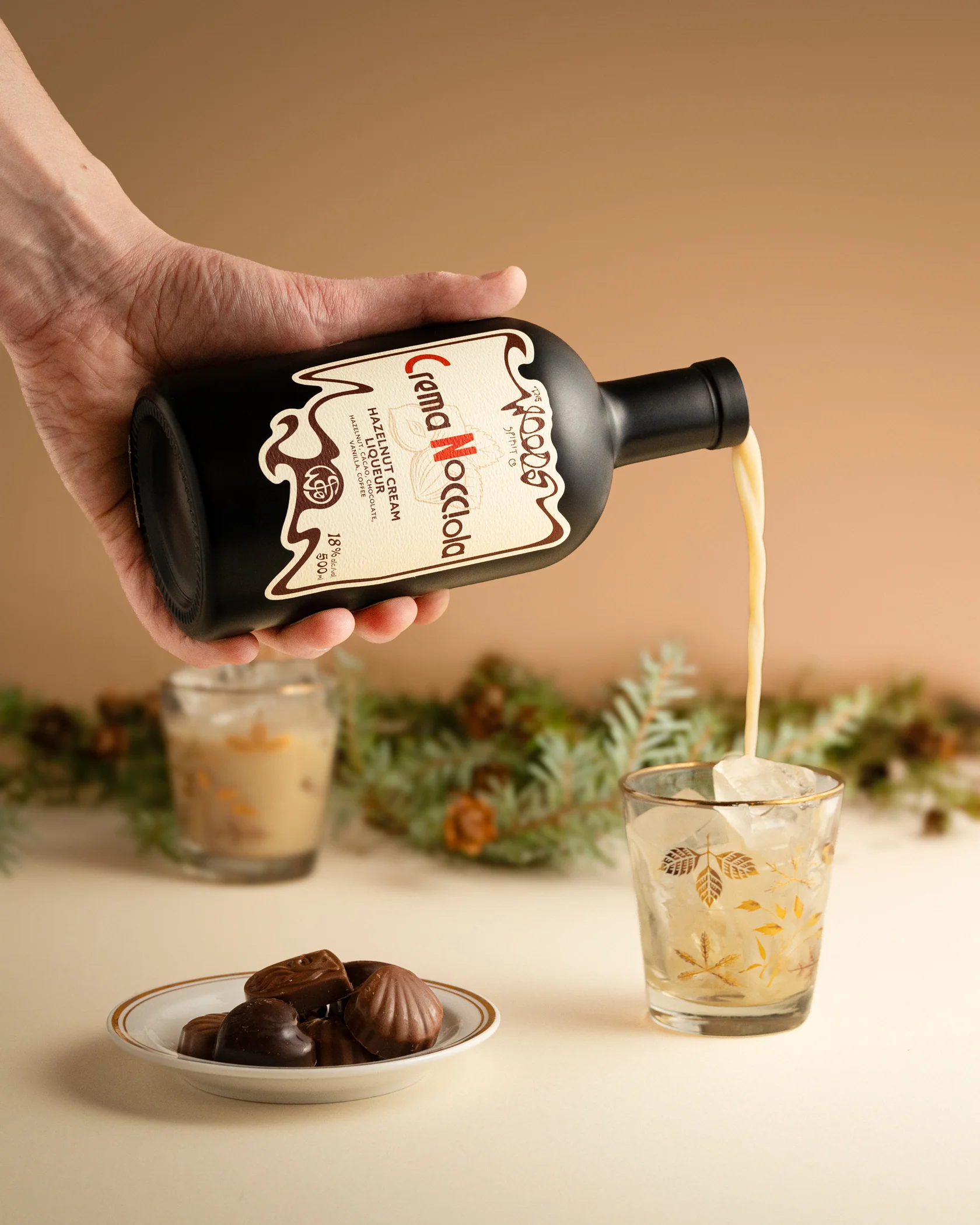
That community spirit comes through in other ways, from sourcing ingredients from local producers and vendors as much as possible to partnering with other businesses as well as nonprofits at community events across the Lower Mainland. The Woods’ Crema Nocciola, a hazelnut cream liqueur, for instance, is made with hazelnuts from the Fraser Valley, coffee distillate from Moja’s Coffee in North Van (a few steps from The Woods distillery), and oat milk made from Canadian oats. Chiang also points to recent collaborations with Reduxwood to raise money for men’s mental health, and with Cork It Wine Making on a women’s event.
By staying small and investing in grassroots community initiatives and local sourcing, Chiang can appreciate that her approach translates to a unique product and valuable connections with both partners and customers.
“You know people really enjoy supporting a Canadian company,” she says. “Beyond that, it’s like, okay, well, we’re supporting this product and this business, but we’re also supporting the hazelnut farm and we’re also supporting a coffee roastery.… It’s not necessarily the distillery, but it’s other not-for-profits and other businesses.”
Read more business stories.