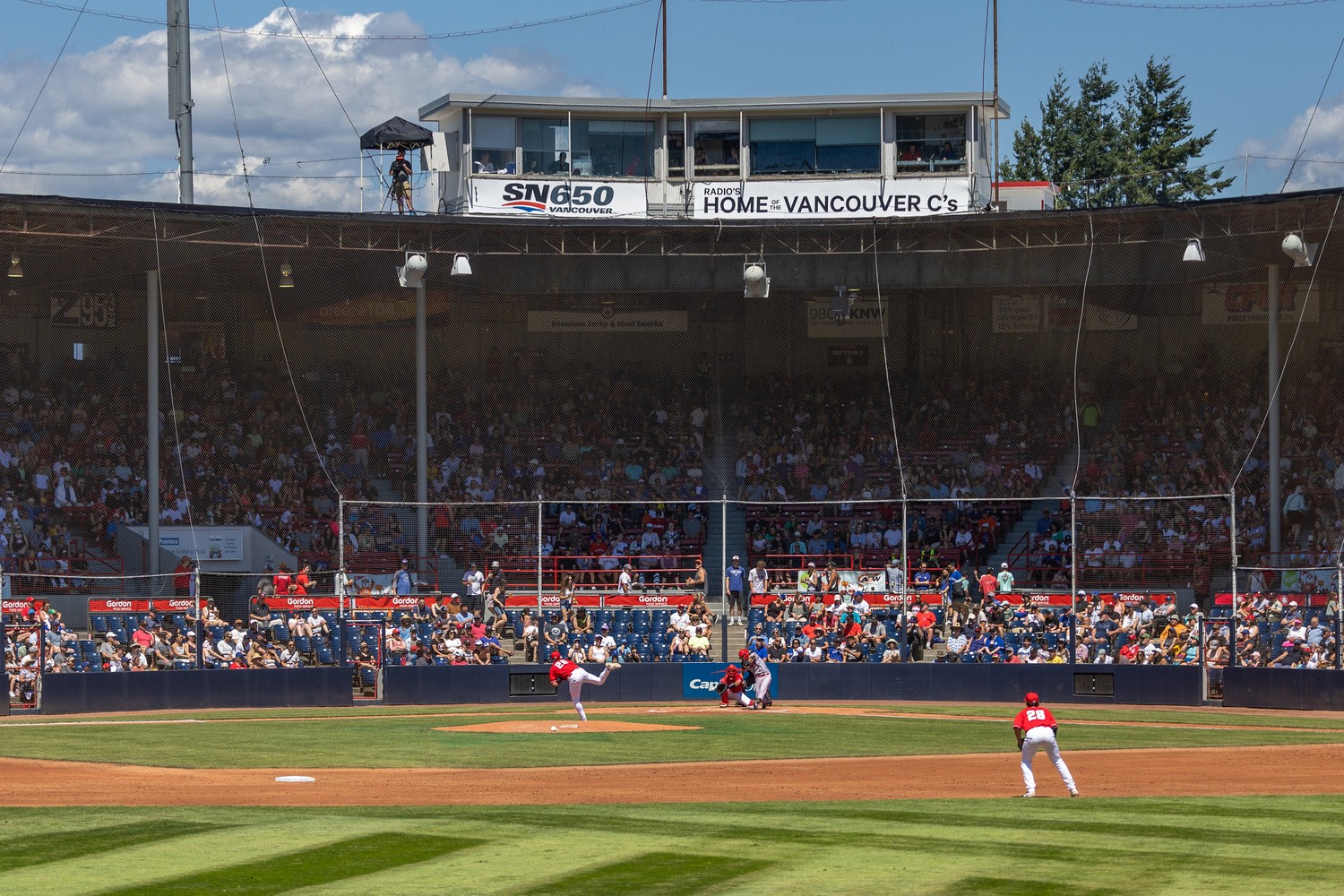


Long lines of cars blocked the side streets of Vancouver’s Riley Park neighbourhood surrounding the new baseball stadium. More than 8,000 fans—the largest baseball crowd in city history—filled every seat and even occupied the aisles. Hundreds more who were turned away sat on the grassy slopes of Little Mountain, while countless others listened on the radio. Top tickets cost $1.35 ($16.68 today), and a child could find a spot in the bleachers for just 15 cents ($1.85). Some children formed a knothole gang, peeking through gaps in the boards surrounding the outfield.
Vancouver mayor Fred Hume threw a ceremonial first pitch. Colour guards from the RCMP, the Canadian Army, the Royal Canadian Navy and the Royal Canadian Air Force marched across a field of grass as green as a shamrock, though players would later complain the ground was mushy and soft.
This was the first game at what is now called Rogers Field at Nat Bailey Stadium, to use the corporate name for what everyone calls The Nat. The field turns 75 this month, a birthday it was never expected to make.
Today, it is home to the Vancouver Canadians, a Toronto Blue Jays farm team populated by young men, almost all born after 9/11, from the United States and Latin America. Most will never make the major leagues. But on occasion, a player goes from pitching before a few thousand in Vancouver to standing on the mound in the World Series, a journey that took pitcher Trey Yesavage just five months to complete last year.
To mark the ballpark’s 75th birthday, every Tuesday home game during the season includes special celebrations. The players wear uniforms with “The Nat” in red script across the chest and a shoulder patch featuring the team’s anniversary logo. It is a rare instance when a ball club celebrates its home field. And what’s a baseball game without a hot dog? Wieners cost just 75 cents at those games. “Trouble for my waistline,” team publicist Tyler Zickel admits.
In 1951, when the stadium opened, hot dogs cost 20 cents, about $2.37 in today’s money. They sold a quarter-million each season.
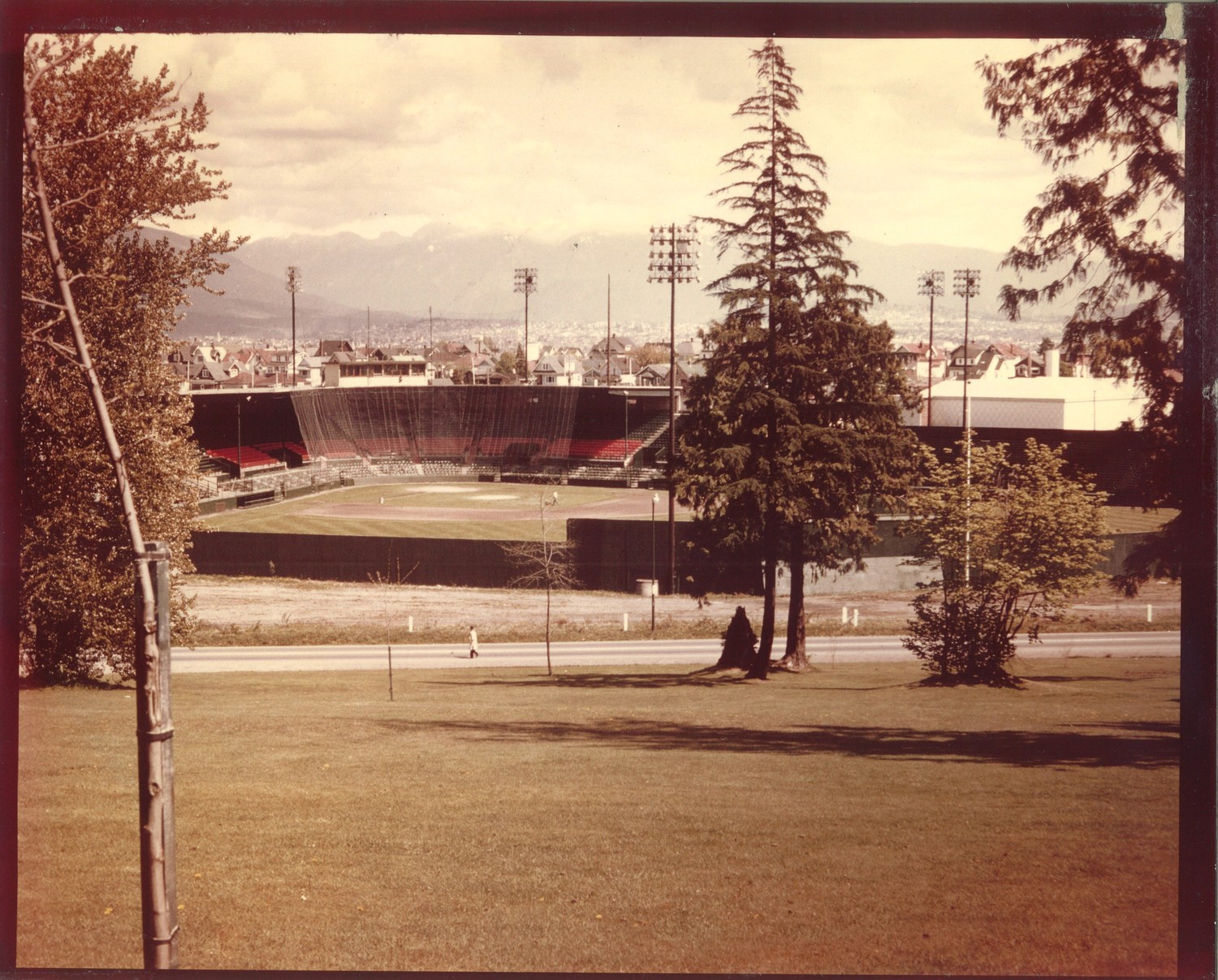
Image courtesy of BC Sports Hall of Fame.
The venerable ballpark turns its back on the city. To approach the entrance is to look on a concrete bunker, unwelcoming save for the handful of doors. It is only after one passes through those portals that the true wonder of the place is evident: a verdant lawn, a diamond path of red-brown dirt; pristine white pillows serving as bases; chalky foul lines extending outward, one presumes, toward infinity; and a five-sided plate serving as a guiding white star.
To sit in the stands and look up from the field is to gaze on the wonders of Queen Elizabeth Park, the gentle Little Mountain in whose lee the ballpark rests, with a hill where once children and other cheapos could watch a game for free, though now the view is blocked by dense foliage.
The stadium is an oasis in a city of glass skyscrapers, home to a pastoral game from the 19th century, now played under the unblinking eye of camera systems capable of determining spin rates and launch angles through parabolic arcs and advanced calculus. Baseball has come a long way from “hit it where they ain’t.”
And yet in a city whose history has been defined less by the people who live there than by the price of land, The Nat is a rare survivor from the less frantic, less wealthy, more working-class Vancouver of yore. It was built three years before Empire Stadium and has already survived it by three decades.
When the ballpark first opened its doors, the story was covered by reporters from three daily newspapers, including the scrappy News-Herald, which failed to survive the decade. Everyone read a newspaper. The city’s first television station had yet to open. (Two years later, CBUT began by airing five hours of daily programming.) Downtown was a blaze of neon signs heralding department stores such as Woodward’s, movie theatres like the Pantages, and diners including The Only Seafood. All now long gone.
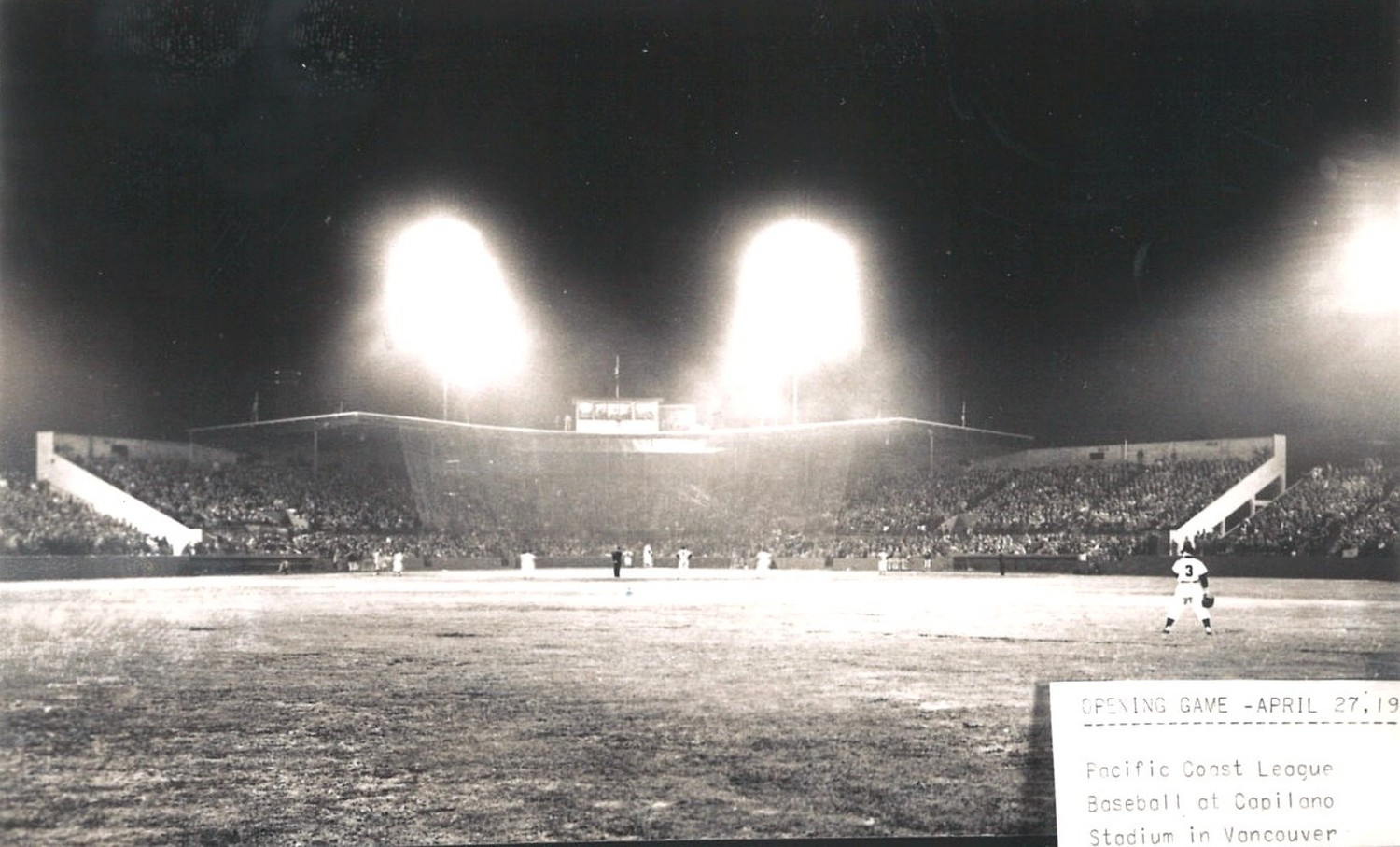
Image courtesy of BC Sports Hall of Fame.
In Vancouver, land is king. The city’s first real ballpark was Recreation Park at the corner of Homer and Smithe. A large wooden grandstand was built on land leased from the Canadian Pacific Railway. Warehouses and a railway shunting yard on the north side of False Creek were just beyond the outfield.
When Bob Brown acquired the Vancouver Beavers baseball team, he decided he did not want to continue paying rent and got an option on a city block at West Fifth Avenue and Hemlock Street on the other side of False Creek. He cleared the land by hand, walking around with dynamite in his back pocket, which he used to clear stumps. Athletic Park would serve as the home of professional baseball in the city for almost four decades until the city decided to build a new Granville Street Bridge. By then, the park and baseball team had been bought by Emil Sick through his Capilano Brewery. The team was known as the Capilanos and their park as Capilano Stadium. (A likely apocryphal story is told about the brewer once introducing himself to a fellow businessman: “I’m Sick, of Capilano Beer.” “Me too,” the other man responded.) A proposed Hemlock on-ramp and the swing of West Sixth into West Fourth under the bridge meant a new road was to run through the middle of the outfield.
After several years of wrangling, a site for the new park was chosen. Riley Park was originally offered, but the five-acre site was too small. A 15-acre triangle of undeveloped brushland owned by the CPR was obtained and a complicated deal arranged whereby the brewery would build a stadium, and over time the land and stadium would revert to the city’s park board.
It is hard today to imagine great swaths of unused land in the heart of Vancouver, but such was the case at what is today the intersection of 30th Avenue and Ontario Street.
The construction of what was originally billed as New Capilano Stadium was delayed because of a postwar shortage of building materials, which were desperately needed for housing.
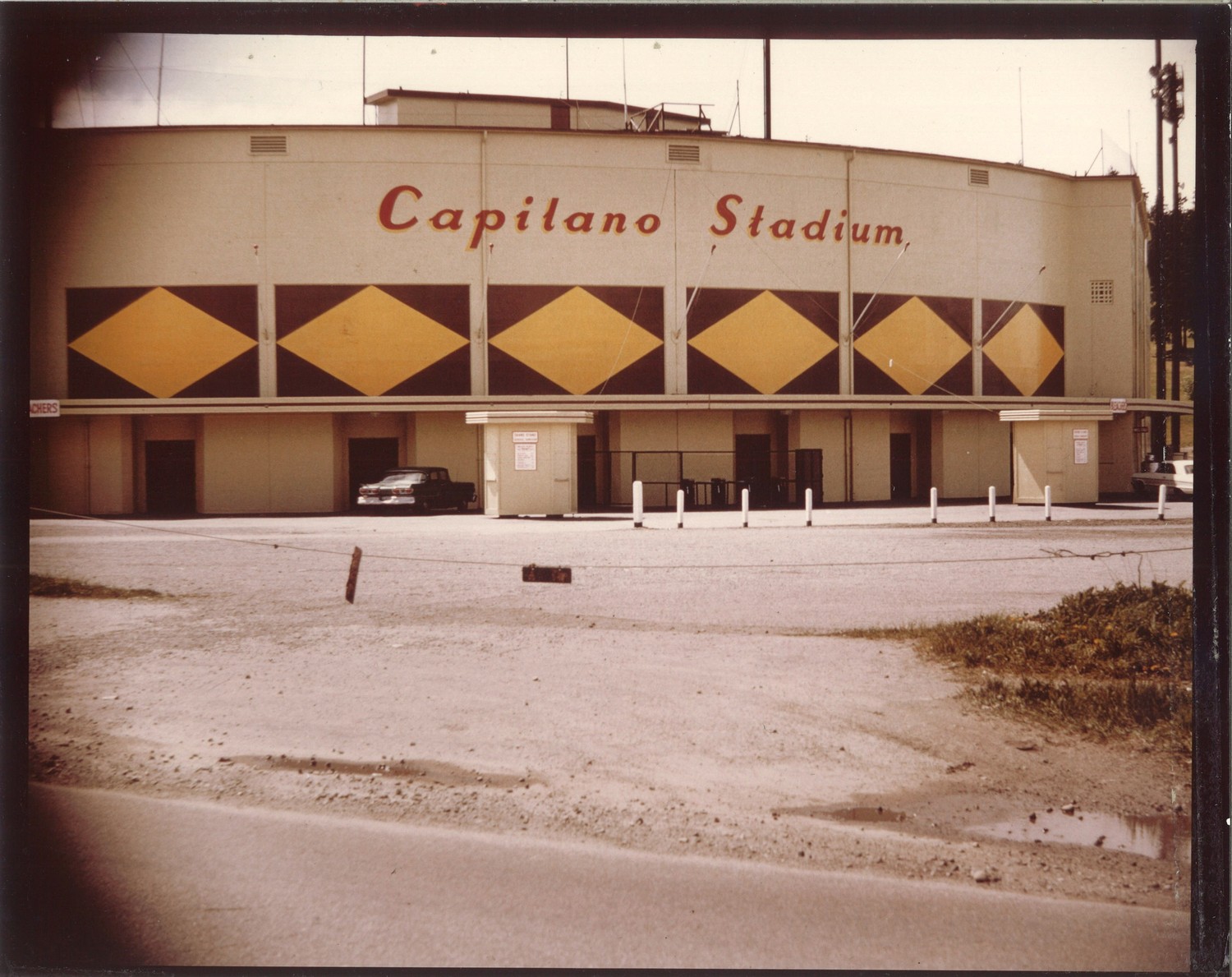
Image courtesy of BC Sports Hall of Fame.
The new stadium, modelled on Sick’s Stadium in Seattle, finally opened on June 15, 1951. The brewery hoped to lure a Pacific Coast League franchise to the city. The Coast league was ranked just below the majors and was seen by some owners as a potential third major league until the New York Giants moved to San Francisco and the Brooklyn Dodgers to Los Angeles after the 1957 season.
Coast league president Clarence (Pants) Rowland attended the opening game at the new park, his first visit to Vancouver in more than four decades. (He got the nickname because he once tripped while running the bases while wearing his father’s hand-me-down trousers, which were too big for his frame.) His concern then was not the Giants and Dodgers, but ABC, CBS, NBC, and DuMont, as the fledgling technology of television became a sensation.
“It’s not televising the actual ball games that hurts,” he said. “It’s the competing programs—Howdy Doody, Arthur Godfrey—that keep customers away from the ball parks.”
Nine entire minor leagues had folded in the previous two years, a trend that would continue through the 1950s. It was in these unpromising circumstances that the new stadium began business on June 15, 1951.
The pregame ceremonies with all those colour guards and speeches took more than an hour. “Several cities in the major leagues would love to have this stadium,” Sick told the crowd, which roared its approval.
“Years of privation at the old Fifth and Hemlock shanty had made them forget that comfort and beauty could mingle with baseball,” Dan Eckman wrote in the Vancouver Sun. The players patrolled infield grass that had been carefully moved from the old park to the new one, cut into long strips and rolled up like green jelly rolls.
For the record, the hometown Capilanos defeated the Salem Senators 10-3.
In 1954, the Capilanos won the Western International League championship. The league promptly folded. Average attendance over the season: 898 paying customers.
After sitting empty for most of a year, during which high-school football teams turned the pristine turf into a quagmire, Vancouver at long last got a prized Coast league franchise. Clarence (Brick) Laws, a wealthy California theatre owner, moved his Oakland Oaks franchise north, only to discover the field had a serious drainage problem. The standing water led one witty headline writer to describe the park as “Laws’ Lagoon.”
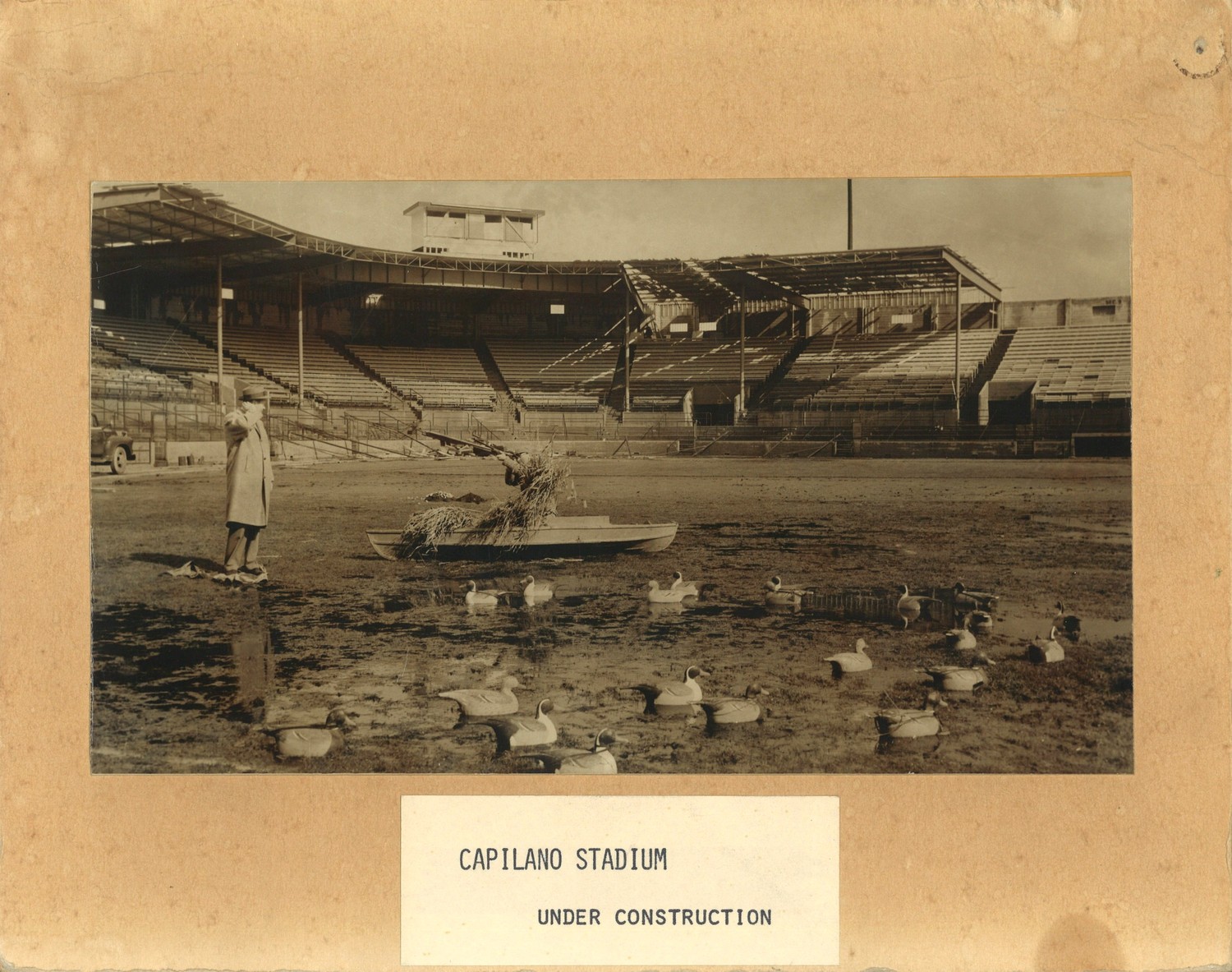
Image courtesy of BC Sports Hall of Fame.
The Vancouver Mounties struggled at the gate and on the field, though several future major-league stars played here, most notably third baseman Brooks Robinson. The infielder suffered a near career-ending injury when his arm was impaled on the top of a chain-link fence surrounding the field. Quick-thinking trainer Harold (Doc) Younker raced to get a stepladder so he would have leverage to raise the injured arm without causing further damage. Robinson, nicknamed the Human Vacuum Cleaner, went on to enjoy a Hall of Fame career with the Baltimore Orioles.
A young radio man named Jim Robson called games at the stadium before going on to become a legendary hockey broadcaster. When the baseball team was out of town, he and a sound engineer provided a play-by-play account based on wire reports of every pitch with recreated sounds of the game.
The Mounties survived thanks largely to Nat Bailey. As a young man, he sold peanuts in the stands at Athletic Park. His singsong call for hot dogs: “A loaf of bread, a pound of meat, and all the mustard you can eat.” His rich tenor was so mellifluous they called him Caruso Nat. He also served as an announcer at baseball games and boxing matches in the days before electric voice amplification was common. Bailey expanded his park offerings by selling food and drink from a wagon overlooking the Fraser River and the Strait of Georgia. When a patron asked him to hire a girl to bring food to his car, Bailey turned the idea into a drive-in restaurant. The restaurateur’s White Spot became a symbol of Vancouver. When Laws sought to move the Mounties, Nat Bailey put up $25,000 of his own money to jump-start the creation of a local syndicate of owners.
Bailey needed all his entrepreneurial skills to keep the team afloat. He sold shares in the team to members of the public, including some to Premier W.A.C. Bennett, and constantly stumped for ticket sales, covering deficits when necessary. The Mounties moved away for good after the 1969 season. (The team had been a farm club of two major-league expansion franchises, the short-lived Seattle Pilots and the Montreal Expos.) The city-owned park slowly deteriorated without a professional baseball tenant. The wooden bleachers were auctioned off as fencing. It seemed doomed until sports entrepreneur Harry Ornest got a Coast franchise a few months after the death of the White Spot’s founder. The park board renamed the park after its old saviour.
With backing from Molson Brewery, Ornest called his team the Canadians, which, coincidentally or not, was the name of the brewery’s bestselling brand. The uniforms, coincidentally or not, used the same colour scheme as the brand, making the players look like nine beer cans in the sun.
In 2007, two friends, Jake Kerr, who made a fortune in forestry, and Jeff Mooney, who did the same through A&W Restaurants, bought the Canadians. They spearheaded physical improvements to the park, succeeding in preserving it from the wrecker’s ball. The combination of a repaired park, better food and drink options, and such entertainments as fireworks nights, “Nooners at the Nat,” and on-field races featuring anthropomorphic sushi pieces made C’s tickets, once deeply discounted, a hot item.
With ever more movies and television programs being shot in Hollywood North, The Nat became a popular venue for film. Notably, retired baseball star Reggie “Mr. October” Jackson appeared in an episode of MacGyver, appearing in a Season 6 episode titled “Squeeze Play.” Standing in the third-base dugout, Jackson says, “I think we should listen to MacGyver.” Wiser words have likely never been spoken on a diamond.
When Sarah McLachlan was told by music industry mavens that no one would attend a concert with two women at the top of the bill, she defied their wisdom by organizing an all-woman concert lineup. The inaugural Lilith Fair concert was held at The Nat, the launch of a historic tour.
If it survives, The Nat will mark its centenary in 2051. Two even older baseball parks in the majors—Wrigley Field in Chicago and Fenway Park in Boston—are still in use. Here’s hoping Vancouver fans will be able to celebrate the summer game in a beautiful, throwback ballpark for many more seasons to come.
In case anyone wonders, the former swampy brush land on which the stadium sits, once costing no more than an ordinary city bungalow, is valued by BC Assessment as worth $208,339,000. That’s not peanuts.
Read more community stories.