

Excerpt from Vitality: Iconic Images, Hidden Stories edited by Carol Lee, Susanna Ng, and Ramona Mar, published by Vancouver Chinatown Foundation, a companion to the exhibition of the same name at the Chinatown Storytelling Centre, running through spring 2026.
Vancouverites, and not just Chinese Canadians, treasure their Chinatown because it is an integral part of the city.
As one of the city’s oldest neighbourhoods, it has roots in the sawmills and transcontinental railway that gave rise to a major port city. Vancouver became Canada’s West Coast gateway, with silk and tea from Asia being transshipped to the East Coast for markets beyond.
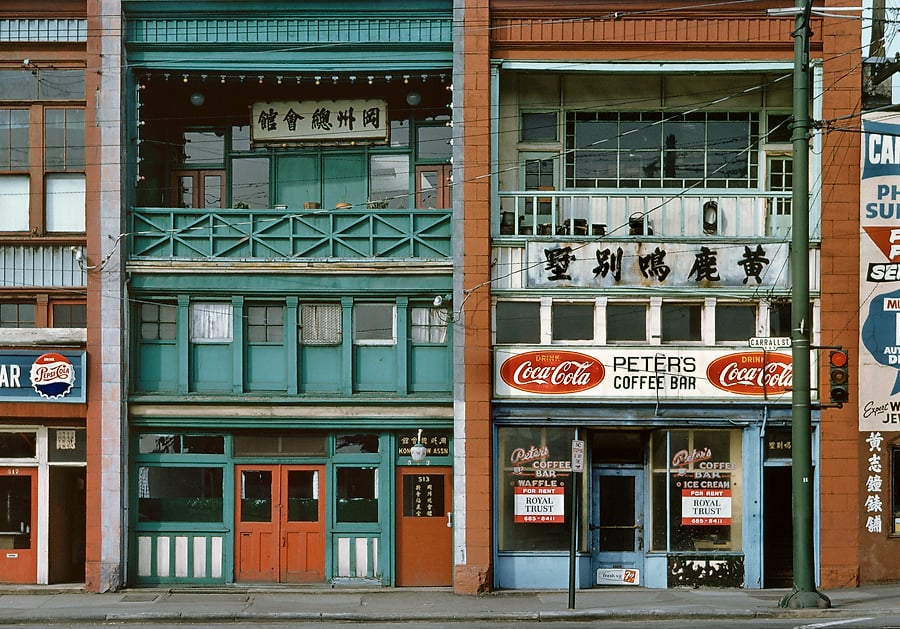
The weathered buildings of Chinatown have witnessed more than a century of immigration, struggle, and change. The district arose from grave limits placed on Chinese Canadians by an unwelcoming society. But those Chinese people grew into many generations and created a thriving world that embraced housing, families, entrepreneurship, and mutual aid. Over the years, they spearheaded many projects to enhance the community’s prospects. Wars, economic depression, urban renewal, and the pandemic passed through.
This long and rich history also drives the mission of the Chinatown Storytelling Centre: to collect the stories and memories embedded in the community that it serves. The deeds of prominent leaders are no less important than the activities of ordinary individuals who lived and worked through the many versions of “Gold Mountain” that had attracted and sustained them with opportunities.
Although I was raised on Pender Street, it wasn’t until my university days that I came to appreciate Chinatown. By then, you couldn’t keep me away. It became my second home, where I felt a keen sense of belonging and wanted to contribute. I thought to tell stories about Chinatown that went beyond narratives of racism, in which Chinese Canadians were always seen as victims.
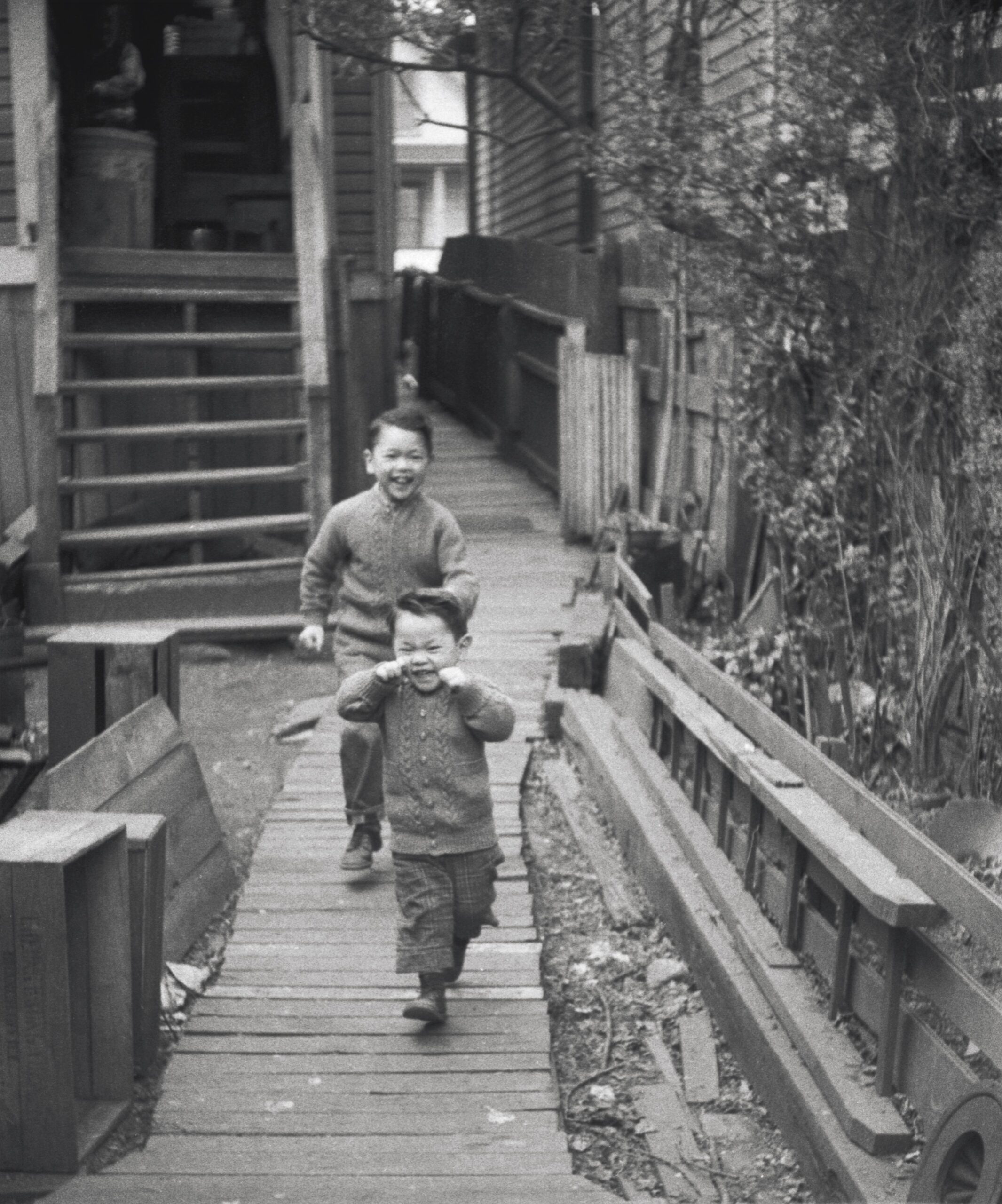
Paul and Vernon Yee, 1959. City of Vancouver Archives, 2008-010.3009.
These days, on every trip to Vancouver, I visit Chinatown because it is a solid connection to the past and a clear declaration that a sense of community still exists. As time and history march on, there are always more stories that need to be recorded, papers that must be archived, photographs to be captioned, partnerships to be undertaken.
I first saw Fred Herzog’s photographs in 2011 at the National Gallery of Canada in Ottawa. I was thrilled then to see how he had captured the faces and places of my childhood. His work also reminded me of how Chinatown’s next-door neighbour, “Skid Row,” now the Downtown Eastside, had once been part of the downtown core. Hastings Street was home to bustling retailers like Wosk’s, Army and Navy, and Woodward’s. When cold weather put an end to the season’s work at logging camps and salmon canneries, unemployed workers (Chinese, white, Indigenous, and others) would come spend the winter in the two districts, boosting its population and commerce.
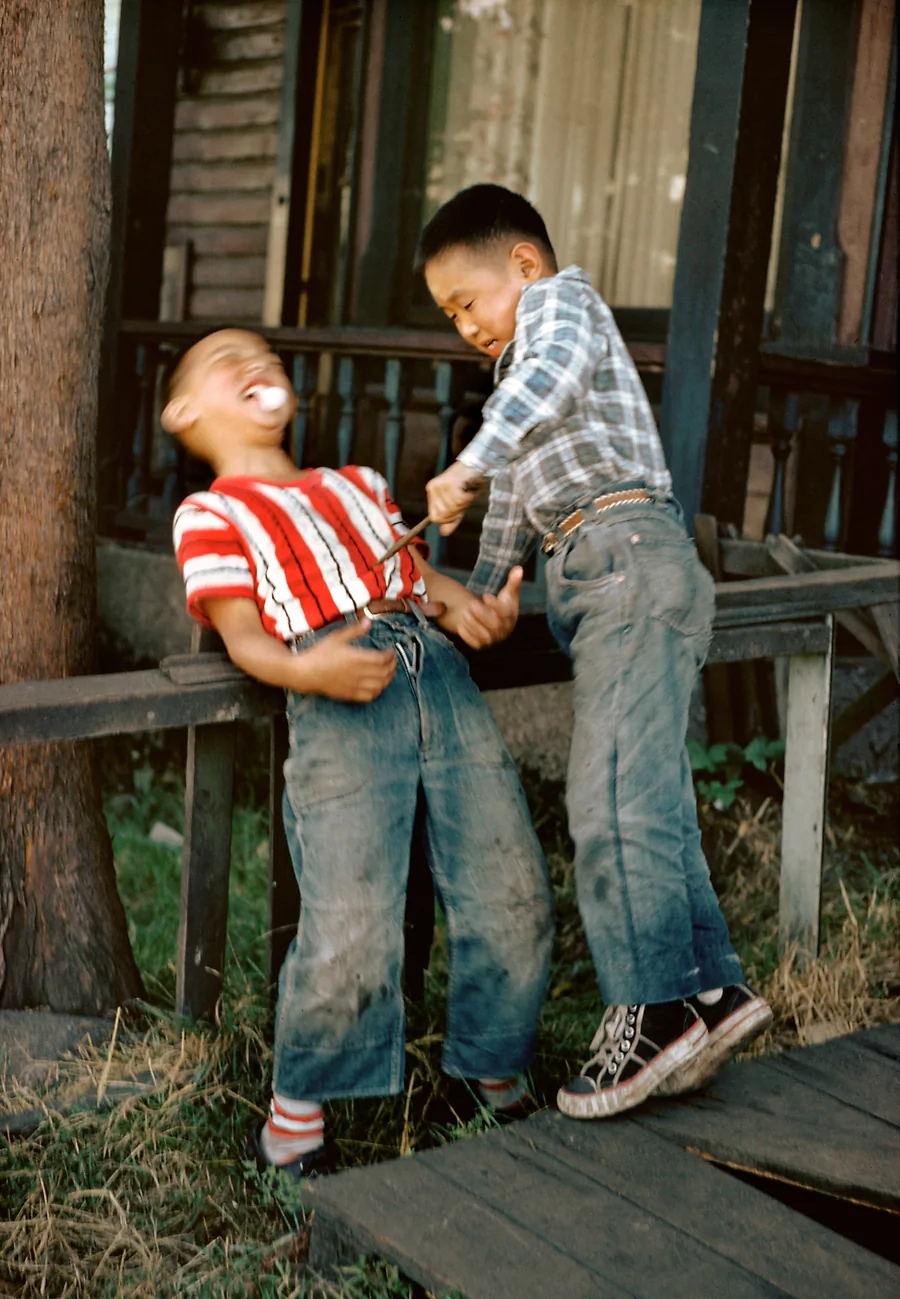
Fred Herzog, His Last Bubblegum, 1968. Archival pigment print. Courtesy of Equinox Gallery and the Estate of Fred Herzog. © The Estate of Fred Herzog, 2024
I loved seeing these photographs in colour. They made Chinatown all the more real to me, in memory and in real life. This book is a great way to travel back in time, through unique images and layers of stories. They add precious links to the chain of history to which we are all attached.
I hope these photographs give you new insight into these two neighbourhoods and make you want to see them restored to good health.
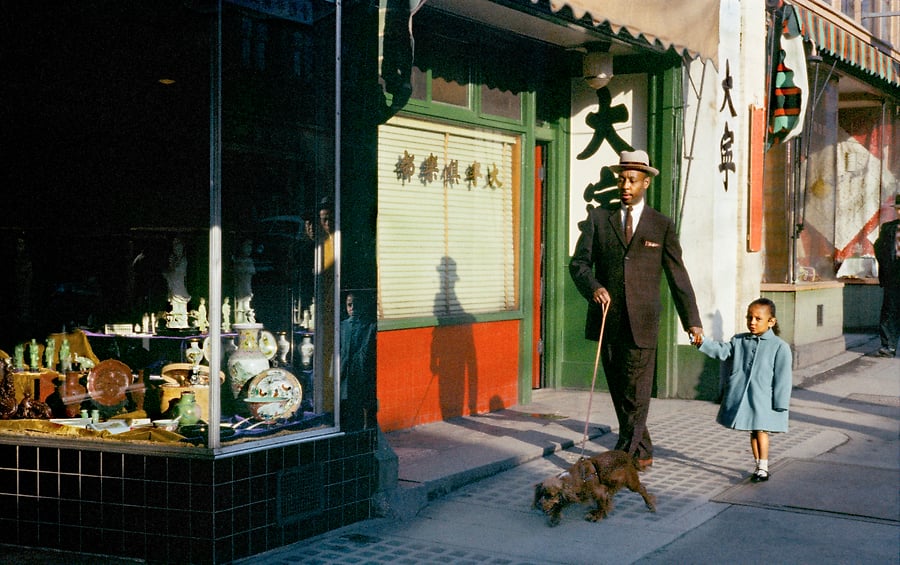
Fred Herzog, Black Man Pender, 1958. Archival pigment print. Courtesy of Equinox Gallery and the Estate of Fred Herzog. © The Estate of Fred Herzog, 2024
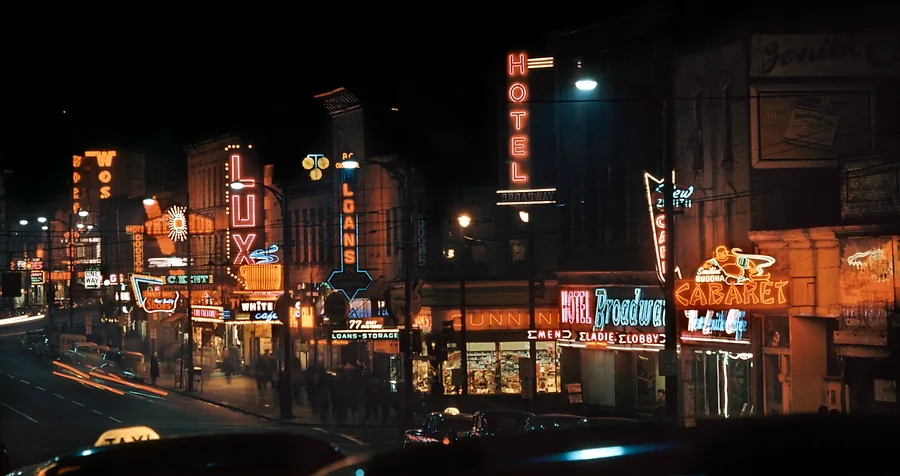
Fred Herzog, Hastings, Carrall to Columbia, 1958. Archival pigment print. Courtesy of Equinox Gallery and the Estate of Fred Herzog. © The Estate of Fred Herzog, 2024
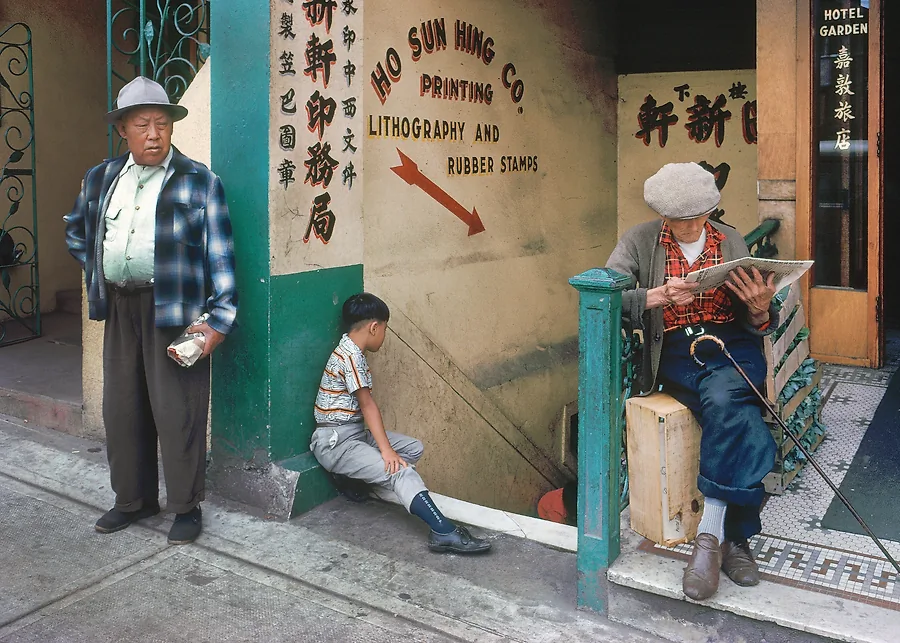
Fred Herzog, Man with Cane, 1961. Archival pigment print. Courtesy of Equinox Gallery and the Estate of Fred Herzog. © The Estate of Fred Herzog, 2024.
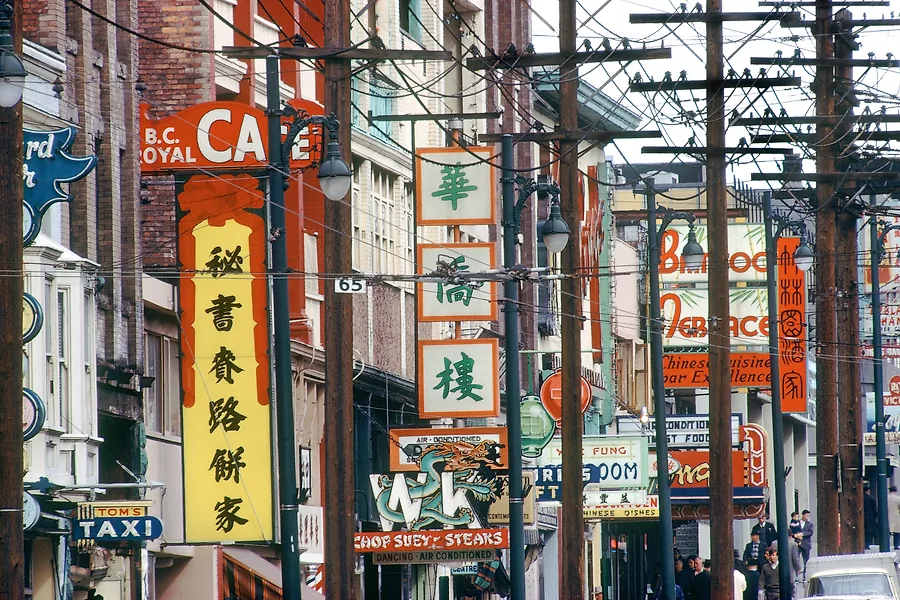
Fred Herzog, Chop Suey Steaks, 1968, Archival pigment print. Courtesy of Equinox Gallery and the Estate of Fred Herzog © The Estate of Fred Herzog, 2024.
Paul Yee is a historian, archivist, and the award-winning author of more than two dozen works of fiction and nonfiction for both youth and adults. His seminal work, Saltwater City: An Illustrated History of the Chinese in Vancouver (Douglas & McIntyre, 1988), won the Vancouver Book Award in 1989. This influential book was inspired by the groundbreaking exhibit of the same name, which he curated at the Chinese Cultural Centre in 1986 to commemorate Vancouver’s centennial year. Deeply connected to Vancouver’s Chinese Canadian community, Yee now continues his writing from his home in Toronto.
Read more community stories.