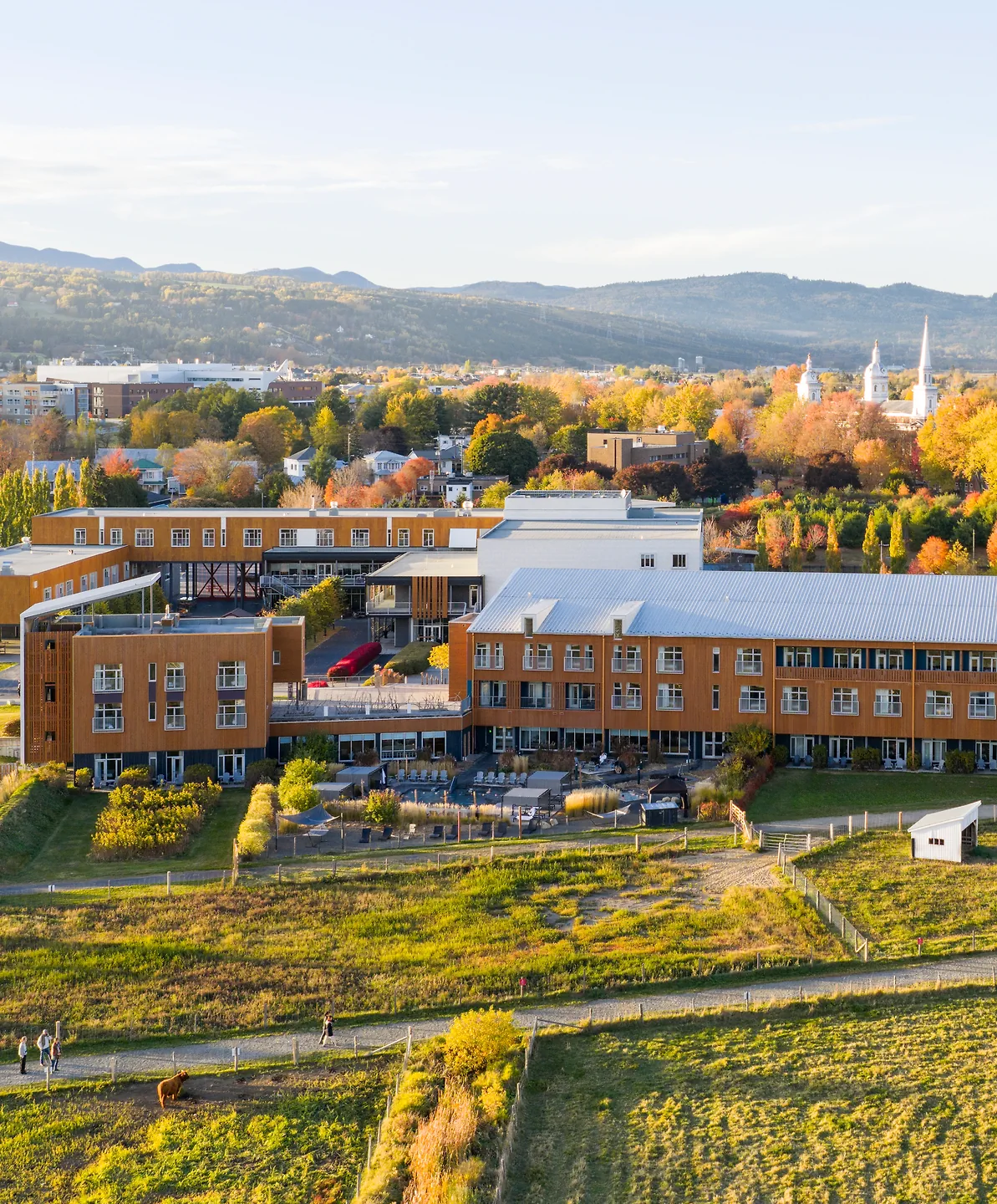


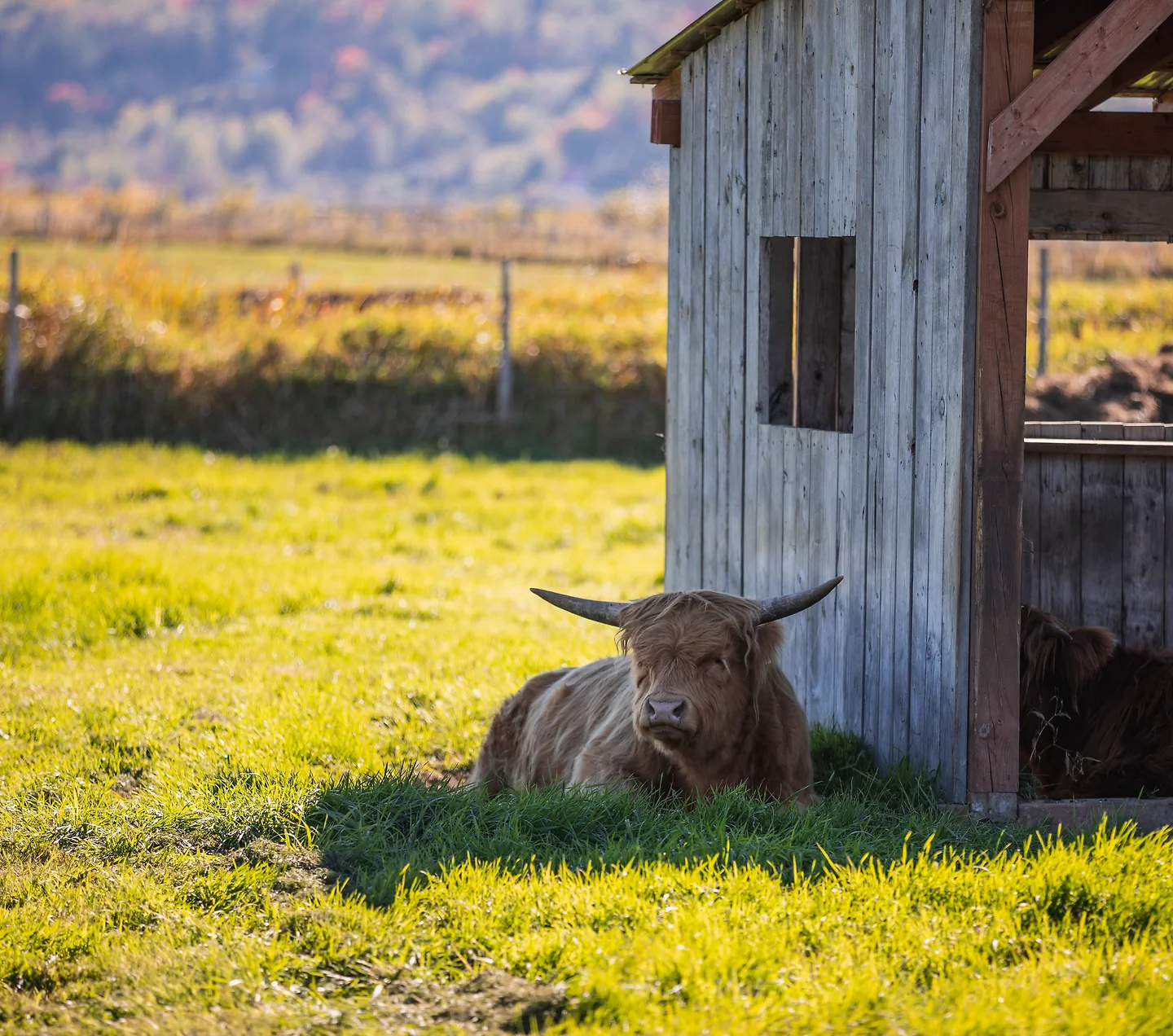
Walking out into the fields behind my hotel in Baie-Saint-Paul, I’m greeted with a scene both unexpected and delightful. Highland cattle, instantly recognizable with their shaggy ginger coats and distinctive horns, laze nonchalantly on thick, richly verdant grass. Some are lying down, signalling agreement with the rain showers forecast for later.
Among the neatly divided four acres of farmland that surround the hotel, I wander by ducks and chickens, sheep and rabbits. Farther on, past the animals, are seemingly endless straight rows of vegetables—leeks, garlic, zucchini—and next to them, long polytunnels for the less hardy crops—tomatoes, basil, fruits, even ginger. A cluster of beehives provide not just honey but also hard-working pollinators. It is beautifully organized and intentional in the way that small-scale agriculture allows, with specific varieties planted as needed.
It is all part of Le Germain Charlevoix Hotel & Spa, which honours land once farmed by nuns and is now one of many locavore havens in this bountiful region of Charlevoix, Quebec. Everything produced on the farm is destined for use on-site, whether at the hotel’s fine dining restaurant Les Labours, the breakfast buffet, or as prepared grab-and-go foods (spaghetti sauce made with Highland beef, potatoes in Migneron cheese sauce, vegetable quiche). Flavour is abundant, from the familiar—basil and garlic—to the more specialized— the shiny red gorria pepper (grown in Europe as espelette).
That same pepper appears on the first plate I try at Buvette Gentille, a short walk into the tiny town centre of Baie-Saint-Paul. Here, where 98 per cent of ingredients are sourced from Charlevoix, scallops are served with an XO sauce made from the dehydrated muscle of the mollusc, dried ham, and that gorria chili. Casual in its atmosphere, the menu at Buvette Gentille displays a sense of humour and nostalgia (baloney sandwich, anyone?) refined into precise, intelligent cooking. Easy to see what earned the restaurant a Michelin Bib Gourmand.
Ten kilometres inland—Baie-Saint-Paul sits close to the north bank of the St. Lawrence River—is Famille Migneron. Until early this year, this vibrant family business, producing artisanal cheeses and natural wines and spirits, was also home to Buvette Gentille’s elder sibling, the more formal restaurant Faux Bergers, now in a new spot two kilometres down the road.
The embodiment of convivial Québécois hospitality, Madeleine Dufour (who runs the business with her brother Alexandre) lays out a selection of cheeses: a sheep’s milk tomme with strong woody notes, a cow’s milk blue with salty veins and a back note of anise, and the delightfully nutty Le Migneron de Charlevoix. (Migneron was the maiden name of the first wife of the first Dufour to land in Quebec.)
We’re sitting in the newly refreshed restaurant space (in July it was in the final stages of preparation, and it has since opened as Le Relais des Florent). It’s quirky and unpretentious, the idea being approachable, hearty, seasonal food, cooked exceptionally well and drawing deep from Québécois cuisine. The restaurant marks the return of Hugue Dufour (no relation), a chef who grew up in Lac-Saint-Jean but went on to earn his stripes at Quebec’s most celebrated rooms, Toqué! and Au Pied de Cochon. He’s come home from New York, where he famously became Canada’s first chef to win a Michelin star for his restaurant M. Wells, happy to get back to the region and food that excites him, and the bounty Charlevoix provides.
Madeleine tops up my glass with the delicious and juicy Osceola muscat from the family’s excellent natural house-made wine selection and sends me on my way with a snifter of invigorating eau-de-vie distilled using the whey left over from cheesemaking.
Sea urchin from the St. Lawrence River was not something I expected to be served, but here it is, placed along a spear of perfectly cooked white asparagus. It’s darker than the tan-coloured lobes we are familiar with on the west coast, and the texture less creamy, but the punch of briny goodness is unmistakable. Next up is a master class in halibut cookery: the flesh pearlescent and moist, topped with a morel stuffed with fish mousse and served with another take on XO sauce.
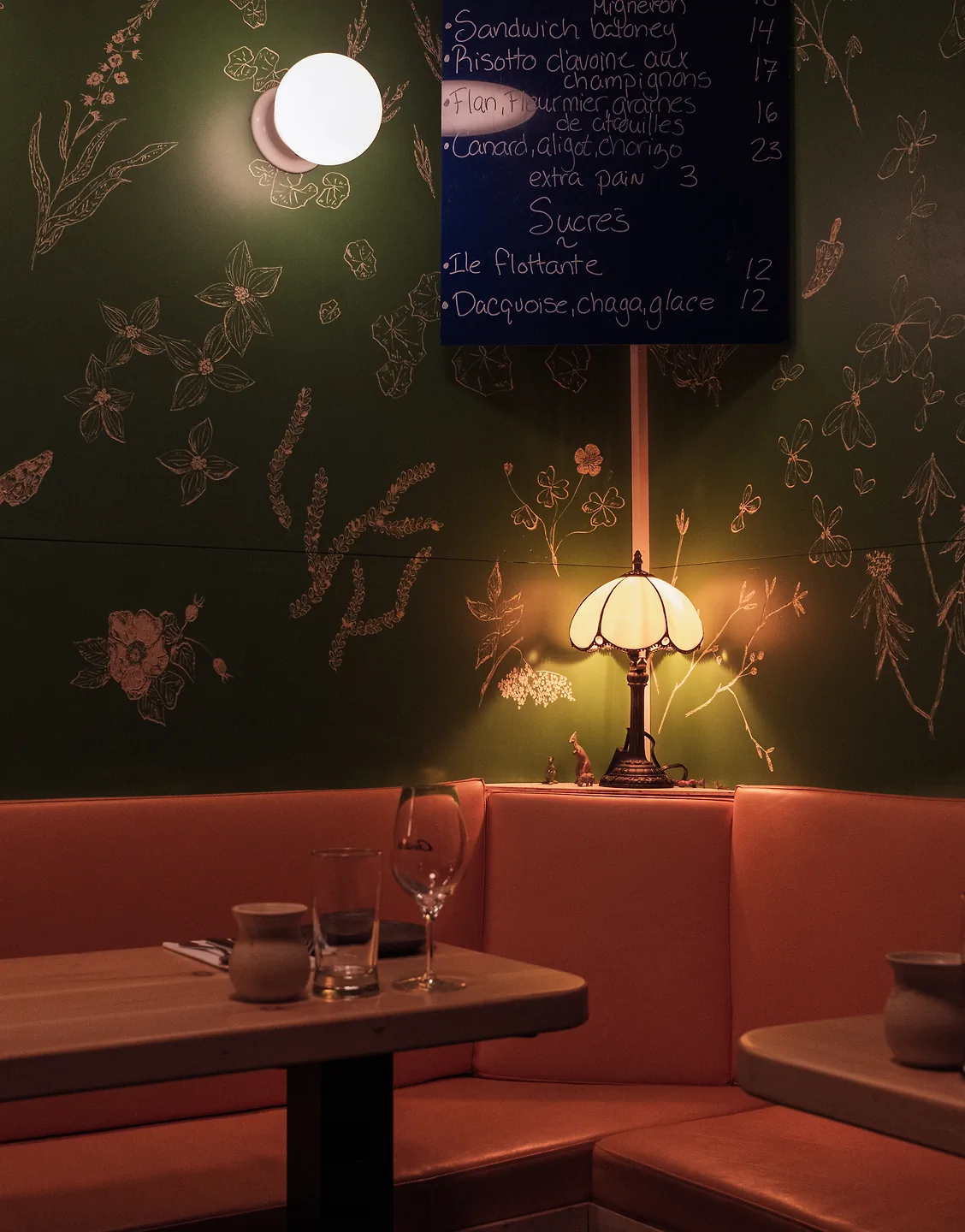
Buvette Gentille. Photo by Éva-Maude TC.
High above the waters of the St. Lawrence, Fairmont Le Château Frontenac sits proudly in upper Quebec City. Inside, at the Champlain restaurant, a monumental 17-metre-long sculpture by Charlevoix artist Marc Bouchard hangs from the ceiling, delineating the topography and depths of the river from its mouth at Île d’Orléans to its end in Montreal. Executive chef Tristan Ratcliffe Lambert (formerly of the Fairmont Empress and Marilena in Victoria) takes inspiration from the river and its banks, allowing its flow to shape the menu, rooting his dishes in that terroir.
Deep in the Montmorency Forest, 75 kilometres north of the city, the ancient Indigenous roots in that terroir are clear. Here, I learn about the forest plants that have been foraged for food and medicine over generations. And taste: the antioxidant-rich Bartram’s serviceberries, violet in colour but from the same family as cherries; the acidic oxalis or wood sorrel; and the unexpectedly menthol wintergreen berry, described preternaturally as the “Tic Tac” of the forest.
Huge wedges of 1608 cheese made by Laiterie Charlevoix are being grilled over wood as we sip Labrador tea (from a plant in the rhododendron family) and eat canelé infused with poplar. Then comes bannock topped with slices of duck charcuterie, dripping with the melted cheese, and drizzled with lilac-blossom honey—and this is just to whet the appetite.
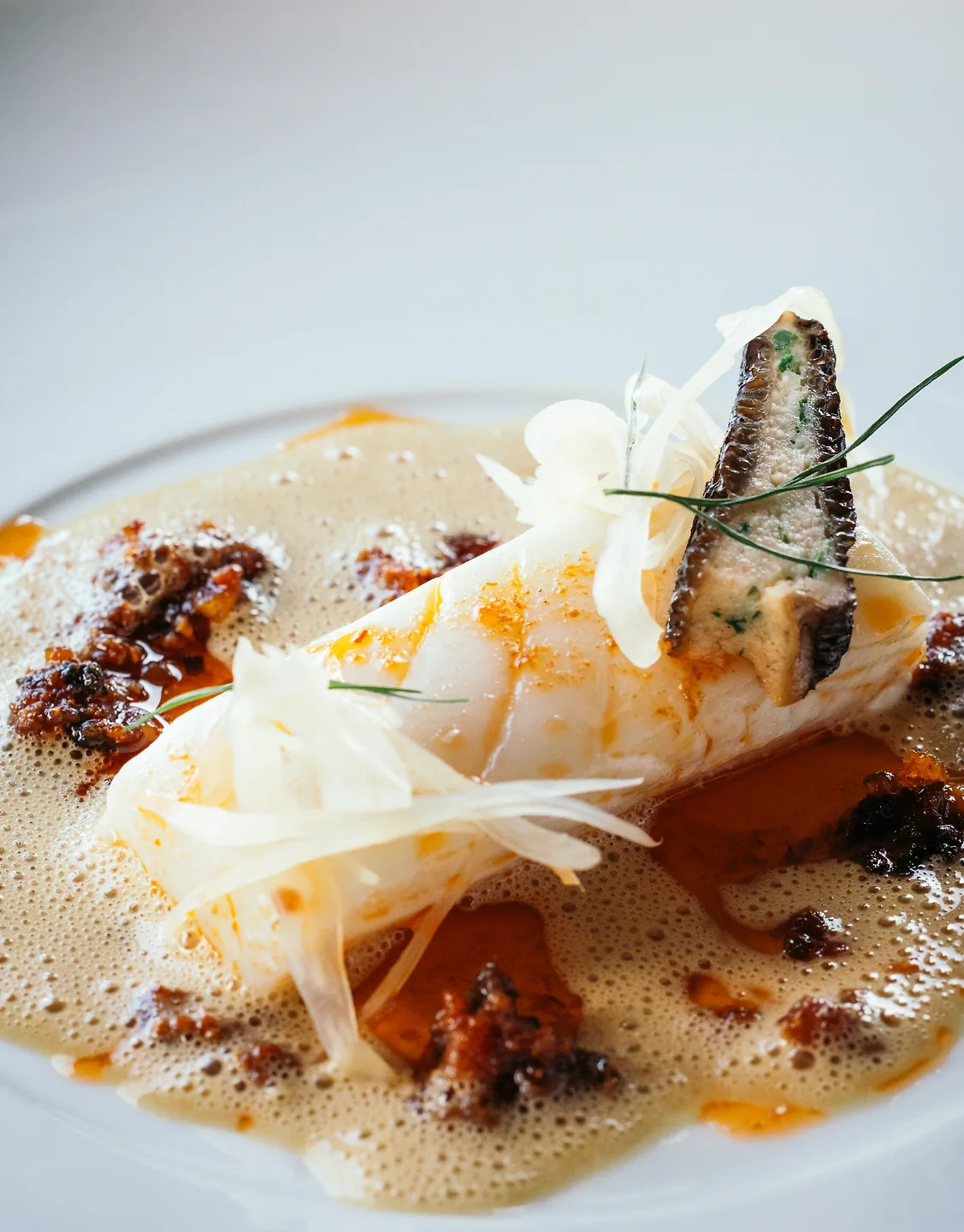
Halibut at Champlain restaurant. Photo courtesy of Fairmont Le Chateau Frontenac.
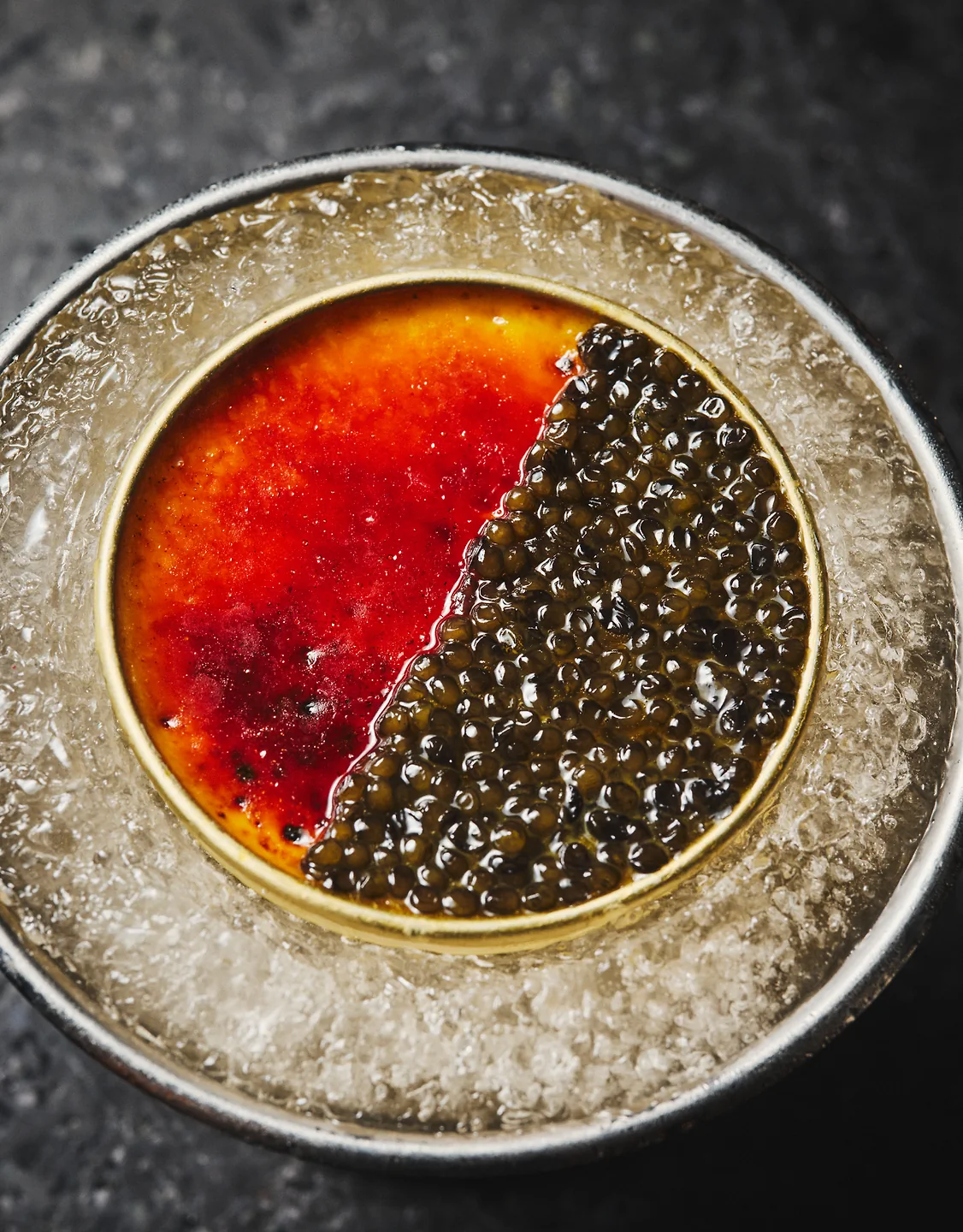
Crème brûlée with Acadian caviar at Tanière³. Photo by Audrey-Eve Beauchamp.
Inside a traditional shaputuan structure, Anora Collier of the Wendat Nation and executive chef of Indigenous restaurant La Traite is cooking alongside François-Emmanuel Nicol, the visionary behind Quebec City’s Tanière³, one of only two restaurants in Canada to be awarded two Michelin stars. We are seated at a long table and presented with a menu that showcases much of what we have seen today: winterberry oil energizes scallops, prickly ash pepper delivers an onomatopoeic flavour bomb to a beet purée, and fried caribou moss provides an airy crunch to dessert. The most memorable morsel, however, is the slice of charred, medium-rare moose.
If lunch was magical, then dinner at Tanière³ is mind blowing. Nicol is a charming and humble presence. In contrast, his restaurant is an all-out assault on the senses. There are rooms to journey through for different courses, each interior generating its own atmosphere. Local and foraged ingredients are forefront in a meal that becomes an exploration of tastes, textures, and unexpected juxtapositions. From a plethora of intricate appetizer bites, a mussel with wild blackberry and birch syrup vies for top billing over a venison taco laced with evening primrose and mustard, not to forget the tuna doughnut with burdock.
Course after course reveals surprises: a cloud of buttery Raphaëlle potato beneath a perfect scallop; not just the herring served with the beef but also the separate dish filled with pucks of bone marrow bobbing in a rich, glossy sauce; the fresh honeycomb warmed tableside and poured over roasted quail. But nothing is as counterintuitive as the pre-dessert.
Placed before me is a dish filled with crushed ice. On it sits a tin containing a crème brûlée infused with candy cap mushrooms, bisected by a layer of Acadian caviar across one side. The almost cheesy mushroom custard brings the umami, the caviar that hit of salt, and the burnt sugar just enough bitterness to cut through the richness of it all.
Equal parts madness and genius. And another emphatic representation of culinary Quebec inspired by its land and the river that runs through it.
Since publication, a third Canadian restaurant (Vancouver’s AnnaLena) has been awarded two Michelin stars. Read more from our autumn 2026 issue.