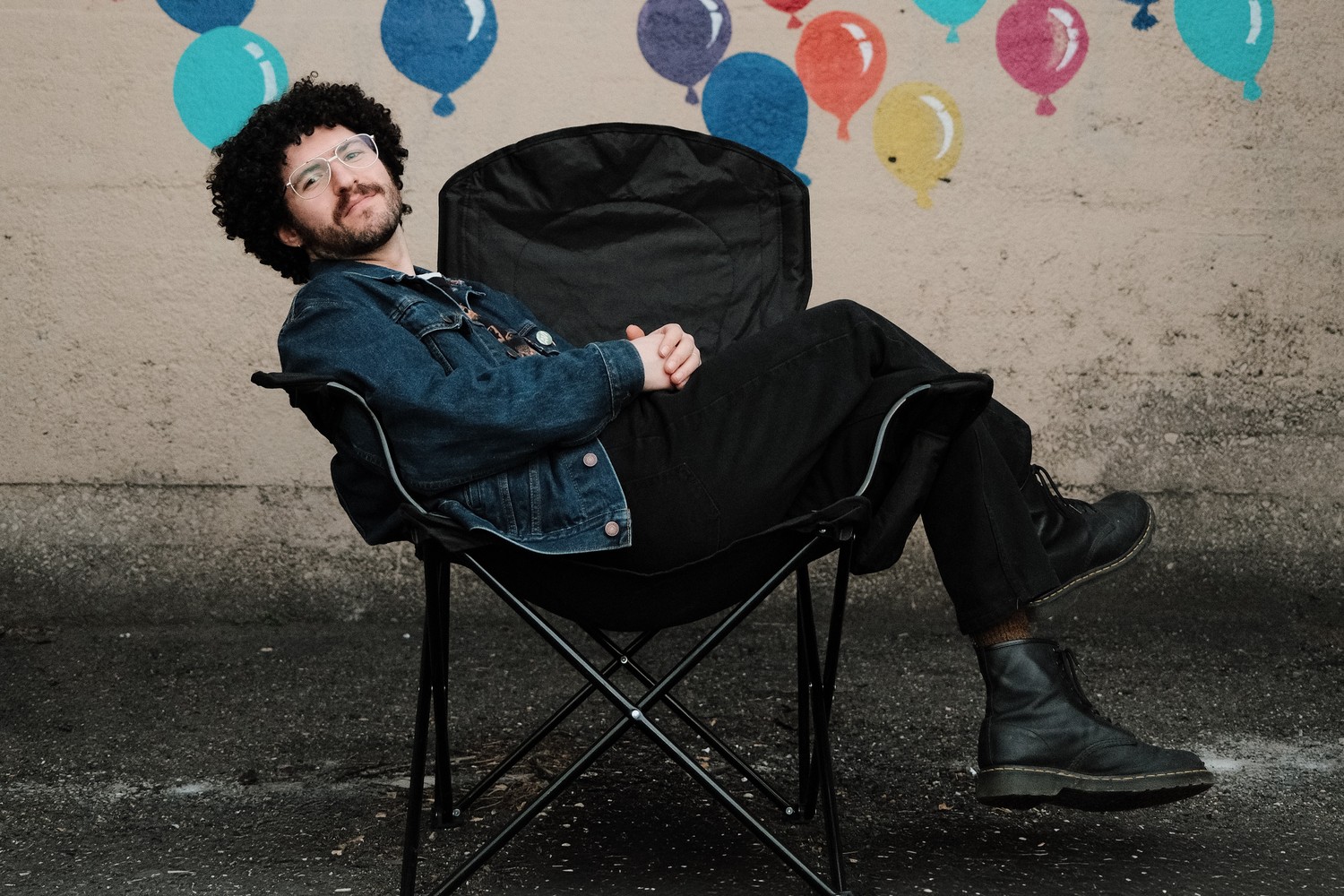


Daniel Forrest had not so much as set foot in Vancouver before deciding to pull up stakes in Philadelphia and set off for a new life more than 4,700 kilometres away, piloting a U-Haul from one coast to another and across the border.
“I’d never been here before,” the musician says. “It seemed like a cool place to be, another country to experience, meet new people. And my partner likes to bike and hike and camp and stuff, so it just seemed like a good place for us to be.”
Five years on, Forrest balances his academic pursuits—he’s a PhD candidate at UBC’s Institute for Resources, Environment and Sustainability—with a seemingly superhuman level of musical activity. Along with his membership in three bands, he also performs and records as a folk-rock-leaning singer-songwriter under the name D.L. Forrest.
Perhaps the most striking thing about Forrest is how keenly he has come to observe the place he initially knew nothing about. That perspective is woven through the songs of Buddie, the grunge-pop project he started before his big move.
Forrest and the three other musicians who make up the Vancouver edition of Buddie—guitarist Patrick Farrugia, bassist Lindsay Partin, and drummer Natalie Glubb—are now crafting new songs for a followup to last November’s Glass. That eight-track release earned Buddie some much-deserved buzz in local media, with journalists taking note of not only the quartet’s well-honed indie-rock chops but also of Forrest’s lyrics, which offer incisive commentary on modern urban life. With themes of wealth disparity and alienation woven through the songs, the record is evidence that Forrest is an astute chronicler of the place he now calls home.
The very title Glass is evocative of the city, calling to mind Douglas Coupland’s 2000 collection of essays, City of Glass. The highrises of blue-green glass that dominate Vancouver’s downtown skyline proliferated in the 1990s, many of them full of unoccupied condos whose owners lived offshore. “To Vancouverites,” Coupland wrote, “these towers signify a few things: the power of global history to affect our lives, and the average citizen’s alienation from the civic political process—they’re large glass towers that say ‘F-you’ to us.”
Forrest acknowledges that living in Vancouver has shaped his writing, but he points out that his use of the word “glass,” which pops up in several songs, has multiple meanings beyond the obvious. It also represents what he calls “this invisible barrier between us socially and communally.”
Anyone who responded to pandemic-era stay-at-home orders by becoming more and more reliant upon online shopping and food-delivery apps will relate to Buddie’s song “In the Glass Shell,” which pushes that reality to its most dystopian extreme. The song’s narrator has isolated himself so completely—perhaps in a tower of blue-green glass—that he now perceives the world outside as an existential threat. “I sent for a book / And a meal,” Forrest sings. “I can’t touch / But I still feel.”
COVID-19’s impact on Forrest goes beyond lyrical inspiration. The pandemic played a critical part in his decision to come to Vancouver in the first place.
“There was a kind of fissure moment for, I think, a lot of people when COVID isolated us all, and it made us stop doing whatever we were doing,” says Forrest, who was working as a data-science lab technician at Rutgers University when the World Health Organization officially characterized the COVID-19 outbreak as a global pandemic.
He was also playing in several local bands, including an early incarnation of Buddie, when COVID brought the Philly live music scene to an unceremonious halt, and even rehearsals were put on hold.
“So it was like, ‘Okay, well, I can’t do this music thing right now. I don’t know how long this is going to be, my job is a temporary gig,” he recalls. “What am I doing with my life?’”
Eventually, Forrest was compelled to choose between grad-school positions in North Carolina and Vancouver. Of the two, the latter was the more exciting prospect—and UBC’s world-class sustainability programs weren’t the only factor in the city’s favour.
“And yeah, I was just making sure that there was a music scene at all here beforehand to make sure that I could still do my music,” Forrest says of his initial research into Vancouver’s cultural milieu, “because that’s non-negotiable.”
That was five years ago. Today, Forrest is in a rehearsal space tucked in an unassuming industrial building just east of Main Street, seated on an old couch above which has been tacked a sun-faded print of Pablo Picasso’s The Old Guitarist. Chock-a-block with drum kits and amp cabinets, this room is the home base of indie-twang outfit Runner, another of the bands he plays in.
Like a proper Vancouverite, Forrest has cycled here and picked up a coffee on the way. He’s especially eager to talk about his solo work, which finds him under the influence of Tom Petty, Neil Young, and MJ Lenderman.
The most recent D.L. Forrest release is “Can’t Sleep,” a single featuring pitch-perfect harmony vocals courtesy of Runner’s Kira Cuthbertson. Over a backdrop of heartland-rock guitar chords, the songwriter probes a relationship in which communication has broken down despite the best of intentions.
His deft hand with a hook is on full display, but “Can’t Sleep” wouldn’t be mistaken for a Buddie song. And that’s kind of the point. Forrest says the material played by his band is very much a product of each member’s tastes and how their individual influences combine to create a distinctive sound.
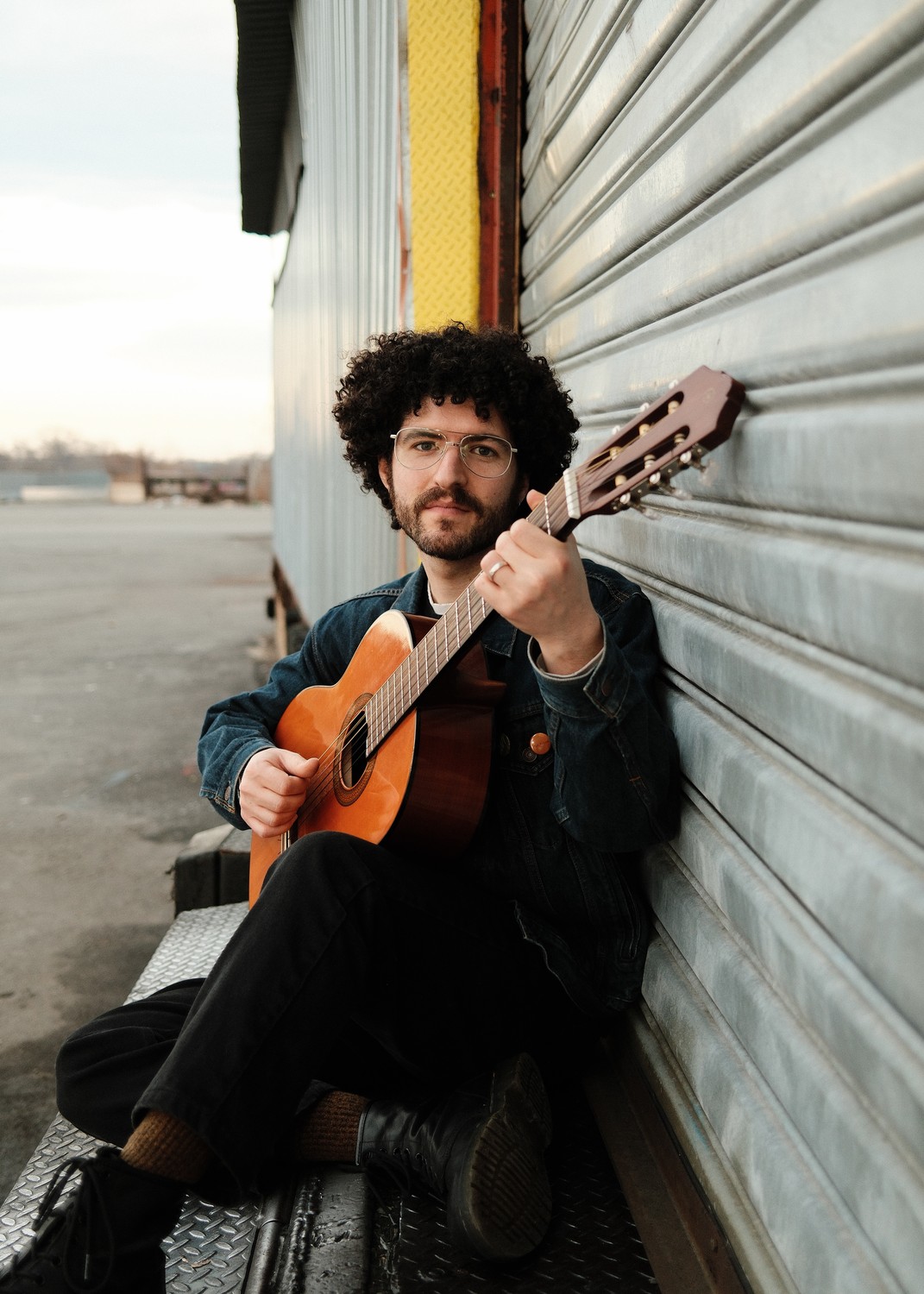
“There was just stuff that I wanted to play that I was bringing to the table that I could tell really wasn’t resonating as much as some of the other stuff that I was bringing to the table,” he says. “But I still really liked it.”
As it turns out, having multiple projects on the go simultaneously is an effective coping strategy for a man whose brain fires on all cylinders.
“I have racing thoughts, and my mind’s always jumping different places,” Forrest says. “Part of the way that I am able to channel any of that energy is through writing music. It’s something that I do to get all this nonstop energy, whatever it is, to flush it from my system. So there’s too many ideas, and it’s helpful now that I have some parameters, I guess, on them.”
All of that energy is certainly being put to good use: a D.L. Forrest album is in the works. It hasn’t hurt that two members of Runner, Alex Walters and Hayden Watson, are recording engineers who work out of The Warehouse Studio.
For an artist with “nonstop energy,” Forrest shows remarkable patience with the recording process, which he says is a newfound trait.
“I used to rush to get things out there because I felt like there was some sort of time limit on the relevance of a song or something like that,” he says. “I no longer feel that pressure, which feels good for me. It’s a relief. There’s something nice about letting it take a long time because I can think about what the arrangements really need for longer, and I can also throw new ideas in the ring every now and again if they feel like they fit well with this package of songs.”
Forrest arrived in Vancouver seeking a new opportunity—an academic one—but the music was always going to come with him. Five years later, the city he had never visited is home, and the restless energy that brought him here is still finding its way into his songs.