

Even when the temperature outside dips 40 degrees Celsius below zero in Whitehorse, the molten glowing heart of Luann Baker-Johnson’s studio stays 1,200 degrees, day and night. The towering steel crucible gives off a steady low roar, a background drone to the clank and rattle of pipes and shears as liquid glass is pulled up in gooey coils, pinched, snipped, twisted, and inflated. Nearby in the steady warmth, a cherry tomato plant is bearing unseasonal fruit.
Clattering through the studio, Baker-Johnson points out metal scoops of glass pellets, arranged in every colour of the rainbow. She drives the raw glass here over the White Pass from Skagway, Alaska, 4,000 pounds at a time, to feed the hungry maw of the crucible. She lifts a dark fluted cup streaked with the colours of the northern lights. “We can’t keep these in stock,” she says ruefully.
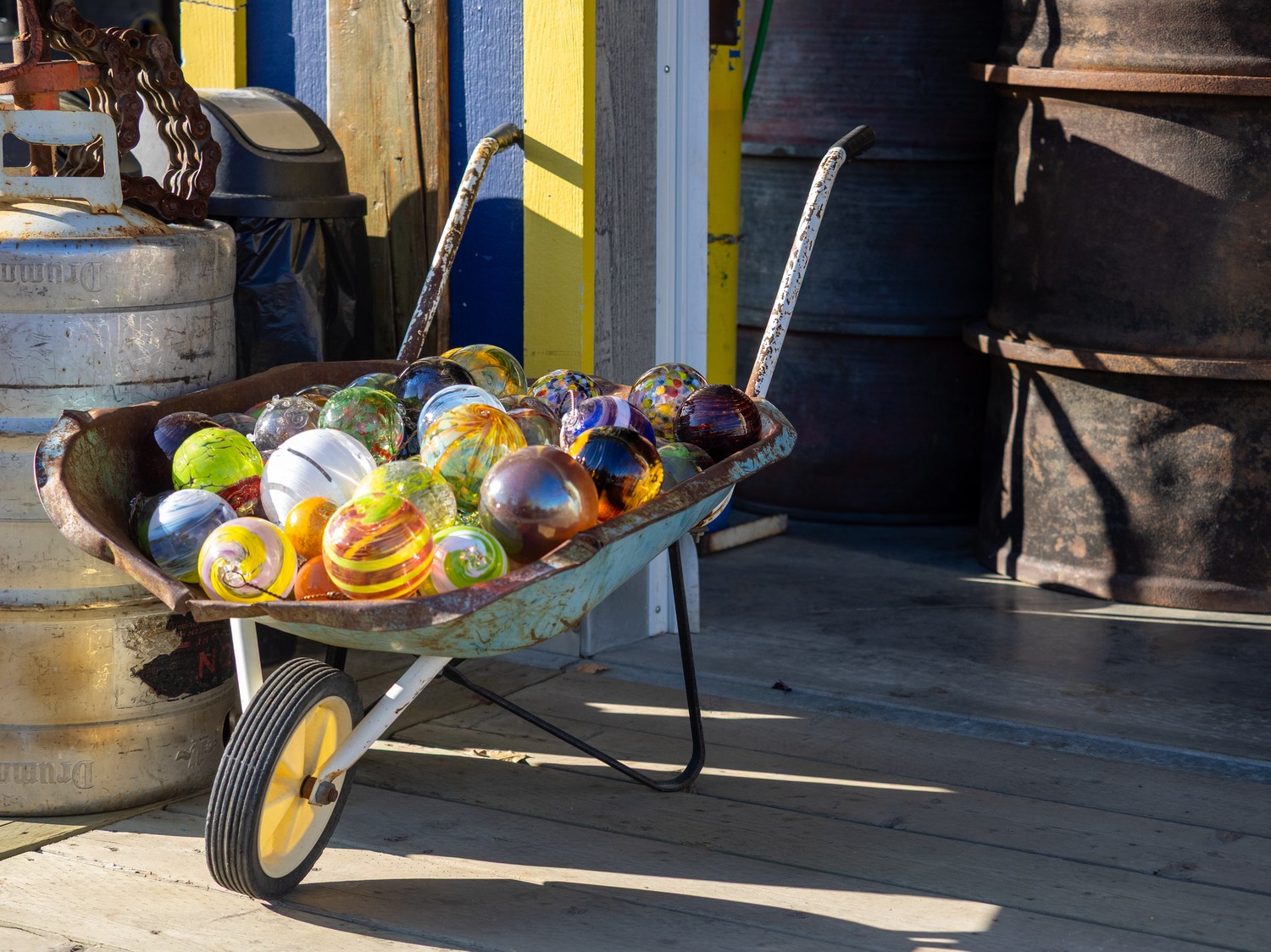
Glasswork at Lumel. Photo by Christopher Wheeler.
Like many people I’ve met in Whitehorse, Baker-Johnson does a little of everything. She’s an artist—of course—an entrepreneur, humanitarian, builder, mother, and teacher. When she framed the cheery blue-and-yellow barnhouse of Lumel Studios in 2016, she strapped on a carpenter’s belt under a growing pregnancy belly. Glassblowing students travel across the country to work with her at Lumel, alongside local kids who need something to do with their hands. Around her, a busy little hub of artists and craftspeople has formed, drawn in by her boundless energy like drones to a queen bee. In the back of the building, her daughter runs a café, serving locally sourced food interpreted by immigrant Costa Rican and Malaysian cooks.
When I first visited the Yukon, I came to write about the surprising diversity of local food in the territory. Many other outsiders visit for the northern lights, the hunting and fishing, or to backpack in the expansive northern wilderness. But Whitehorse, the largest city in the Canadian North at little more than 30,000 people, is also unmistakably a city of the arts. Wood carvings and beaten copper peek out from the shadows of Main Street shops, beadwork and shell earrings swish and tinkle on the streetcorners, and—at Lumel—brilliant glasswork shimmers in the pale sunshine.
It’s the tightly knit community—more artists per capita than almost anywhere else in Canada—that keeps the energy flowing, Baker-Johnson tells me. Just a few weeks ago, Tlingit carver Violet Gatensby from the Carcross/Tagish First Nation on the Yukon-B.C. border swung through Lumel to make a glass hockey mask to fit on a sculpted trophy for the Yukon First Nations Hockey Association’s women’s division tournament. Another day, a deceased Yukon man’s ashes arrived, along with a wish that they be interred inside a series of glass frogs. A local entomologist came by to sculpt the shapes of beetle genitalia from molten glass. For the victorious athletes of the 2026 Arctic Winter Games, Baker-Johnson is putting the finishing touches on 110 glass ulu, crescent-shaped Inuit cooking knives. Copper artist and Bill Reid disciple Brian Walker is visiting to collaborate on a copper cauldron for the games for which Baker-Johnson will furnish a stylized glass flame.
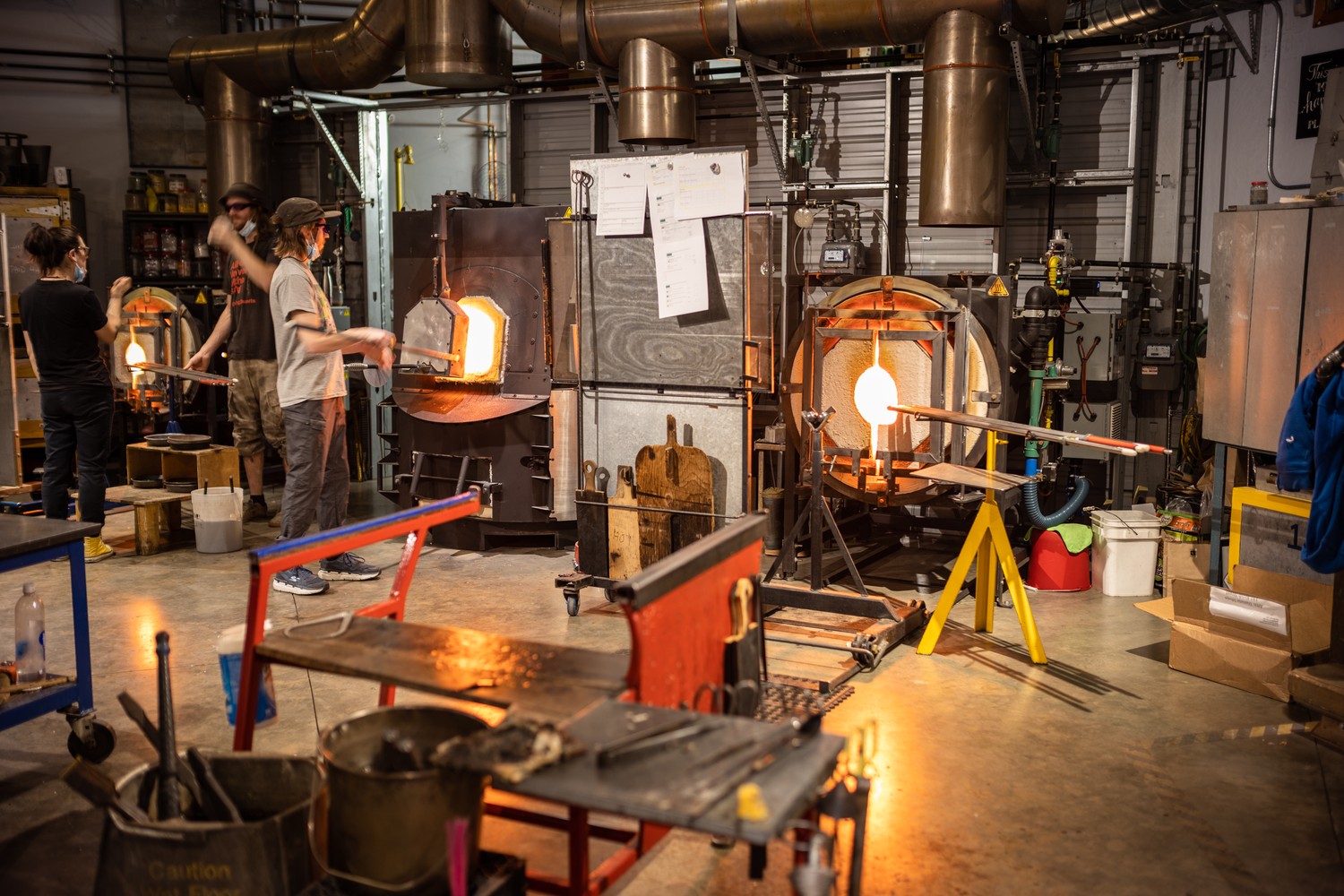
Photo by Christopher Wheeler.
“We feed off each other,” Baker-Johnson says. “I think because we’re a small community and we’re close, it’s easy to know a lot of artists in town.”
The informal economy that underlies the Whitehorse art scene—artists supported by friends, cousins, and acquaintances—is vibrant and interconnected, but it can also be a difficult place to find exposure and fair compensation, says Whitehorse art dealer Douma Alwarid. Her father, a lifelong civil servant and land claims negotiator, spent his career building bridges between Indigenous peoples and the territorial government. Douma has taken on a similar mantle in the arts, convincing artists and buyers alike that Indigenous artists are worth taking seriously, and worth paying for distinctive pieces made from rare materials.
“I’m telling them, your art is worth way more than you’re charging. You’re using real gold. You’re using caribou hair, home-tanned hide. These materials are equal to diamonds and gold,” she says. “They deserve to be paid appropriately. These aren’t crafts. They are unique, one-of-a-kind pieces of wearable art.”
Alwarid also says that in the Yukon, there’s a culture of exchange and appreciation for Indigenous art and clothing that breaks down taboos over perceived cultural appropriation: “Up here, I’ll walk up our main street, and I’ll look at someone, and I’ll be like, oh, I sold her those earrings. Every other woman, white, Indigenous, whatever, is rocking Indigenous bling. It’s 100 per cent acceptable, and it should be down south too, as long as you have made sure that the artist has been fairly compensated. Getting to know who made it, where they’re from, then you’re honouring the artist when you wear it.”
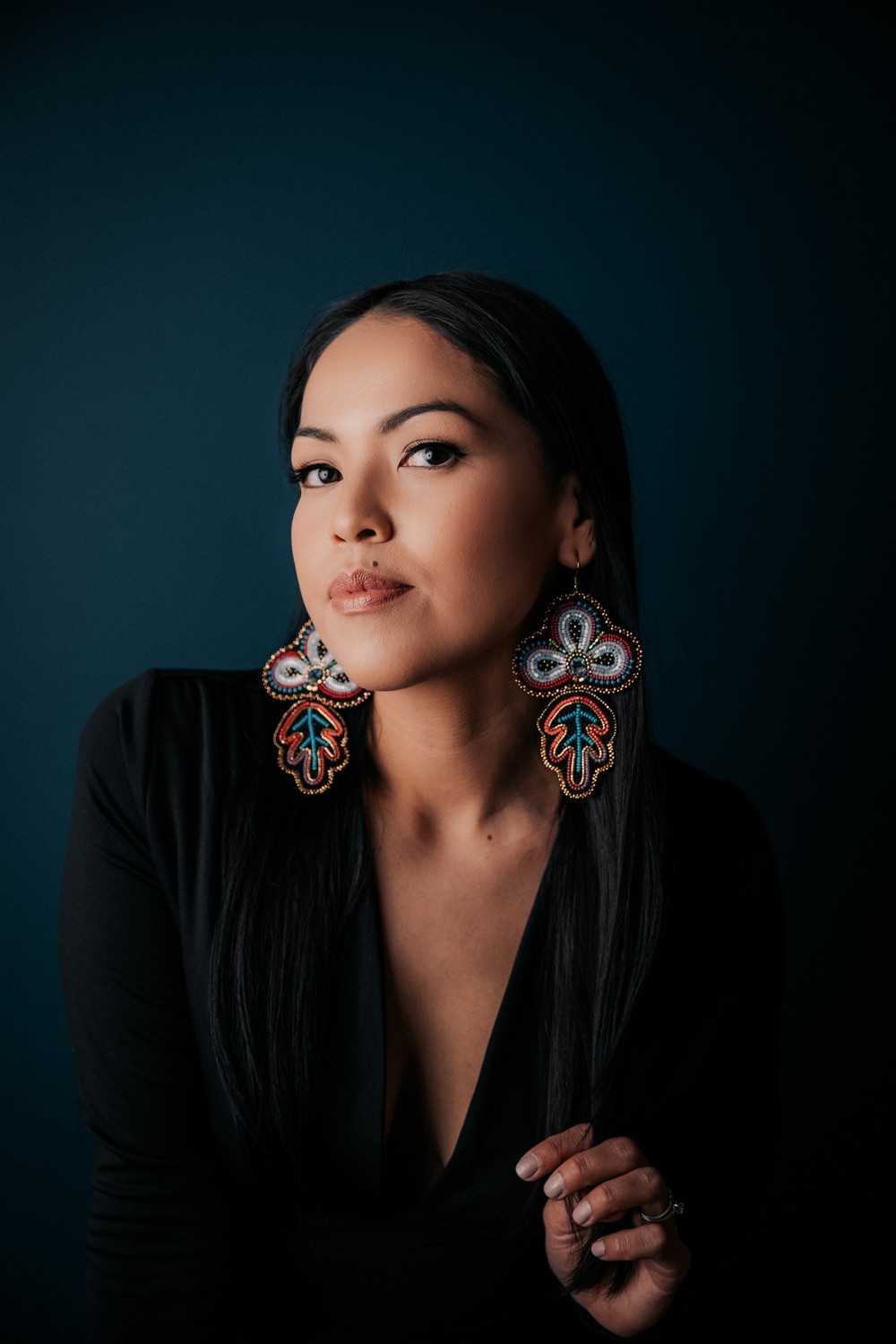
Beadwork by Whitehorse artist Heather Dickson. Model Jada Jerome. Photograph by Brooke Martel.
In 2019, Alwarid set up a storefront just up the river from Lumel, which has, since the pandemic, turned into an online store. Her business, Unorthodox (emphasis on “north”), represents a dozen Indigenous artists, including Inuit, Tlingit, and Gwich’in, who produce beadwork, jewellery, deerskin bags, clothing, and shawls from red and white fox fur. By using professional photographs, modelling, lookbooks, and paying for the work of her artists upfront and pricing accordingly, Alwarid tries to elevate their image from mere local craftspeople to world-class artists and designers.
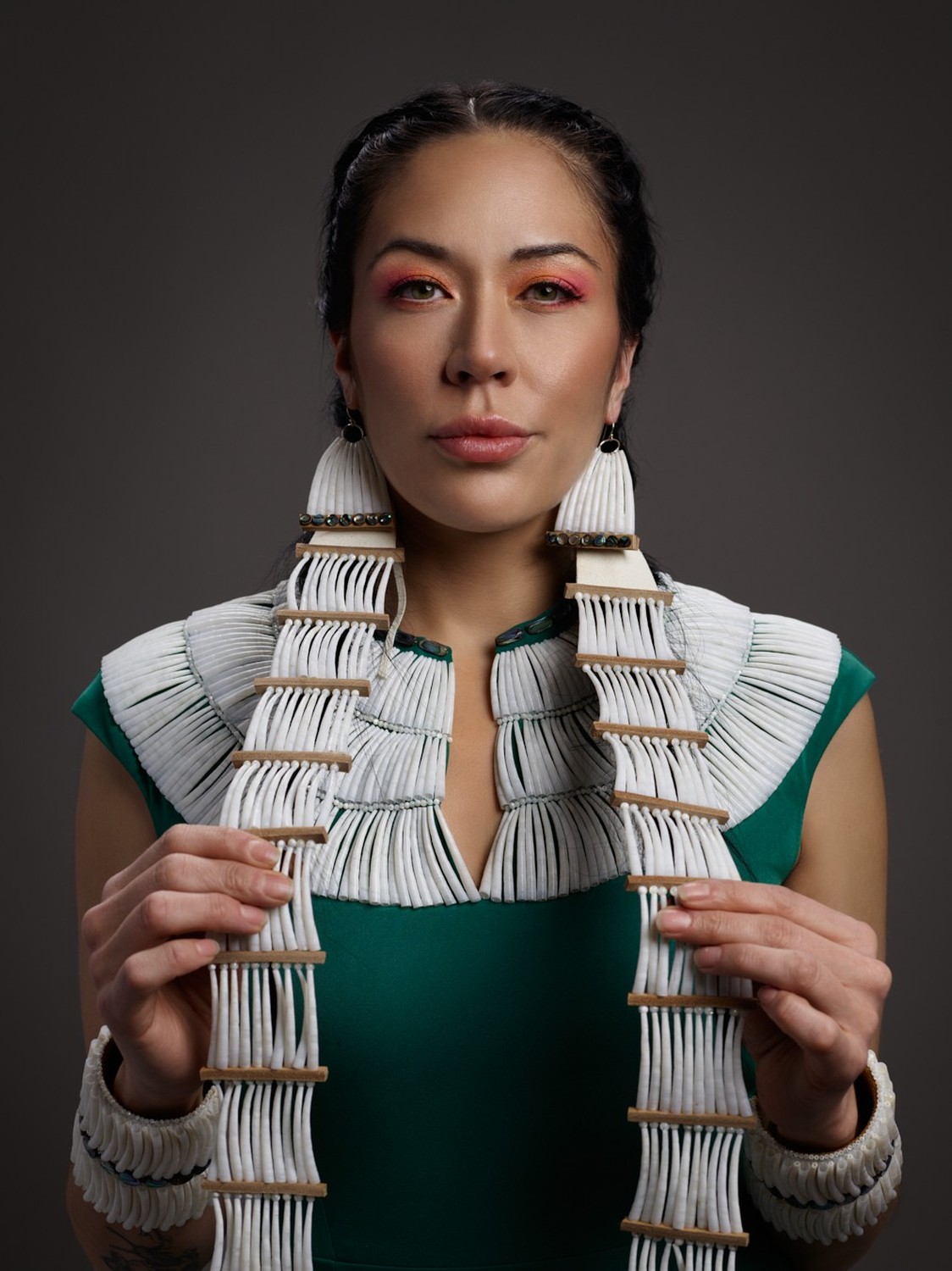
And it has worked. Alwarid’s friend and collaborator Randi Nelson, a Whitehorse artist from the St’uxwtéws First Nation, has thoroughly broken out onto the world stage. A pair of her dentalium (tusk shell) earrings accompanied Killers of the Flower Moon actress Jillian Dion on the Academy Awards red carpet, and other pieces have shown up at the Junos, the Emmys, and the Cannes Film Festival. In 2021, a silver fox fur stole she embellished with gold beads, crystals, shells, and caribou hair was purchased by the Yukon’s permanent arts collection. In 2025 she took a line of sharply tailored modern dresses in tanned deerskin with floral beadwork on tour, including to both Milan and Vancouver fashion weeks.
Working with these materials, she tells me, is neither easy or amenable to mass production. “It counts on a successful hunt. It counts on having time to tan it, because it takes hundreds of hours. It’s a very time-consuming process,” she says. “It’s very different than going online and just purchasing materials.” But that’s also what makes her work unlike anything anywhere else.
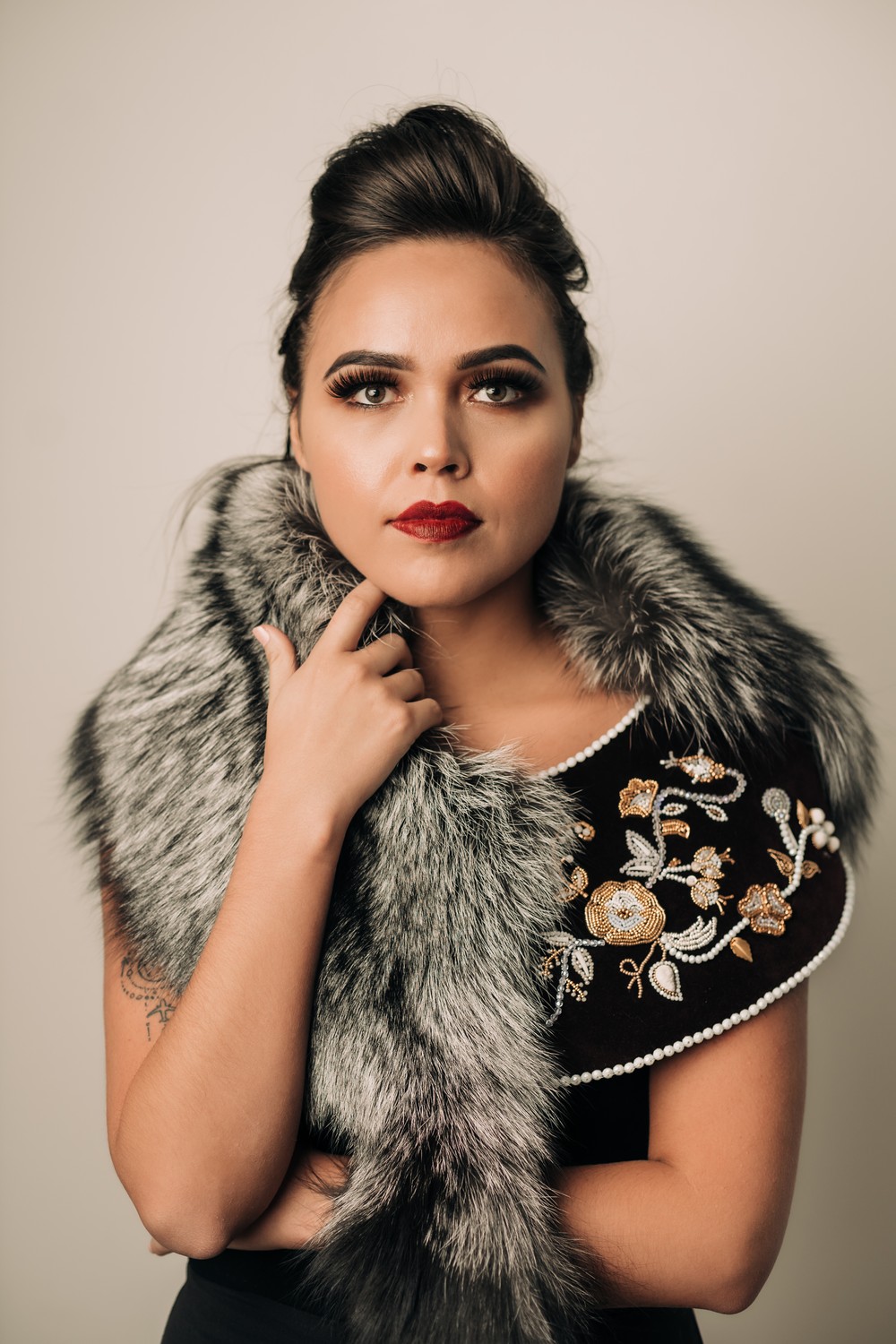
Fur collar shawl designed by Randi Nelson. Model Kendra McMillan. Photo by Brooke Martel.
You’ll find one-of-a-kind local art everywhere around Whitehorse. The Kwanlin Dün First Nation’s cultural centre, just a stone’s throw away from Lumel Studios on the banks of the Yukon River, curates a rotating collection of authenticated work from local Indigenous artists. Ten minutes walk south into the heart of town, Yukon Artists at Work, a cooperative including ceramicist Patrick Royle and watercolourist Doug Rutherford, display their collections together out of a bright blue wooden house. Another two blocks south, the Yukon Arts Society runs a gallery, art supply shop, and ceramics studio, and displays the work of more than 100 working artists.
You can pick up a copy of the society’s self-guided walking tour, taking you from Lumel Studios by the river to the clay cliffs overlooking downtown, where you’ll find loopy abstract metalwork by Tlingit Scandinavian artist Ken Anderson—passing by dozens of murals, mosaics, carvings, and sculptures along the way. Come at the right time of year, and you might also drop by for the Yukon Prize for Visual Arts festival in the autumn, or the summertime Adäka Cultural Festival (in years when it’s running).
Nelson says she hopes more people will come support northern artists on their home turf: “It’s really neat to think that you could come up and instead of purchasing a T-shirt that says ‘Yukon,’ you purchase a pair of earrings from an Indigenous artist, and they’re beaded on home-tanned leather. This was a moose that fed the family, and this is caribou-hair tufting that they hand dyed themselves. There’s so much in the story, and that is a gift to people when they’re able to bring a piece of that back with them.”
Read more travel stories.