

There’s a smeary Blade Runner atmosphere, but the roadside closeup doesn’t reveal the location. Slick with lurid pinks, the sidewalk reveals a setting ablaze with neon. It’s a detail, a patch of pavement. A city somewhere in Asia, maybe even Vancouver. Not necessarily a picture we’d associate with the photographer Greg Girard, the wandering chronicler of Asian megacities, yet when I ask him about the unusual subject matter, his response is recognizably his own.
“I was 18. I just got off this freighter from Hong Kong.” Time and place: that’s what you need to know. He travelled. He shot a picture. That’s the Girardian mode. He rediscovered this particular slide relatively recently, in a box that had been sitting in someone’s basement or garage for over 20 years. “I wouldn’t make a work like that today,” he says, on the eve of his major exhibition at The Polygon Gallery. “But I look at that now and I think, ah, okay, I used a 200-millimetre lens, a really long lens, to get this compression or flattening effect. That was a good choice, and very slow Kodachrome.” Place, position, technical details. The where and how are their own rewards. Take a step; look around; find your next picture.
Growing up in south Burnaby, Girard developed an understandable case of wanderlust, the lens of his camera pointing the way beyond the suburbs. His first destination, still in high school, was Vancouver’s Chinatown and the Downtown Eastside. He educated himself by reading magazines such as Popular Photography, which offered not only technical tips but also portfolios by different photographers, including, he remembers, Garry Winogrand. Mr. Truman, his Grade 11 graphics teacher, introduced him to Diane Arbus, the first contemporary photographer he encountered. As he became exposed to a range of ideas and influences, photography became a realizable way to lend purpose to his journeys.
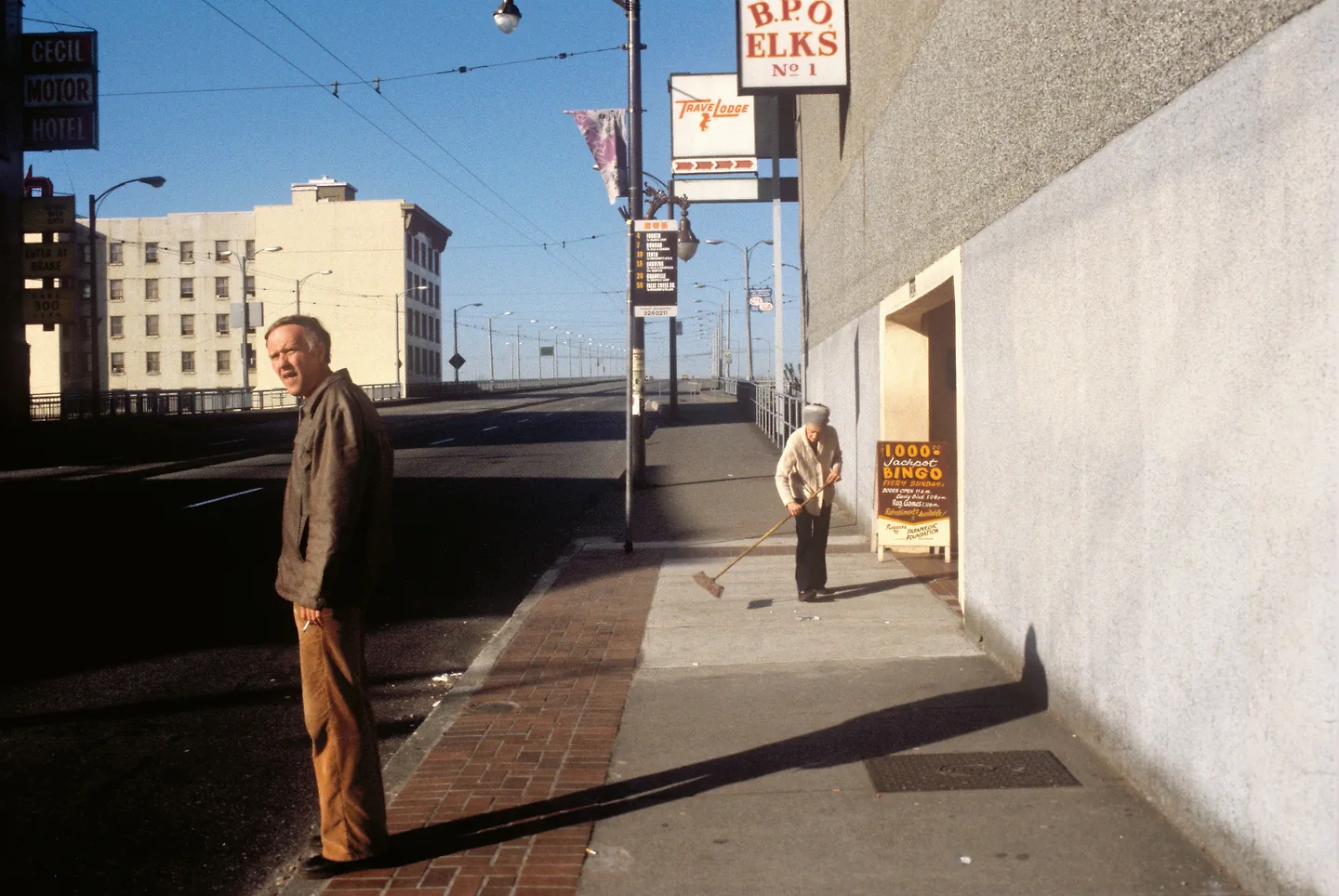
Woman Sweeping, Vancouver, 1981.
But it was an unremarkable picture of the Hong Kong harbour by the photojournalist Eliot Elisofon, shot in 1962, that planted the seed of restlessness. Finding the photograph in a Time-Life book, he was entranced by how it captured a blend of the old and new, the banal and the marvellous. Although he doesn’t believe he fully understood the range of thoughts or feelings the picture provoked in him at the time, the image struck an almighty chord nevertheless, motivating him to hit the road. “I sensed that whatever that picture had in it, I wanted to do that. I decided to go to Hong Kong.”
Aged 18, camera in hand, he travelled to San Francisco and hopped aboard a freighter for the bustling British colony. Soon after he entered the packed, neon-festooned city, he took the picture of that glittery sidewalk, then started taking countless more, entranced by the unfettered intensity of life. After stints in Southeast Asia and Japan, while also spending time in Vancouver driving a cab (and taking pictures) to save money for his next trip, it was back in Hong Kong in 1982 that he had a lucky break, landing a job with the BBC as a sound recordist. Right place, right time—and, in the days of the Commonwealth, the right passport. Zipping around with news teams introduced him to the world of photojournalism.
In the summer of 1987, as his BBC colleagues headed back to the U.K. for their holidays, Girard travelled to Sri Lanka and “stumbled into”—an expression Girard often uses to describe what he witnesses—a furious battle in Jaffna. He happened to be there, and he documented the strife and suffering. A magazine published 16 of the Sri Lanka pictures, allowing him to quit the BBC for an in-house job as a photographer. A year later, he quit the magazine, swapping a paycheque for the copyright of his photographs. Opting for the more precarious life of a freelancer, he continued his adventures across Asia, shooting for a range of magazines, including assignments for National Geographic.
Hong Kong provided the subject matter that secured Girard’s spot in the pantheon of intrepid observers of the world. Kowloon Walled City was an autonomous agglomeration of highrises and home to some 35,000 people: butchers, noodle makers, dentists, drug dealers, and all their families. In a renowned photo from the project, Children on Kowloon Walled City Rooftop (1989), three kids play atop some dull, discoloured concrete, the sky inscribed by antennae. A boy in the background wears a World Cup top, while a girl in the foreground clutches a pole and cracks a gentle smile beneath her bowl cut. Between them, the smallest child bends over and clutches his head, the only note of distress in the photo. Far off in the distance, more highrises, organized and official, and the cloud-topped mountains of the harbour.
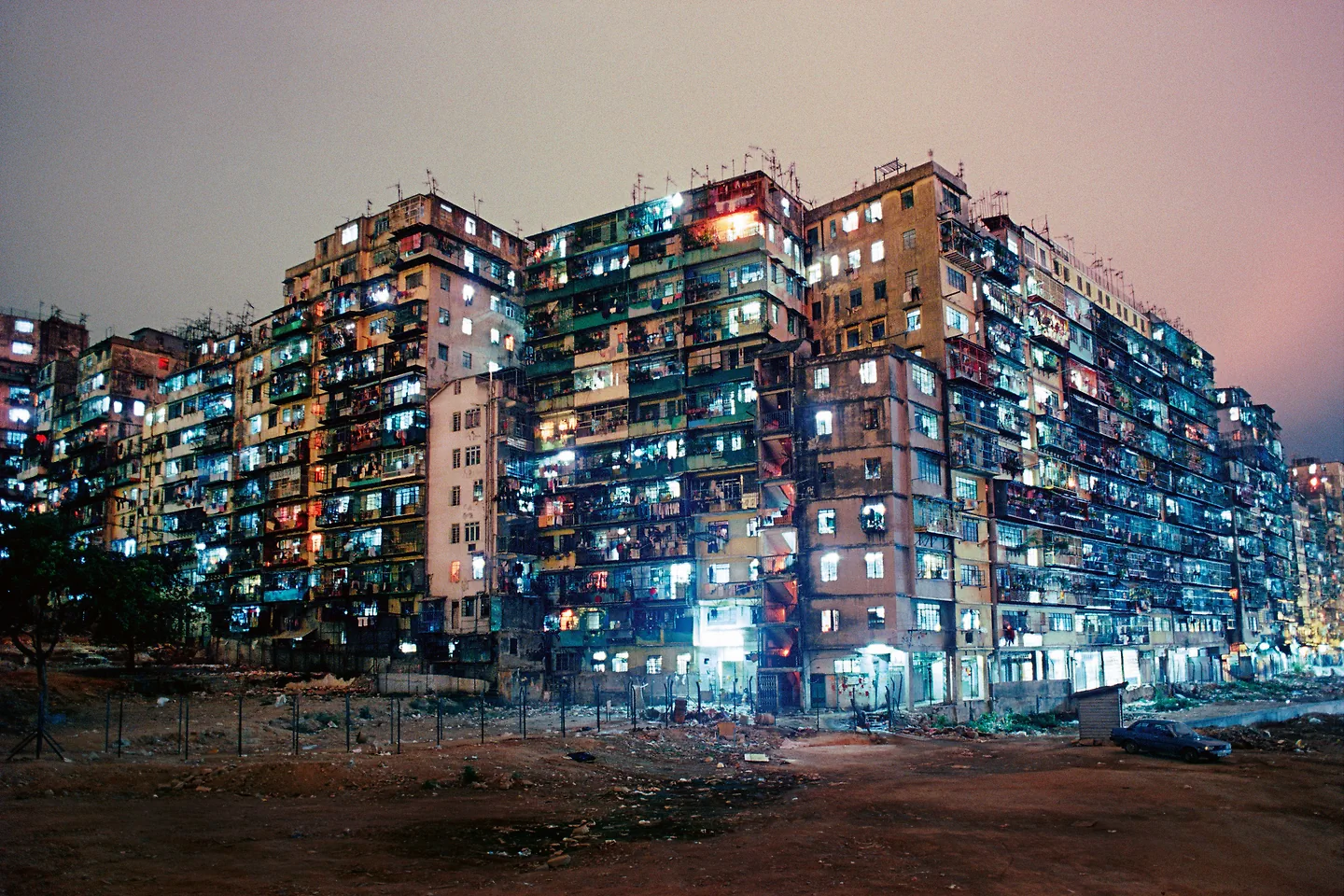
Kowloon Walled City, From SE Corner, Hong Kong, 1987.
The books that he published with his collaborator Ian Lambot, City of Darkness: Life in Kowloon City (1993) and City of Darkness Revisited (2014), became crucial documents of modern life that influenced everyone from Christopher Nolan to William Gibson. The project highlighted Girard’s empathetic vision, establishing his name as one of our era’s most clear-eyed chroniclers of the flux and density of life in Asia.
Time and place, that’s the key to unlocking an image. He stumbles into beauty as he might stumble into a conflict.
While Girard earned his reputation by responding to the actualité and publishing in books and magazines, the exhibition at The Polygon Gallery will offer a chance to look at his pictures from a different perspective. Photographs, whether photojournalistic or the latest snap on your phone, have the capacity to deliver a simultaneous jolt of information and beauty. If Girard’s pictures are crucial documents of times and places, they are also pictures shaped by colour, composition, and atmosphere—values we might associate with art rather than journalism. This is not a conflict but a mutually reinforcing conversation. Historical significance might enhance the beauty of a picture, and vice versa. When I ask curator Elliott Ramsey about these different takes on Girard’s photographs, he responds with an anecdote.
“I’ll give you an example,” he says, nodding. “There was a photograph that he’d taken in the mid-’90s in Beijing. There’s a couple, the woman is in the water, the man on the shore. They’re gazing at each other, and it’s such a tender, fragile, exquisite thing that he’s created. When it was placed in the catalogue, Greg really wanted it to be paired with an image of policemen in Beijing. For him, this was the tension. This was Beijing at the time.” The curator sees one thing; photographer, another. However tender the image, Girard knows the ephemerality of the moment—how the authorities, or other impersonal forces, might destroy their intimacy that very evening. And yet almost 40 years later, the beauty of the photograph persists, outlasting the threat of violence. Ramsey and co-curator Reid Shier, Polygon’s director, persuaded Girard to let the photograph breathe in the catalogue, without the presence of the cops.
When I ask Girard about the pictorial value of his photographs, or images as “exquisite things,” in Ramsey’s phrase, he tends to respond with a few facts: where he was, the context, how he made the picture. Time and place, that’s the key to unlocking an image. He stumbles into beauty as he might stumble into a conflict. And while he resists any invitation to appreciate or interpret his own work too intensively—not his department, after all—he has developed a useful theory about photography. In the age of the smartphone, everyone takes pictures all the time. Photography has become a second language. But even though everyone speaks and writes, not everyone is a writer. Likewise, he argues, while we’re all snapping away everyday all day, not to mention sharing images on social media, we’re not all photographers.
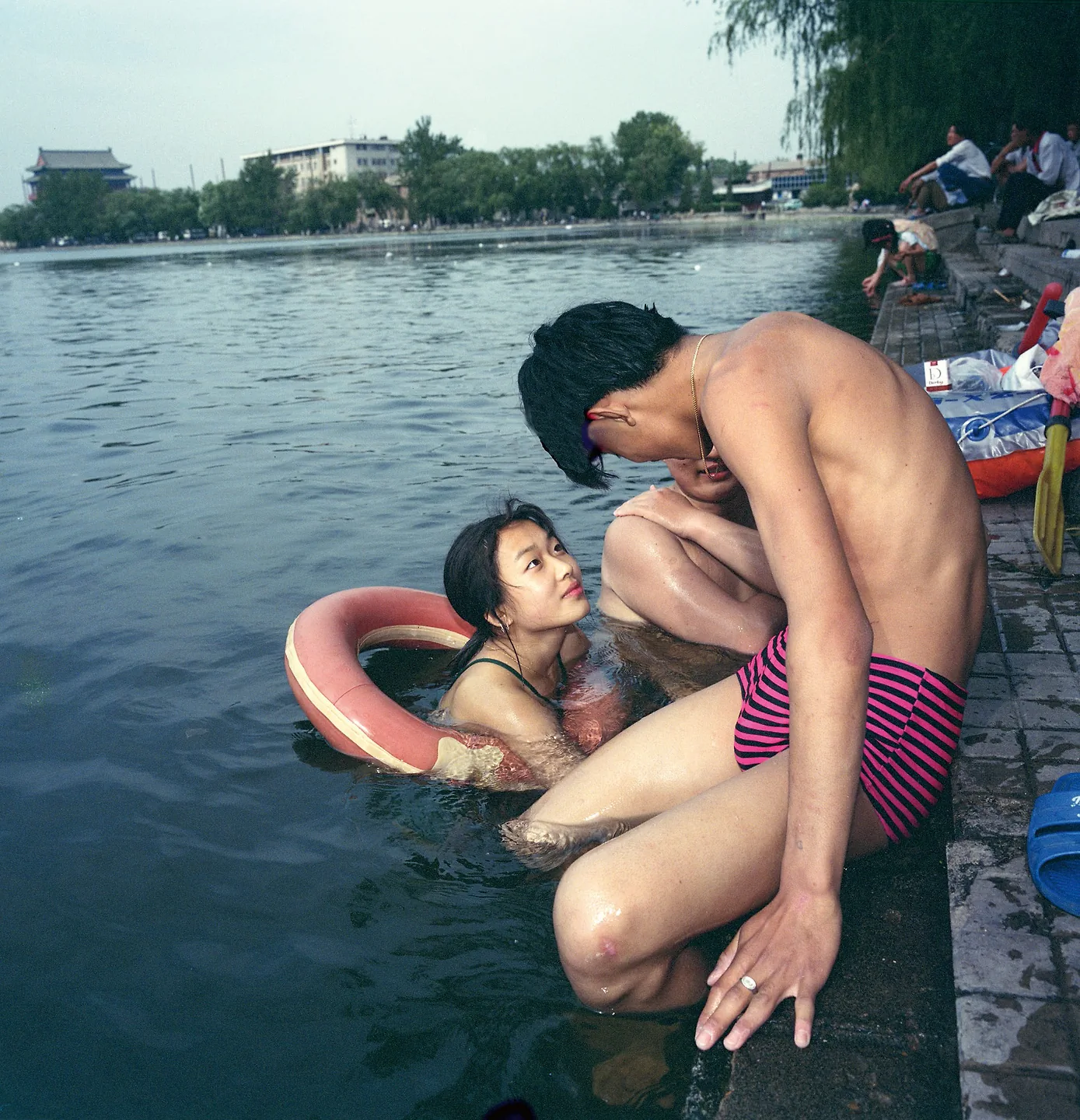
Summer of 1995, Beijing, 1995.
Girard earned his chops as an autodidact, with few constraints. Comparable to an emerging novelist scribbling away in her teenage journal, taking countless pictures became a way for him to forge an identity. Transporting Girard back to his earlier days on the streets of Vancouver, I ask about Woman Sweeping (1981), a picture that reminds me of his Vancouver compatriot Fred Herzog, or even a pocket-sized Jeff Wall. An unremarkable situation, familiar to anyone waiting for a bus, yet the compositional energy transforms the everyday into a beguiling image. I suggest to him that this is an example of a picture that isn’t necessarily about time and place, its success down to more abstract qualities. He takes my point, acknowledging that a good picture needs to do more than just document a moment. “You know, I think that’s why I ended up getting hired” as a photojournalist. “On some level, maybe I was competent because I’d been doing it for 15 years, and not by looking at news photographs.” He found his voice, in other words, before he was told how to look at the world.
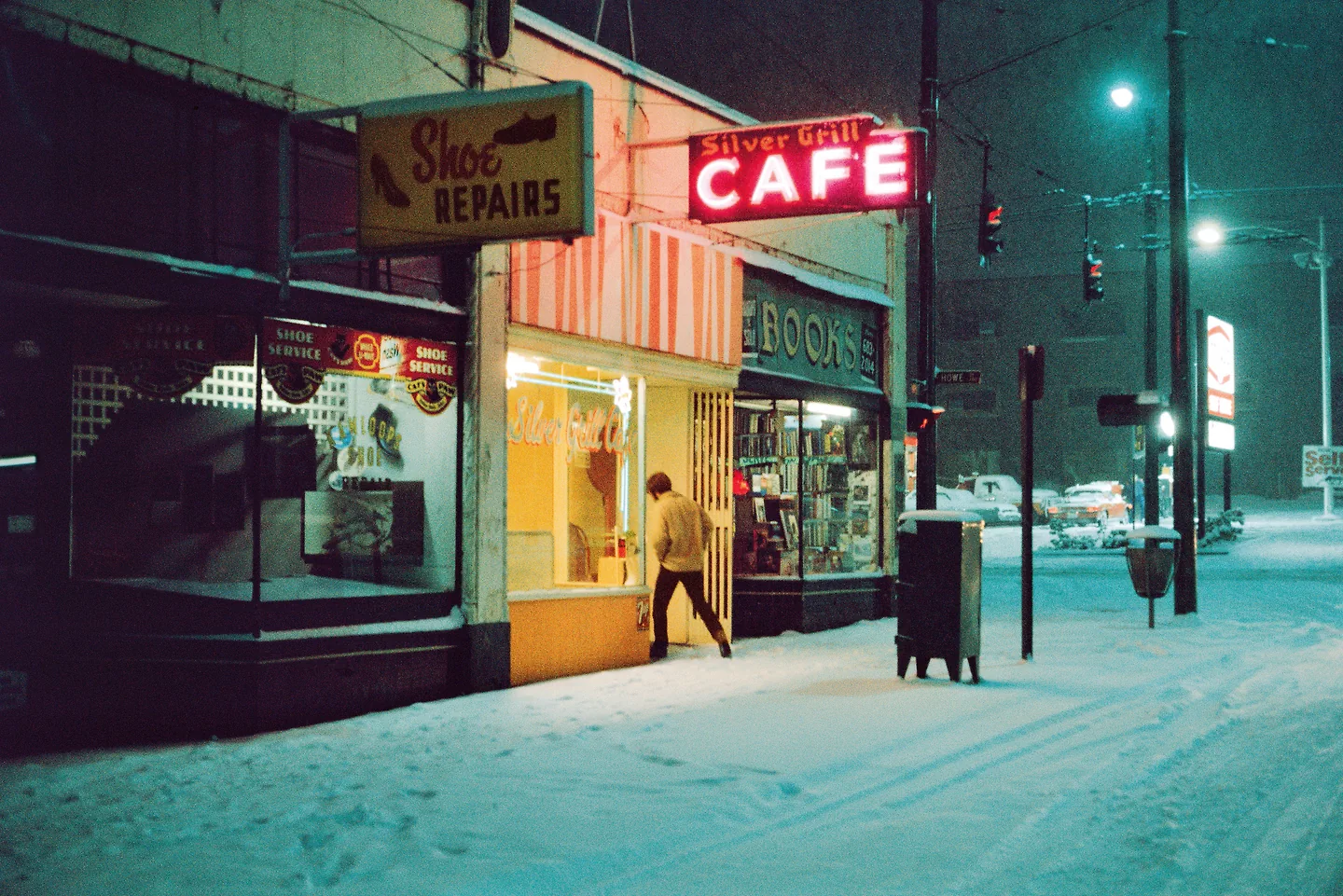
That voice has won him fans and followers across the world, becoming an exemplar of a life behind the lens for many a budding shooter. As a witness, Girard is unfailingly generous. In 1998, he moved to Shanghai, and he has spent years there documenting the relentless evolution of the cityscape. Condemned Neighbourhood (2005) is trademark Girard: acrid buzz of blues and pinks, inexorable change on the horizon, a hint of abjection, and yet in the beauty of the picture a sense of hope as well. There’s amazing continuity across his oeuvre. Thirty years before that picture, he made Silver Grill Cafe (1975), a snowy street in Vancouver all aglow with tungsten and neon, a man stepping into the doorway of the café, seeking a grilled-cheese sandwich or some kind of solace. It’s a great shot, full of loneliness and portent, suffused with the same quality of light that we see in Condemned Neighbourhood. More recently, he’s returned to Japan to shoot a series on late-night snack bars. Look at Snack Sakura, Sanbonmatsu (2022). An almost windowless building glows with a sickly green light beneath a bruised and bluesy sky. A sliver of pinkish-orange in the distance. Someone is awake in the house next door. This is not light as captured by an average human eye. It’s the light in the eye of a particular photographer.
Read more from our summer 2026 issue. Greg Girard, The Polygon Gallery, July 10, 2026–October 25, 2026.