

Rodrigo Caula had a typical teenage obsession with cars, but his love for the automotive world ran deeper than fantasies of buying an expensive ride and burning rubber on the streets of Port Coquitlam. He wanted to be a specialist vehicle designer. “I’ve always had a knack for cars. That was my dream,” the now-36-year-old says. His interest was fuelled, in part, by the work of his father, Marcelo Caula. (Dad’s long architectural career includes work for Vancouver’s B+H Architects and IBI Group, and he was part of the architecture team for the Vancouver House building.)
There was no local fast track for Rodrigo Caula’s specialization—no dedicated car design school in B.C.—so he headed to Kwantlen’s Interdisciplinary Design Studies program (now called Foundations in Design at the Wilson School of Design). Next stop was Emily Carr, where he focused on industrial design. In 2012, he was recognized by the BMW Guggenheim Lab for his Ingrain Reclaimed Street Furniture Project, which transformed a 205-year-old Douglas fir tree into a public bench on Granville Island.
Buzz around Caula was building in the Lower Mainland, but the European scene was calling, and he soon moved to Milan to work for the digital architecture and design magazine Designboom. “It was my first real introduction to the world of design outside of woodworking and furniture making,” he says, “and it helped shape my path towards luxury design.”
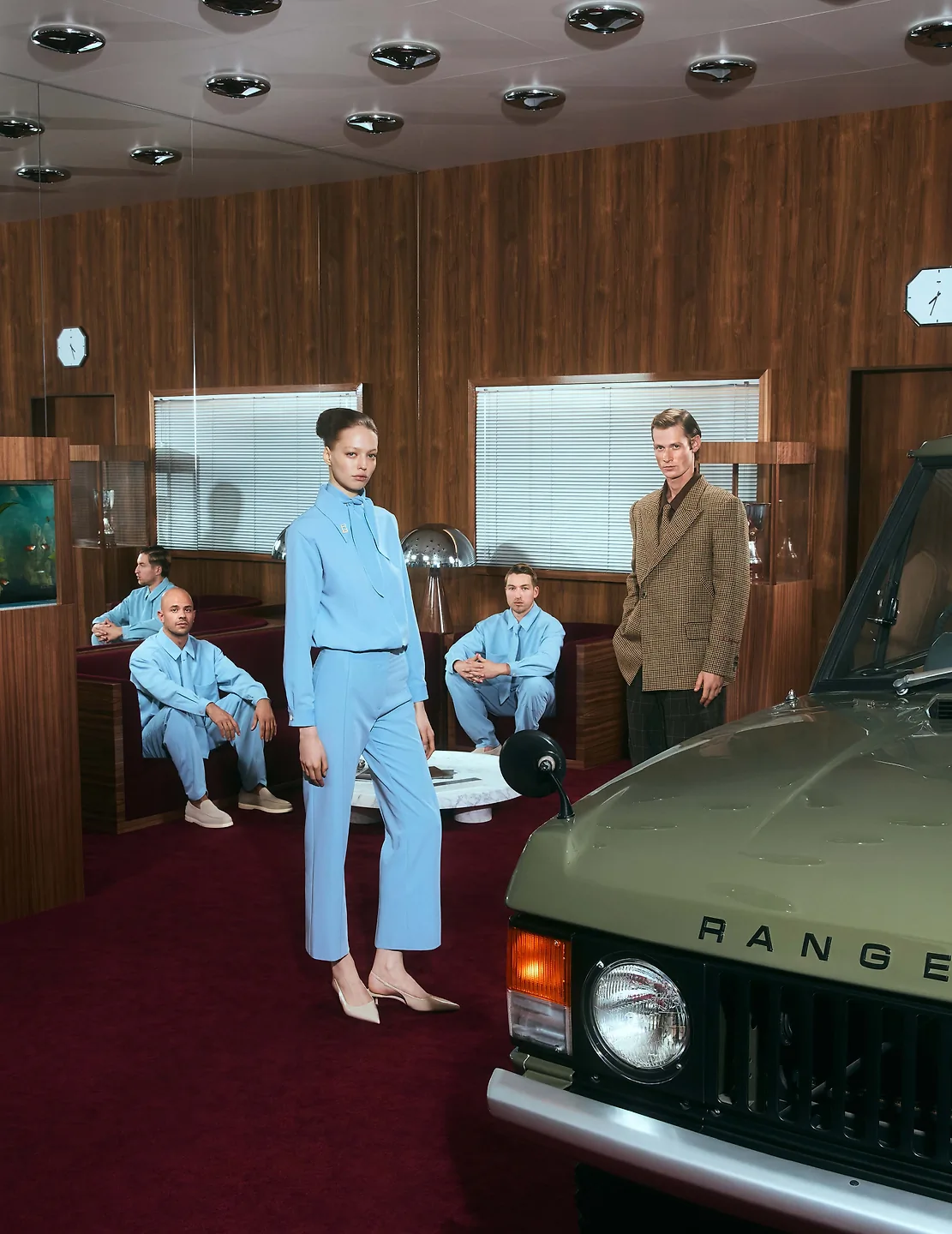
For Range Rover’s 55th anniversary, NUOVA created an installation in Milan that transported visitors between a 1970s car dealership and a vision for the future.
Unlike his boyhood fixation with cars, Caula’s passion for heritage isn’t so common for a man in his 30s. But he found a kindred spirit in fellow designer Enrico Pietra when the two met in Milan. “There’s not a lot of people our age that really have the interest to preserve and protect,” Caula admits. According to the duo, their love for luxe is not about price or status—instead, they are laser-focused on preserving history and authentic craftsmanship. “There are a lot of codes, a lot of honour, a lot of culture and tradition that are respected” in luxury design, he says.
Together, they founded NUOVA (New Understanding of Various Artifacts) Group, a Venice Beach-based multidisciplinary design studio built on the idea that “time travel is possible.” The sci-fi-sounding ethos comes from combining the luxury craftsmanship of the past with technology (and importantly, sustainability) practices of today, thus creating a future that honours both history and the planet.
They look at the 1970s as a time when the future—new technology, social change, innovative design—seemed hopeful and bright.
“At the beginning, it wasn’t explicit to us,” Pietra says. The idea of time travel came through in NUOVA’s work, but the pair didn’t quite name their game until their debut project with the Rimowa luggage brand and La Marzocco coffee machine company. (Ironically, a time machine would have been useful: the Caffè Rimowa pop-up coffee shop was supposed to be at Milan Design Week 2020 but was postponed until 2024 due to COVID-19.) Created to launch the new Linea Mini espresso machine, Caffè Rimowa embraced ’70s-era design: high-contrast wood panelling, red-orange ceramic tiles, and text treatments inspired by old Italian bar signs. “Everything was designed to be time-specific for 1971,” Pietra explains, noting that every wood, fabric, and tile was painstakingly researched. “But everything was redesigned, in a way, because it was our interpretation of the ’70s—we’ve never been to ’71,” he adds with a laugh (both were born in 1989). Rigorous studying of magazine archives, trips to traditional mills and factories, and even dusting off an old record player was required: Loretta Lynn’s country crooning provided another level of nostalgia in Caffè Rimowa. Plus the NUOVA founders were inspired by a workshop they’d attended back in 2019, when they stayed in the California desert in a cabin designed by architect Andrés Atela, who was born in Mexico but is now based in Paris.
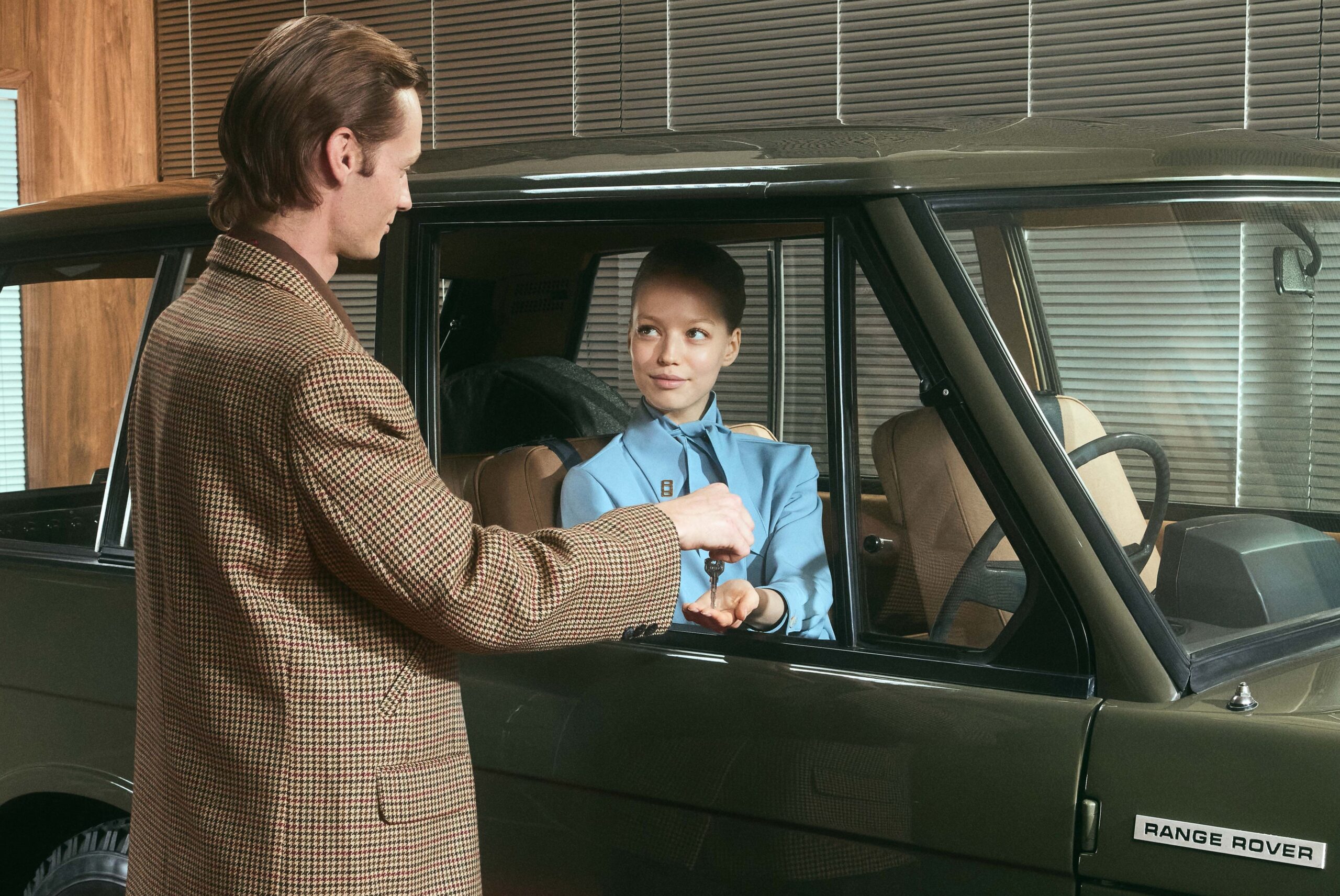
Caffè Rimowa was an instant success at 2024’s Milan Design Week (people got it immediately, Pietra recalls). The pop-up’s popularity led to more collaborations with world-famous brands, including an immersive installation to celebrate Range Rover’s 55th anniversary. The work included a “time capsule” that invited guests into a 1970s car dealership, complete with the first Range Rover ever produced. NUOVA designed everything from the furniture to the soundscape (and smellscape), which was particularly meaningful for car-lover Caula: “Being entrusted by Range Rover to design and produce the work was incredible,” he says.
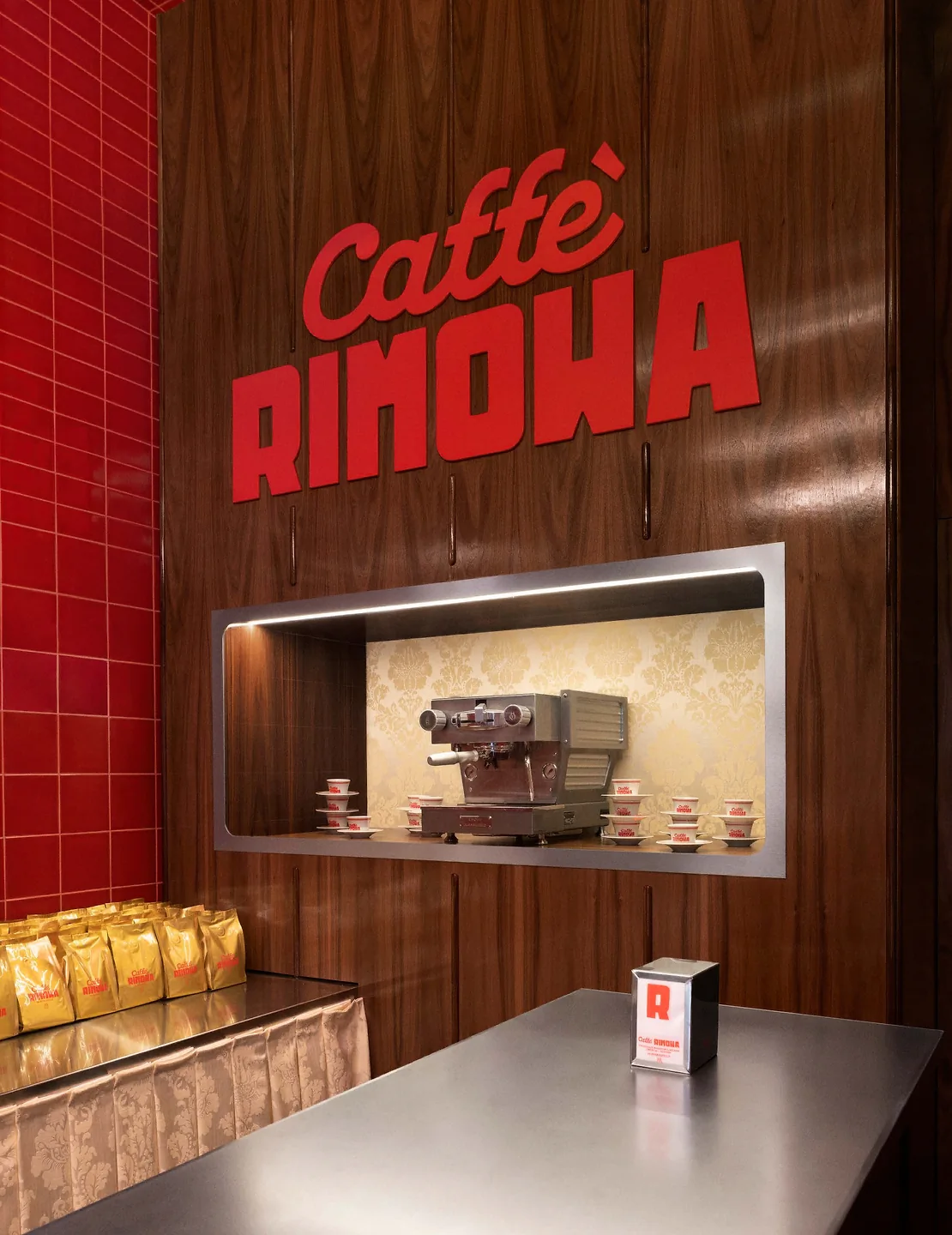
Caffè Rimowa at Spazio Maiocchi during Milan Design Week.
Some of NUOVA’s projects are less elaborate. The Andrea light, for example, designed for Tacchini, is a flying sauceresque polished-chrome wall sconce that gives off a vibey ambient glow. The Enzo reception table is made of solid marble, with a small base that makes the tabletop appear as if it’s floating.
Then, there are inventions that surpass the traditional conventions of design. NUOVA’s fragrance brand, Aeir, makes eau de parfum via molecular engineering. “All of our perfumes are made using bioconversion, which is basically the conversion of sugars to make scent,” Caula explains. “You’re creating this aroma, essentially, through fermentation.” No petroleum synthetics are used, and the alcohol component of the perfume is made with 100 per cent recycled carbon dioxide. “We’re taking, basically, dirty air,” he says. He adds that their creations prove that you don’t need to use harmful chemicals or cut down old-growth trees to make fragrance oils: “We can recreate them in labs at a higher quality.”
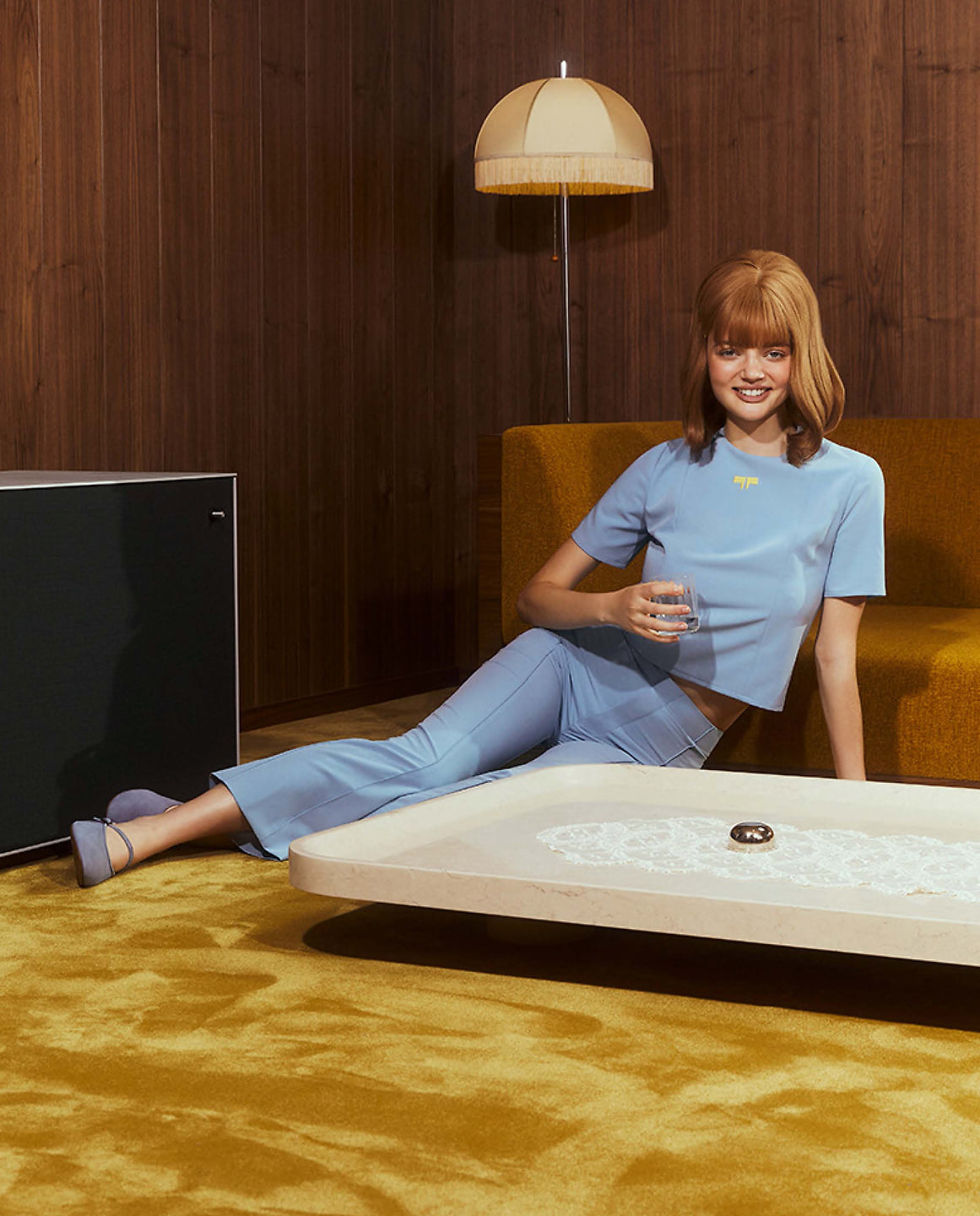
Enzo reception table.
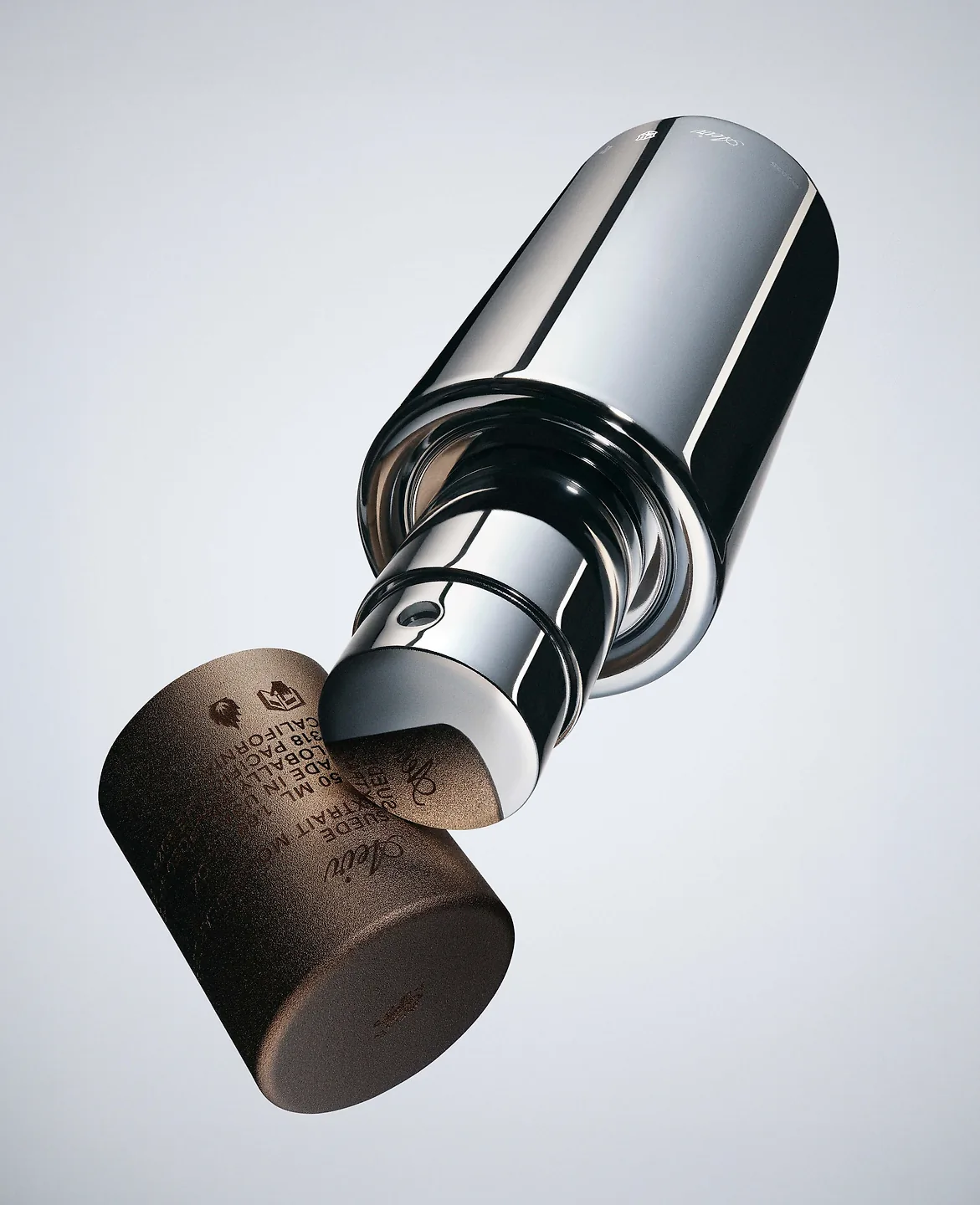
Aeir fragrance.
If high-tech bioconversion represents the “future” part of Aeir, the scents themselves make up the past. “Once you walk into a room, scent is one of the first things that really takes you on a voyage,” Caula says. NUOVA’s eaux de parfum include Wet Stone, Grand Rose, Suede, and Virgin Olive. During a presentation of Suede at Design Miami in late 2024 (also centred on 1971), the co-founders were floored by the emotional reactions their exhibit evoked—from dancing to crying. “You’re literally walking into a space, that’s it—there’s no magic, no Houdini, it’s just the power of design,” Caula says.
The year 1971 may hold a very particular interior design aesthetic, but the pair also gravitated toward this era because of its outlook. “We were inspired by this ’70s vision of the future,” Pietra says, “what the future is bringing to us, in a more positive way.” They look at the 1970s as a time when the future—new technology, social change, innovative design—seemed hopeful and bright.
While he spends most of his time in Venice Beach (or travelling to design fairs around the world to present his immersive projects), Caula still visits home—recently, so he and Pietra could deliver a keynote speech for IDS Vancouver 2025. Next year, NUOVA is leaving 1971 behind and going all-in on 1980. The installation is in collaboration with Basic Space and will launch at a pop-up in Manhattan.
He may not be designing cars at the moment, but Caula’s work is inarguably transportive.
Read more from our Winter 2025 issue.