

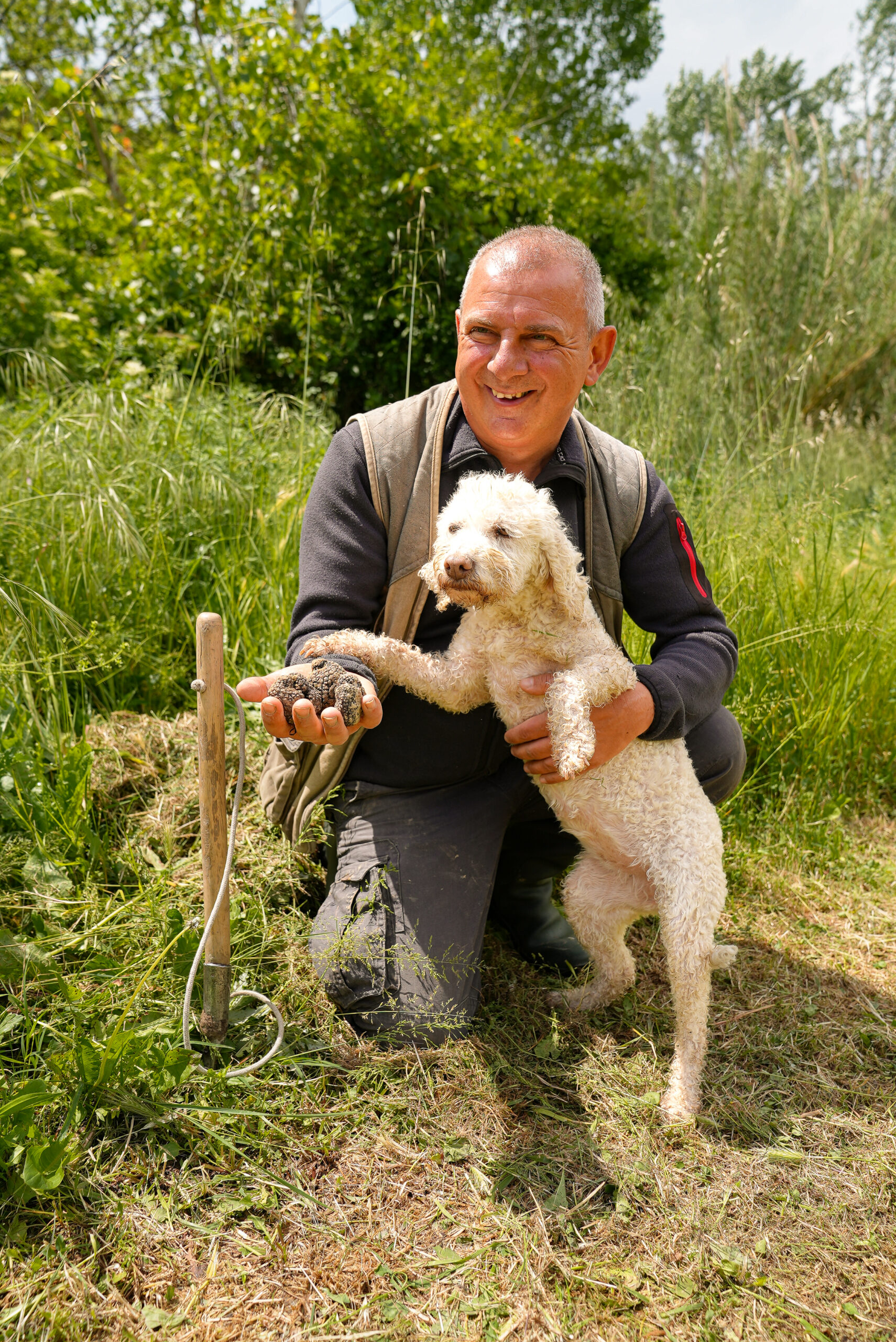
“The truffle hunter is a dreamer. We all dream of finding the biggest truffle in the world. We’re all a little bit crazy,” Massimo Cucchiara says as he and his trusted dog, Bice, roam through the forest of San Miniato in search of Tuscany’s most elusive delicacy.
Under a brilliant springtime Tuscan sun, Bice moves with quiet determination, nose pressed close to the forest floor. His tail flicks as he catches a scent that he follows. Within 90 minutes, he has unearthed three prized treasures.
Holding one gingerly in his palm, Cucchiara explains the subtle differences between the 63 varieties of truffle that grow around the world, 25 of them in Italy.
“Two weeks ago the temperature went up, and we have started to find the summer black truffle. So we have truffles year round,” he says. “Different varieties, different method of hunting, different recipe, different taste, different smell. They are different in everything, right?”
For Cucchiara, a passionate storyteller and truffle hunter, the industry is far more than a profession—it’s a family legacy. His grandfather was among San Miniato’s first truffle hunters, while his father served as president of the truffle hunters association for 18 years. Nestled among the mineral-rich hills of Tuscany, San Miniato is internationally renowned for producing some of Italy’s finest truffles, including the coveted white truffle, widely considered the most valuable variety in the world.
“In my family, the truffle tradition goes back generations,” he says. “I grew up in the middle of truffles, and I’m so happy to share this tradition with you.”
Now, Cucchiara has transformed his family’s heritage into an immersive tourism experience. Visitors join him and Bice or his other trusted truffle-hunting dogs on hunts before returning to the family estate for a homemade gourmet truffle-laden lunch prepared by Cucchiara’s sister. The meal is an intimate glimpse into Tuscan hospitality, with recipes, traditions, and stories passed down through generations.
Cucchiara isn’t your typical tourism operator. He’s a truffle-hunter through and through who’s turned his business into a viable tourism business that allows him to continue his family’s fungi tradition while drawing travellers to a region that few experience year-round.
“We are very, very lucky, and we need to preserve this area,” he says. “If we want truffles in the next 20 years, we need to start today.” And tourists, he says, have an important role in this preservation—by demonstrating the value of the truffle habitat.
Cucchiara is part of a small but growing movement of family-run businesses across Tuscany that are transforming traditional livelihoods into tourism. Their efforts help sustain small communities while encouraging travellers to venture beyond the region’s well-trodden tourist circuit and outside of the usual summer months when tourism booms. Businesses like Cucchiara’s are part of a rhythm of traditional life that continues all year and aim to entice travellers into a slower, off-season experience of the countryside.
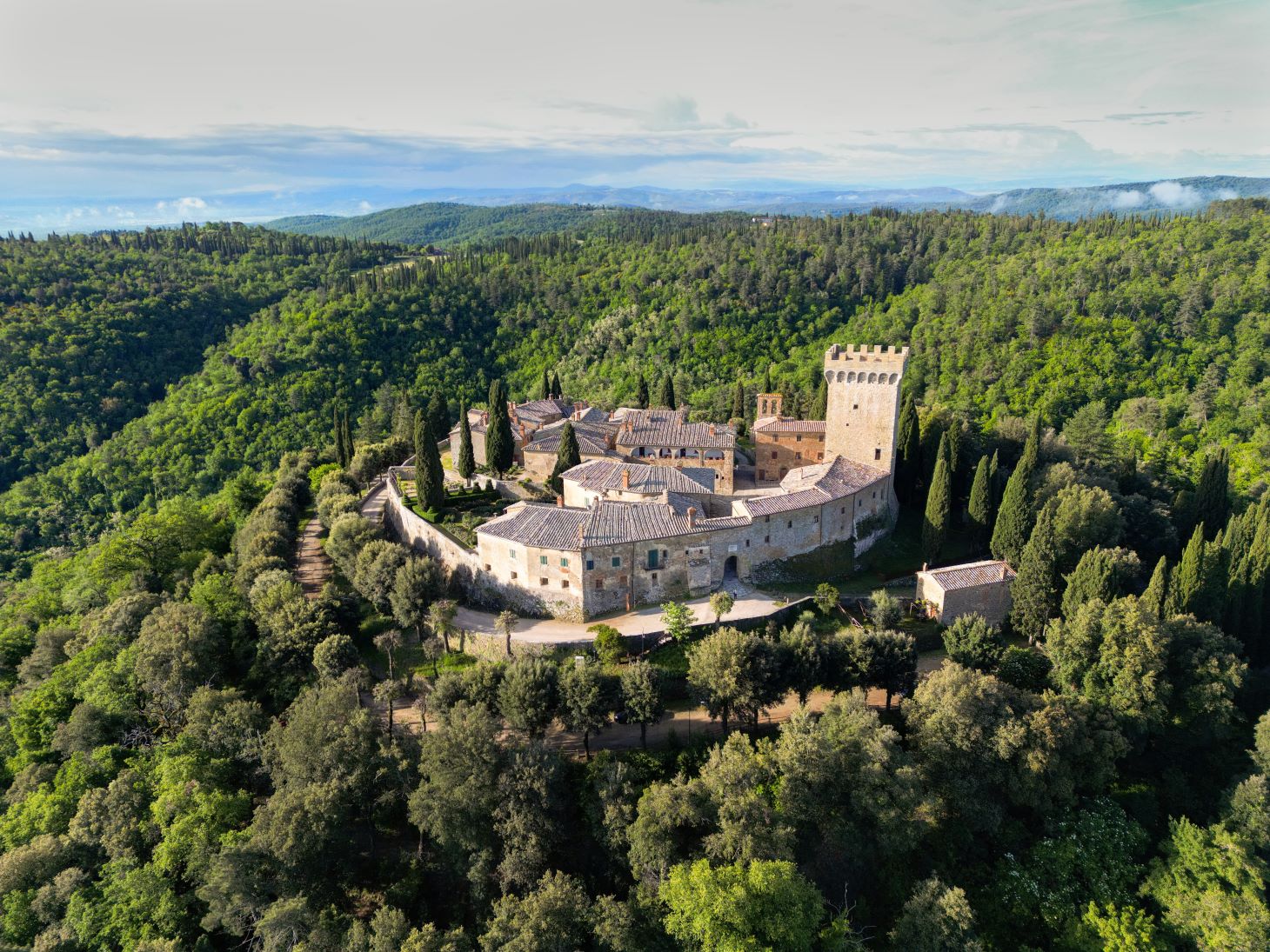
Cucchiara’s passion is deeply rooted in San Miniato itself—a medieval hill town crowned by an ancient fortress overlooking the Arno Valley. Surrounded by cypress groves and olive trees, it offers the charm of Tuscany’s famed hill towns without the crowds or price tag of nearby San Gimignano.
Outside the annual National White Truffle Exhibition each November, when thousands of food lovers descend on the town to celebrate its prized fungi, San Miniato remains peaceful and quiet: cobblestone streets lead to hidden piazzas and family-run cafés. While the festival draws crowds during Tuscany’s winter low season, the region attracts few tourists the rest of the year. Experiences such as Cucchiara’s truffle-hunting tour are helping to entice visitors back to the region.
This sort of experience draws tourists looking for an experience that is more “meaningful, immersive, and connected,” says Ben Colbridge, commercial director for U.K.-based travel agency Exodus Adventure Travels. “We saw travellers increasingly looking beyond traditional sightseeing, wanting deeper cultural experiences, distinctive places to stay, a slower pace of travel, and genuine connections with local communities.”
Colbridge says the agency has met this demand by expanding its guided travel packages beyond ticking off Tuscany’s postcard-perfect villages and into more slow and intensive tours: visiting artisan workshops and inside restoration laboratories to learn about how centuries-old tapestries are painstakingly preserved; stopping at family farms to taste small-batch olive oils with local producers; donning aprons to learn how to make pillowy gnocchi and classic tiramisu alongside local cooks; and experiencing other centuries-old traditions rarely encountered on conventional tours.
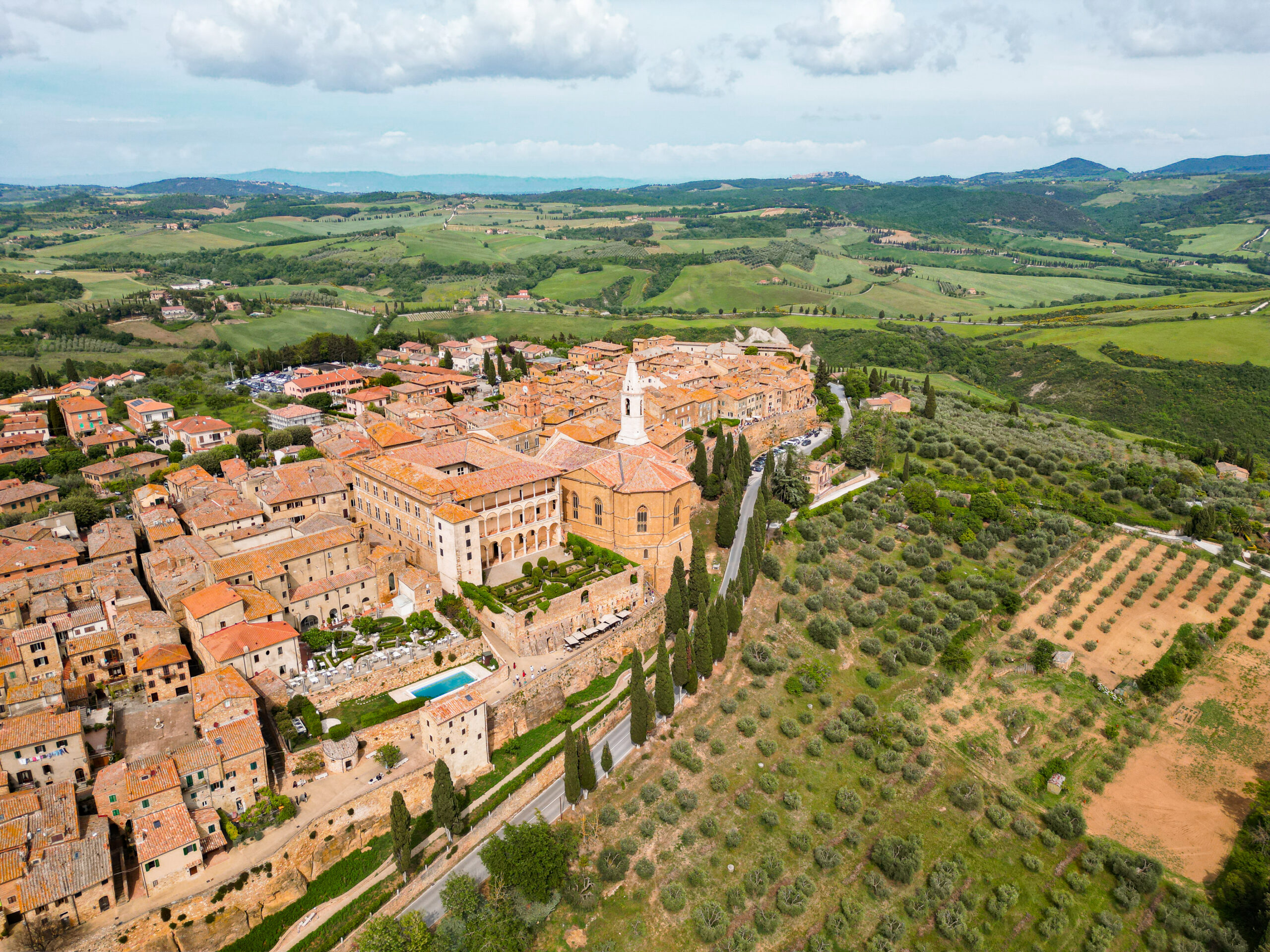
Another slow tourism destination Exodus has partnered with is Podere Il Casale, an organic farm in the rolling hills of the Val d’Orcia, the UNESCO World Heritage region stretching from Siena to Monte Amiata. The sweeping panorama of vineyards and cypress-lined roads is breathtaking, but owner Sandra Braendli proves equally captivating.
Originally from Switzerland, Braendli arrived in Tuscany with her husband and two children, determined to build a healthier life for her family. “In the ’80s, we realized how food was changing,” she recalls. “Caged animals, pesticides, et cetera, so I stopped eating meat, and we decided we wanted to grow our own food.” Locals encouraged her to settle in Val d’Orcia, then a largely forgotten agricultural region.
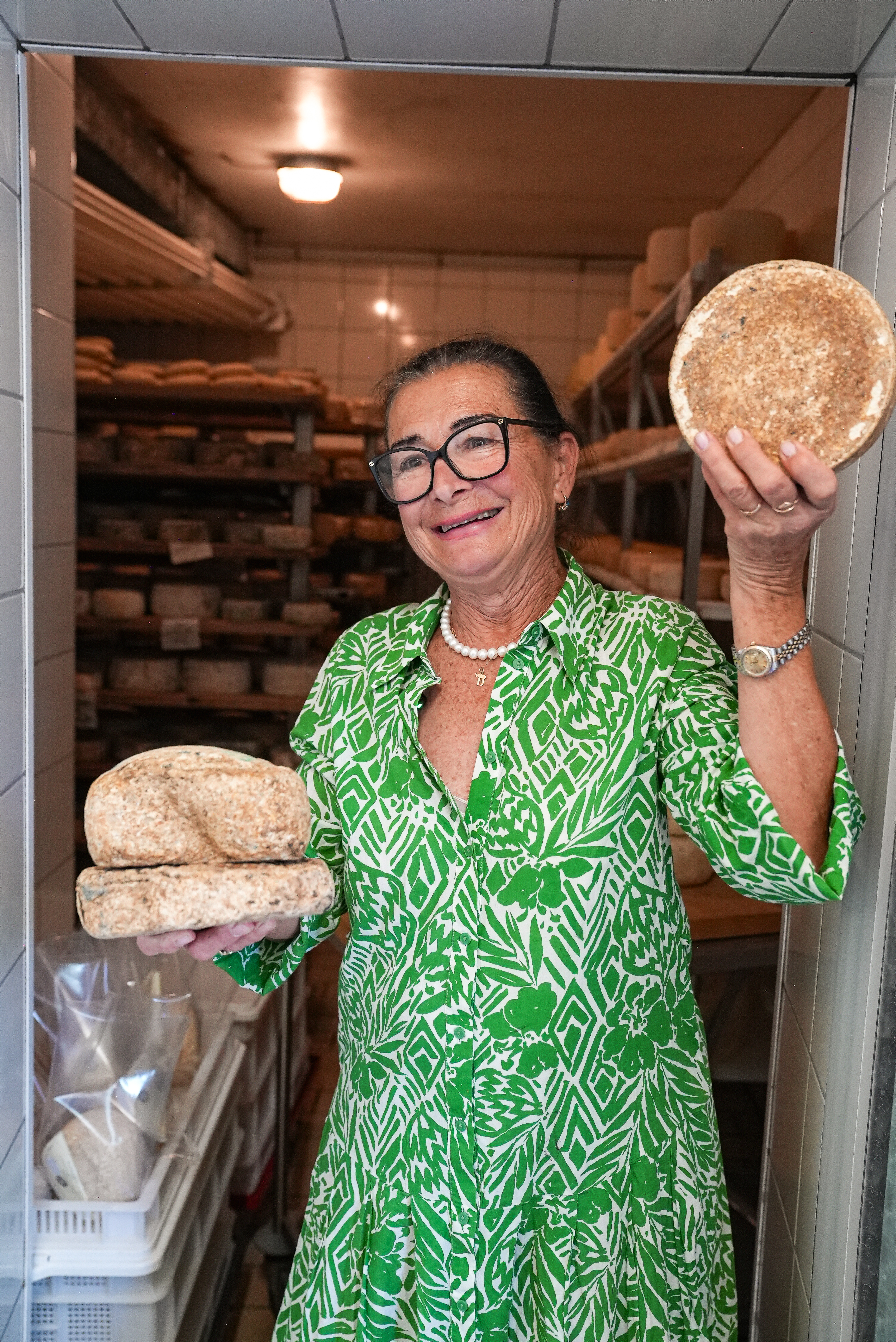
Today she tends to Podere Il Casale, a globally respected organic farm celebrated for its raw-milk pecorino cheeses and acclaimed farm-to-table restaurant in operation for 30 years.
Like Cucchiara, Braendli has turned personal passion into a tourism experience that welcomes visitors into her daily life. After touring the farm and learning about sustainable cheese production, guests gather around a long table overlooking the Val d’Orcia for a leisurely lunch of handcrafted cheeses, cured meats, homemade bread, fresh pasta, and local wines.
Although Val d’Orcia draws visitors to celebrated towns such as Pienza and Montalcino, as well as its famous cypress-lined roads, much of the surrounding countryside remains blissfully uncrowded—a place where Tuscany unfolds at its own gentle rhythm.
“I’ve always loved Italy: the food, the lifestyle,” Braendli says. “Someone told me to come here because nobody was really living in this valley back then. It wasn’t a wine region then. People had moved away. It was an unknown place, and much cheaper. The rest is history.”
Read more travel stories.