

As optimistic as skin-care brands try to be, there’s a lot of focus on the negative. Bottles brag that they hold no artificial colours. No fragrance. No parabens. No aluminum. And while it’s great to stay away from harmful ingredients, body-care entrepreneur Samantha Rayner points out that when you fixate on deletion, you can lose the plot. “Let’s not use this. Let’s not use that—what are you left with?” she says. “It’s boring if you start eliminating everything.” Instead of focusing on subtraction, she searched for something that would add value. When she launched her skin-care brand Maris Dae in May 2026, she highlighted one humble ingredient: seaweed.
Rayner has spent 20 years in the Vancouver product-marketing and wellness industries (she’s worked at Saje, AG Hair, and Lululemon). In 2020, she founded Better Basics, a housewares business for reusable and refillable body and home-care products: bulk soap, dispensers, water bottles, and produce bags. She ran it for four years before pausing to develop her latest venture, Maris Dae (pronounced “mari,” as in marine, and “day,” as in today).
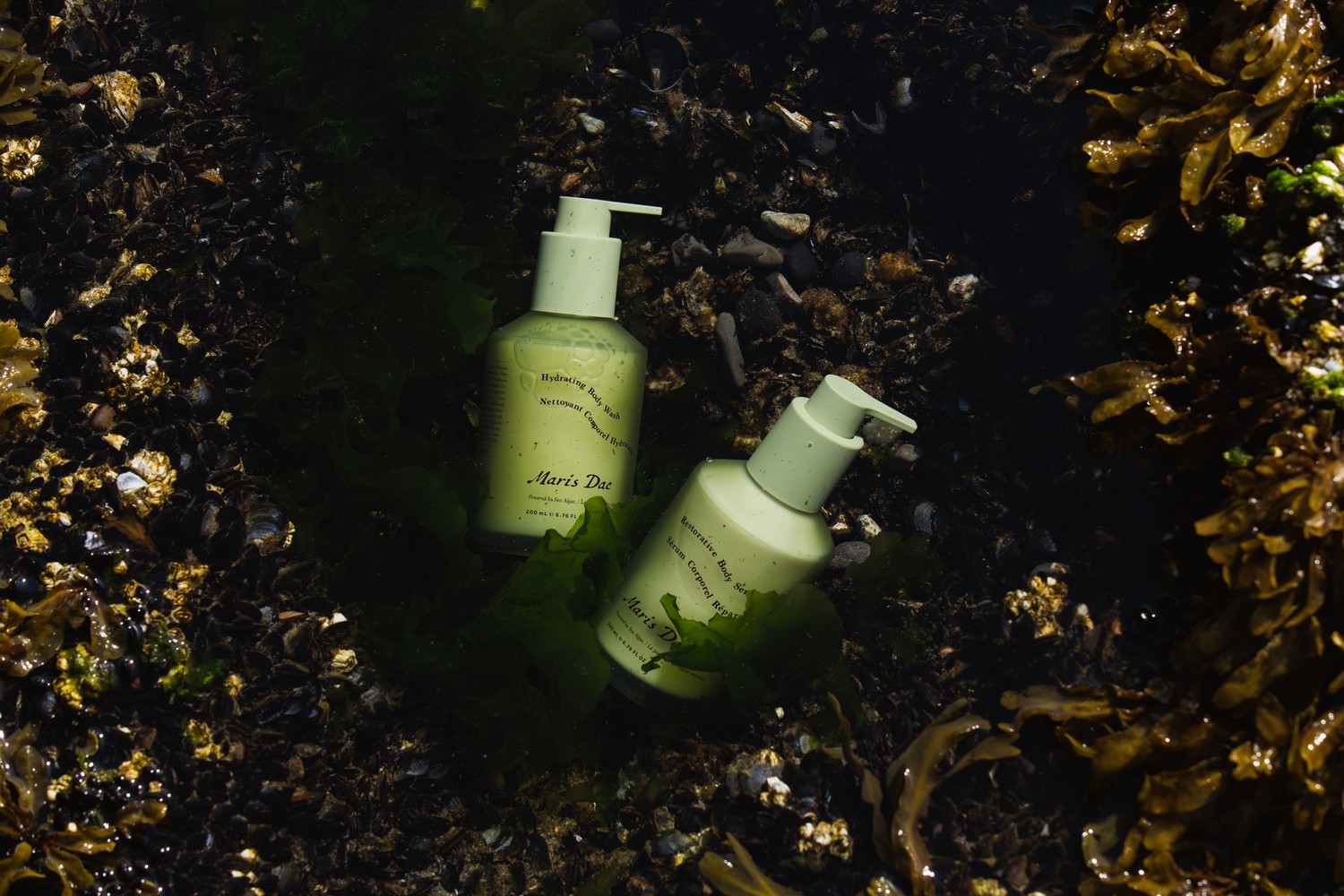
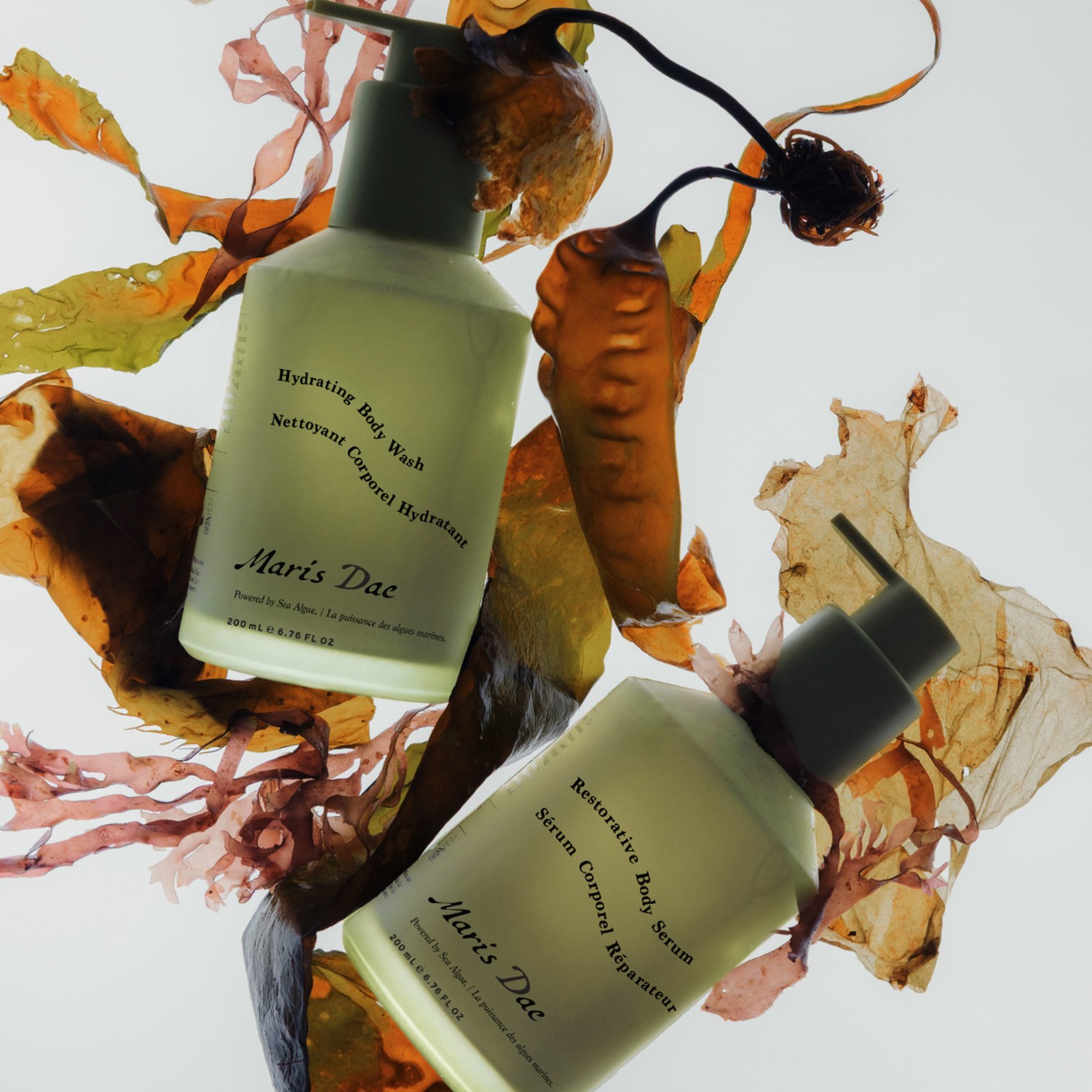
To date, the company sells just two products: a body wash and a body serum. A body oil is available for preorder. Marketing photos are rich, with an outdoorsy, oceanic vibe: “We’re going for this mermaid, no-makeup, I just got out of a fresh ocean swim look,” Rayner says. Thanks to two decades of experience, she knows all about branding, but her real mission, much like her hero ingredient, runs deep.
Rayner’s own wellness story has been informed by loss and health challenges, including losing both parents to cancer and a five-year battle with infertility. Her experiences informed Maris Dae’s ethos and commitment to ingredients that are supported by research. She explains that transparency and science-backed product development was important to her—after studying the potential skin-care benefits of seaweed, she sought support from experts. Naturopathic doctor Sarah Harbottle is Maris Dae’s head of product, and cosmetic chemist Paul Crichton does research and seaweed extraction. Aware of the deceptive advertising common in the beauty industry, she is eager to share her team’s qualifications online.
Citing a 2023 study published in the journal Cosmetics, Maris Dae claims that algae improves skin texture and hydration as well as reducing fine lines and dark spots. That’s thanks to polysaccharides, naturally occurring carbohydrates that can improve skin health. Skin-care products made of seaweed may sound very 2026, but Rayner points out that they have been used around the world for ages: there’s thalassotherapy, a term coined by a French doctor in the 1800s, and Irish seaweed baths, both practised for centuries. Indigenous people on the West Coast have historically harvested bull kelp for food, skin care, and medicine. “Algae has been used in other skin-care brands and products for generations,” Rayner says. “There have been quite a few published dermatology papers on seaweeds for skin care, which is very exciting.” The caveat, she acknowledges, is that algae is extraordinarily diverse. Seaweedheads will know that Algaebase in Ireland has recorded 185,940 species to date. Not every kind of algae (or seaweed, a type of algae) will benefit the skin, and how the ingredients are extracted also matters (which is why Maris Dae has a chemist do it).
Other local skin-care companies also highlight algae as a hero. Bowen Island’s Sangre de Fruta uses Macrocystis pyrifera (kelp) extract in its Floral Tempest rinse-free hand wash. Victoria’s small-batch West Coast Seaweed Skincare carries a line of products formulated for perimenopause support. Sooke’s Seaflora has a digital trophy case full of clean beauty awards. Vancouver-based Plantd just launched facial care treatments made with wild Pacific kelp and red seaweed (and the company supports kelp forest restoration through a partnership with Veritree). Sealuxe, also based in Vancouver, highlights razor burn and keratosis pilaris as issues that can be remedied with seaweed-based products.
Maris Dae’s marine hydration skin-care products are made using bull kelp and Mazzaella japonica that comes from Richmond-based Canadian Pacifico Seaweeds, a big name in local seaweed farming. In addition to benefitting the skin, algae is also a relatively sustainable resource, especially when carefully farmed. “Seaweeds don’t take a lot of resources to grow,” Rayner says. “It doesn’t cost a lot, it doesn’t impact the environment a lot, and the benefits are significant.” Seaweed aquaculture absorbs carbon dioxide and can improve water quality. It’s not an answer to climate change (and local regulations complicate environmental impact), but it’s a meaningful step in the right direction. “As a category, seaweeds are very interesting for B.C.,” Rayner says. “I think it’s a big investment in our economic development.”
One of her goals is to conduct her own clinical study that focuses on the seaweed extracts Maris Dae uses. For now, the company has conducted molecular testing on the polysaccharide content of its bull kelp and continues to seek biochemical expertise for new products (Rayner plans to launch facial skin-care products in 2027 and to eventually expand to supplements, as well).
Seaweed isn’t a new ingredient, and it’s not even new to the world of skin care. But marketing might be the missing element that could promote algae to the it-girl status of aloe or coconut oil. “As I developed the packaging, I used social media a lot,” Rayner says, explaining that everything from the colour of the bottle to the wave motif was chosen by Maris Dae’s target audience. The green glass bottles look luxe on a bathroom counter so are unlikely to be tucked away and forgotten. “I wanted something that would be pretty, that bring you a moment of self-care and joy in your busy day, because I know our customers are very busy, and they don’t take a lot of time for themselves,” Rayner says. The “mermaid skin” messaging is working—the company’s last preorder sold out in 48 hours.