

Sometimes mistakes become medicine. Bad leads to good. Challenge can be curative. Naoko Fukumaru knows this all too well. The conservator and restorer, who’s worked on some of the world’s most renowned masterpieces (by the likes of Caravaggio and Leonardo da Vinci) and is now an artist in her own right, has faced tough trials in her personal life. She ended her marriage after enduring years of abuse that continue to plague her. But she’s also found a way out of trauma through her art. And yes, it began with a mistake.
She was forging a new life in Powell River on the Sunshine Coast when a fellow potter sent her a note about missing her kintsugi workshop. But Fukumaru had never done kintsugi. The 500-year-old tradition is a ceramic repair process that uses urushi resin dusted with powdered gold to highlight rather than hide cracks. Kintsugi means “to join with gold.”
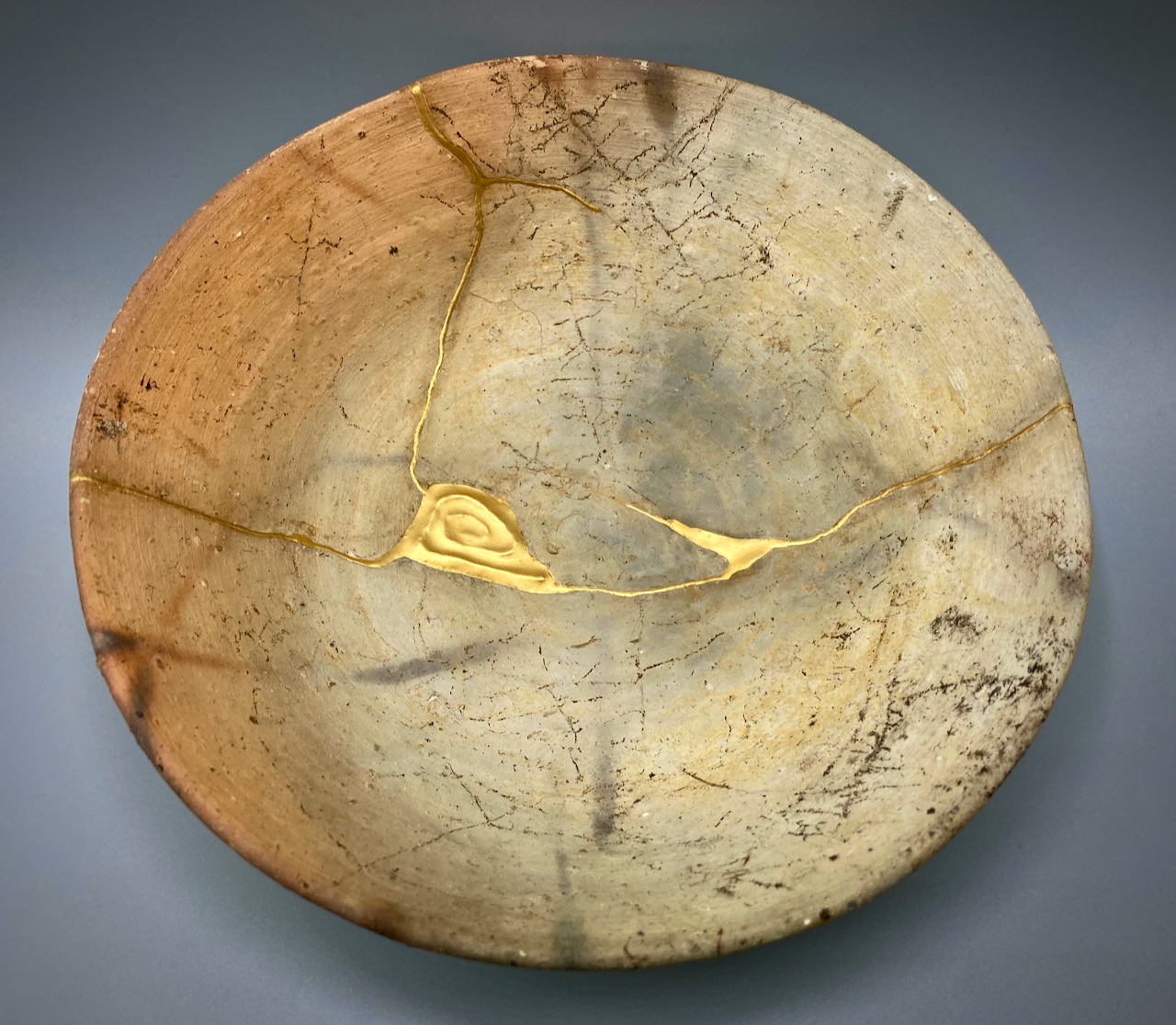
“Morning Moon” – 2022, Kintsugi on 300 BC – 300 AD Yayoi Era pottery.
She knew what the process was, having grown up in Japan with a family in the antiques business for four generations. But it was this impromptu note that began Fukumaru’s now-six-year-long love affair with the craft of kintsugi.
Her refrain is that kintsugi saved her life. She’s studied the tradition, developed her own approach, and taken the craft far beyond its strict boundaries. Creativity and restoration now come together in her artwork, as seen in her new show Beautifully Broken at the Nikkei National Museum & Cultural Centre in Burnaby until February 21, 2026. The exhibit showcases a range of her work but also highlights another random occurrence that stirred something in her, spurring her into yet another direction.
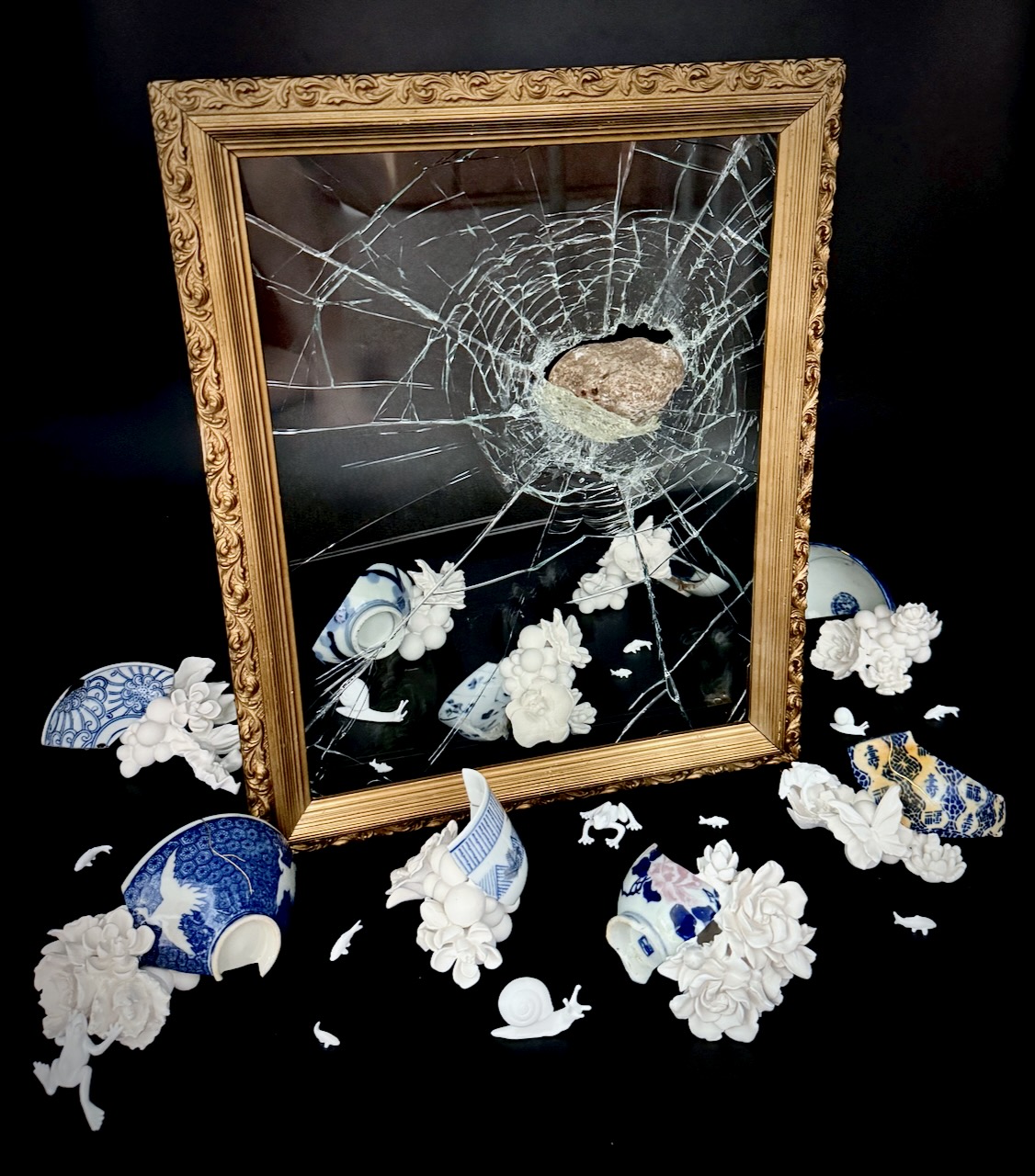
On a July day in 2022, she saw a shattered window at the Vancouver Japanese Language School. The rock that had been thrown at the school’s window was stuck in the broken glass, as if suspended. The vandalism was visceral, “a modern reminder that there is still racial intolerance towards Japanese Canadians,” Fukumaru says. Instead of walking past, she saw an opportunity to transform the violent act into art—just as she had with her own life through kintsugi.
Related stories
- A Vancouver Artist Unstitches the Border Between Arts and Crafts
- Learning the Way of Tea in North Vancouver
- An Emmy-Winning Prosthetic Makeup Artist in Vancouver Takes Us Behind the Scenes of Shōgun
The school gave her the broken window. She reimagined it as an art piece created specifically for the Nikkei exhibit—a kind of collage of found object, kintsugi, and sculpted life forms. “Behind the Window acknowledges intolerance while exploring the beauty and vitality of the Japanese-Canadian spirit,” Fukumaru writes in her artist’s statement about the work.
The artwork delves into a shameful part of Vancouver’s history. From the 1890s, Nihonmachi (Japantown: Nihon is “Japan” and machi is “town” or “street”) was a thriving and diverse community along Powell Street. “Little Tokyo” was home to Japanese Canadians until 1942, when they were forced into internment camps by the federal government and their property was seized and sold. The fragments in Fukumaru’s artwork are relics of what was left behind and lost.
But she also wanted to honour past lives and encourage new beginnings. “When we talk about painful stories, I don’t want to only bring sadness and depression,” she insists. “I want to bring hope. We’re trying to heal. We have resilience. We have hope. We have a future.” She named the piece Behind the Window as an acknowledgement that everyone is suffering in ways we can’t always see. “We sometimes don’t know what’s going on behind the window, but there’s so much life.… You can put a lot of imagination into what’s happening, and not only the pain and sadness.”
Those pottery shards, strewn across Railtown along Alexander Street in what was Nihonmachi, have outlived the people who originally used them to sip tea or eat ramen. These hundred-year-old pieces are utilitarian, but they have value in “history and memory,” Fukumaru says. And as she writes in her artist’s statement, “Kintsugi, applied to broken ceramics from Japanese settlers and washed-up fragments from Japanese internment campsites, holds profound healing and reconciliation potential for our community.”
Casts of flowers and animals bloom and grow out of the fragments she’s pieced back together with kintsugi. This natural world is something she returns to again and again. She used to jump into the ocean and lakes on the Sunshine Coast to overcome grief and trauma while at the women’s shelter in Powell River. Now she brings the beach and forest into her art. And finds inspiration in other creatures, from fish to butterflies.
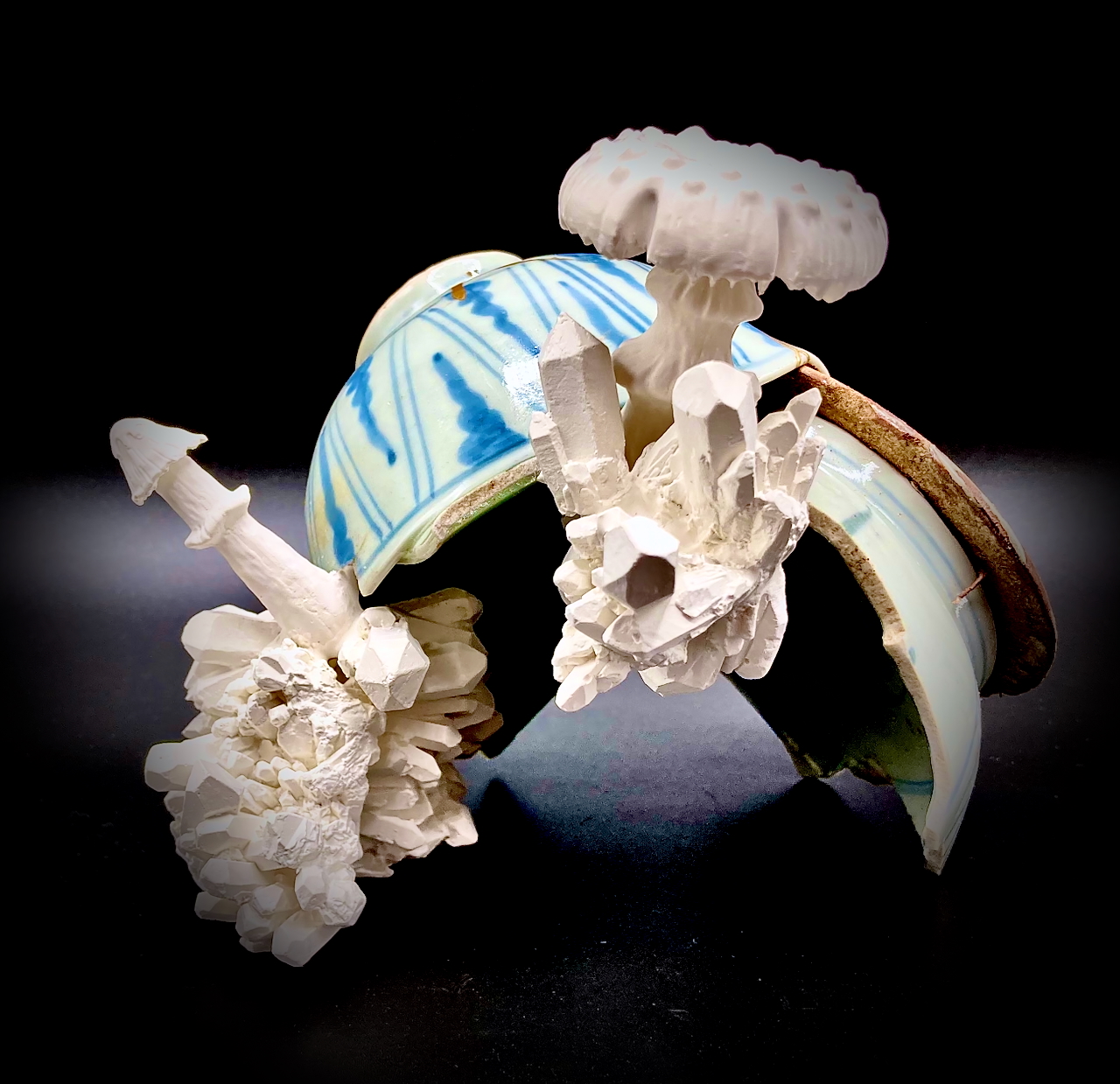
“Born This Way – Cycle of Life” – 2024, Kintsugi on old Imari porcelain (1820-1860).
“My artwork’s using painful and broken fragments, but still there is new life starting, and many new lives, like frogs and snails and flowers,” she tells me. “So much is starting from brokenness.”
In her studio in East Vancouver (she splits her time between there and Powell River), blocks from where Nihonmachi once bustled, her work forms a microcosm of history, meticulously restored and yet also a wholly new piece of art. From teapots inscribed with poems to thick raku bowls to a squat and serene tanuki—a Japanese racoon dog and symbol of good luck.
Fukumaru found the 19th-century hearth cover through her family’s antique dealership. It was broken into dozens of pieces, so she used kintsugi to reform the tanuki and the prophetic inscription on his robe: “If you accept it with an open heart, everything becomes beautiful.” The tanuki is an apt talisman: “He’s tricking people into acceptance and makes them smile.”
This oddly endearing yokai, a mischievous Japanese shapeshifter (on display at the exhibition), does seem to exude a kind of soothing magic. And when Fukumaru talks about the tanuki, she affectionately caresses the creature she’s recreated and brought back to life. She does the same with every broken piece.
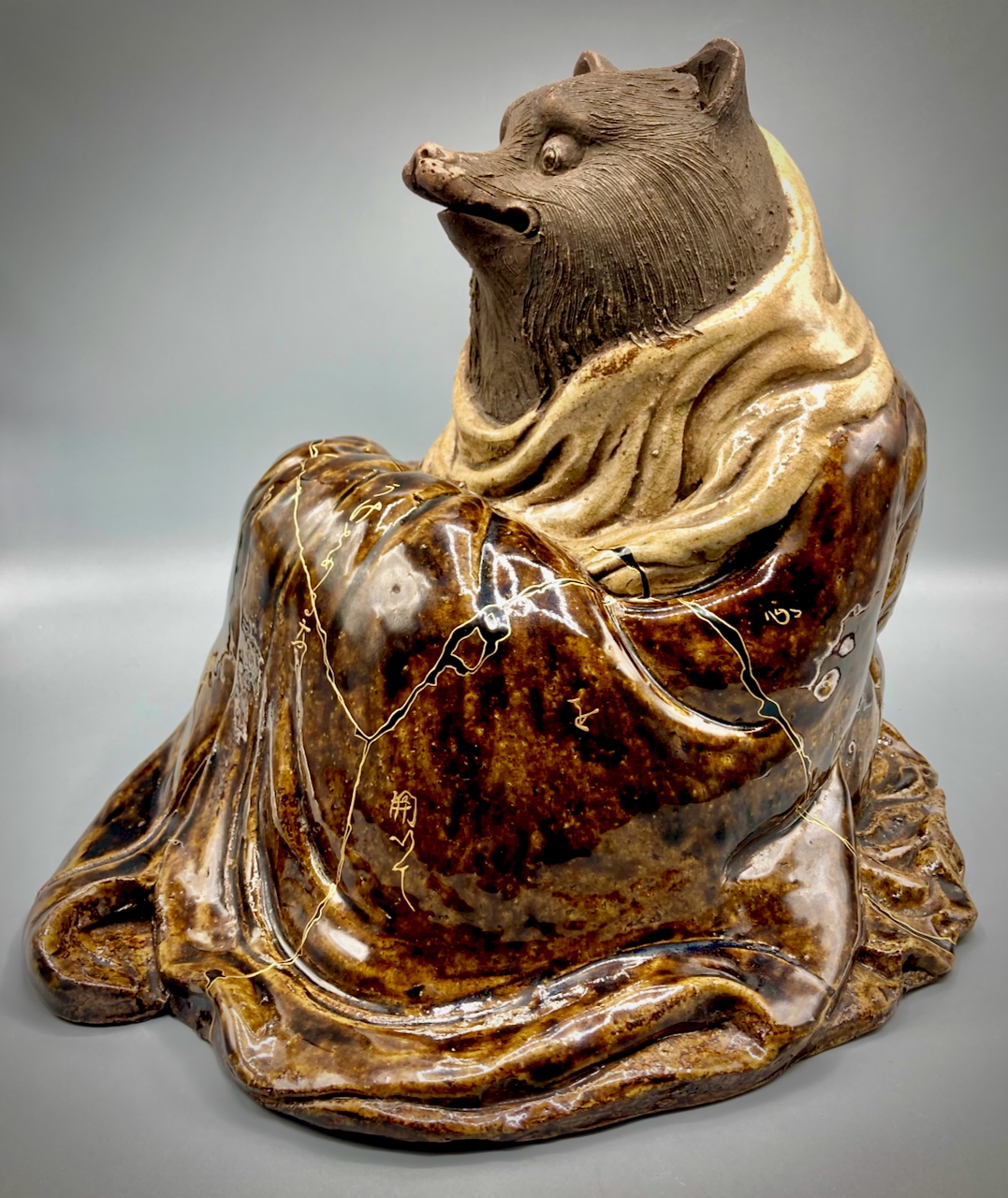
“Tanuki” (repaired with kintsugi).
There are various interpretations of the word “tanuki,” but one homophonic meaning is based on ta as “other” or “different” and nuki as “omit” or “remove.” In another layer of its folkloric good fortune, tanuki becomes a symbol of getting beyond negative things that distract or diminish. It’s the hope that Fukumaru embraces in her life and art.
Beautifully Broken runs from October 14 to February 21, 2026, at the Nikkei National Museum & Cultural Centre, with an opening reception and artist talk October 11.
Read more stories about art in B.C.