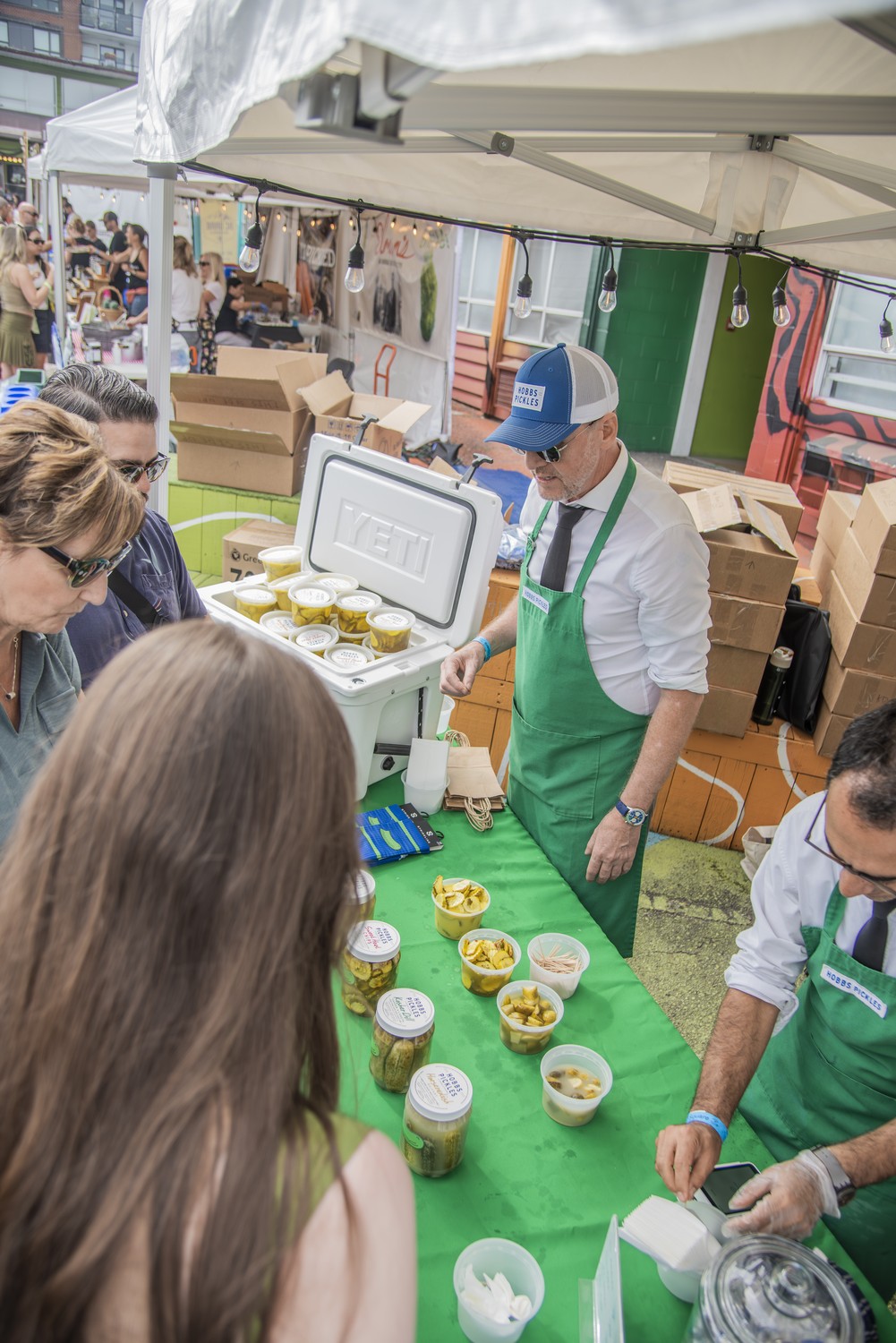


Leaning over the polished wood of the Hobbs Pickles counter on Granville Island, Adin Wener and Chris Hobson are deep in conversation. Wener—his hands sawing the air in enthusiasm—is an ursine, bestubbled Jewish guy from Toronto, a brewer (Henderson Brewing Company), soda maker (Solly’s), and one of the faces, along with his first cousin Eli, of Canada’s greatest and only pickle festival. He’s blowing through the Granville Island marketplace on his way to see a distributor but first taking a moment to talk shop with Hobson—the tall, slim, silver-haired proprietor of the pickle shop. They are both wearing pickle-themed ball caps. In the hubbub of the market, Wener’s growling voice briefly carries above the crowd: “It’s about the dills!” This might as well be his motto.
Wener is in a hurry because Vancouver’s 2026 Picklefest—which will take over Main Street in Mount Pleasant on Saturday, September 12—is only days away. There are pickle tents and pickle vendors to organize, a pickle-eating contest, pickle memorabilia, and pickle security. This will be the festival’s second year in Vancouver; it has spread from Toronto across the country to Victoria, Calgary, Edmonton, and Charlottetown. Muskoka is next, and Wener has his eyes on Montreal—a city with a profound pickle heritage.
Pickles are, he believes, a universal food. “The pickle is the court jester,” he tells me. “You can’t have a royal court without a jester to please the king and queen and the guests. And I think there’s also something about just the word pickle, how it sounds, that it puts a smile on your face.”
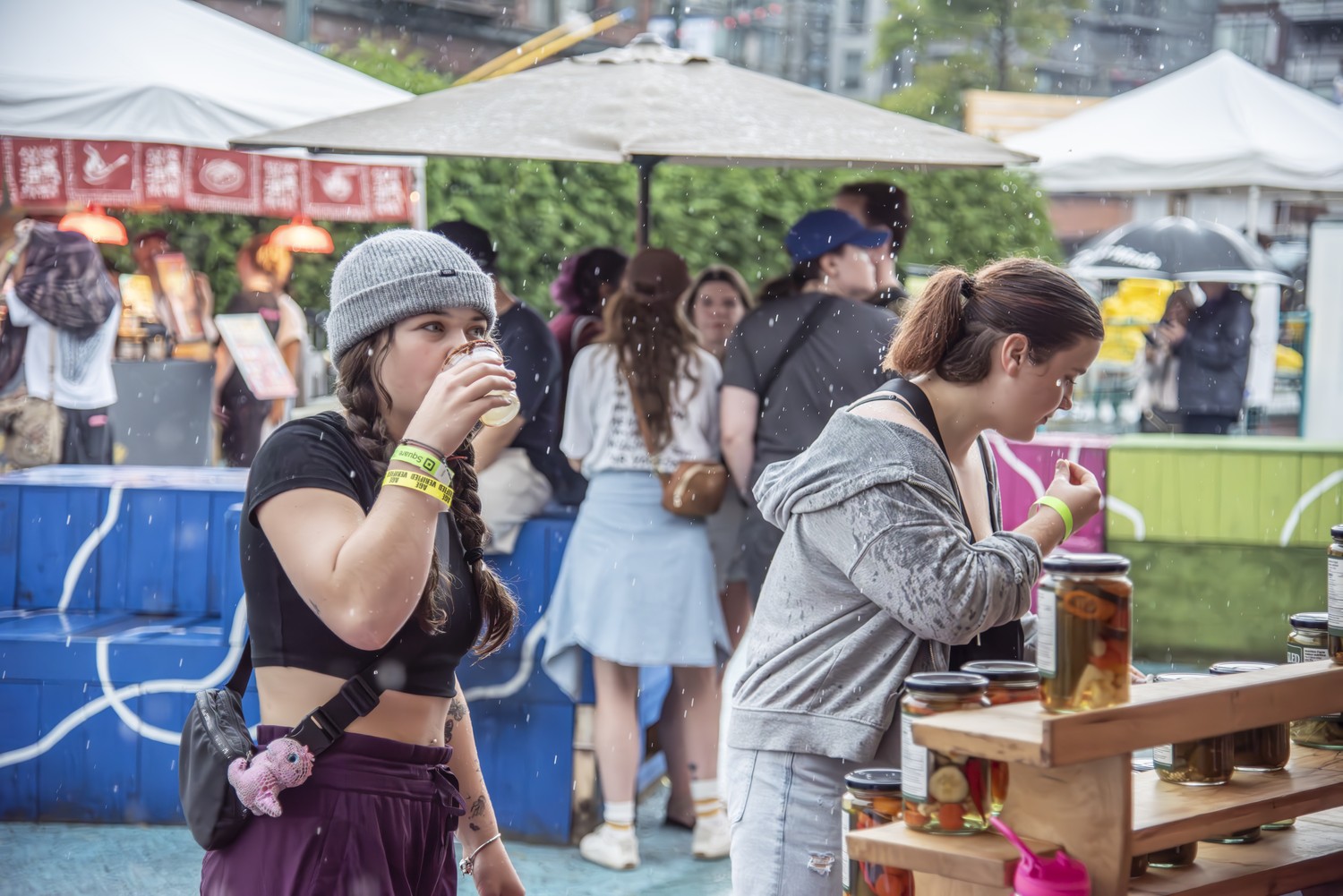
To Hobson, pickles are serious business (his own pickle company, he tells me dryly, is “like the Reservoir Dogs” of pickles—suits and ties, no funny stuff.) To him, the allure of the pickle is its familiarity, its ability to draw up deep gastronomic memory. Sometimes the right pickle—and the memory of a grandmother’s kitchen long ago—can bring a customer to tears.
“It’s all variations on that same theme, right? Is it the right crunch? Does it have the right amount of acidity,” he says. “Is it smooth? Does it overpower? And then you get into all the nuances. I mean, it’s like wine pairing.”
And then there’s the diversity. There’s the ever-present kosher dill, of course, but also pickled onions, eggs, beans, and carrots; kimchi, achar, tsukemono, and sauerkraut; vinegar and lactofermentation. In a country of immigrants, the multifarious pickle speaks to everyone.
Wener and his cousin grew up eating homemade pickles from a precious collection of jars his dad stashed away in the basement to last all winter. These days, his fridge is full of kimchi that his wife and two kids put on everything (as well as Hobbs horseradish pickles), but to Wener, the one true pickle is still the pickle of his childhood.
“You can pickle anything, but you can’t turn everything into a pickle,” he says. “To make it into a pickle, it has to be a cucumber.”
Of all the people who come to Picklefest—the hard-nosed fermentation enthusiasts who want to talk technique, the pickle superfans in their costumes, the casual drop-ins—Wener says he loves to watch the intergenerational families who show up to pass on pickle lore to the next generation. It’s the reason, he says, why pickles will never go away.
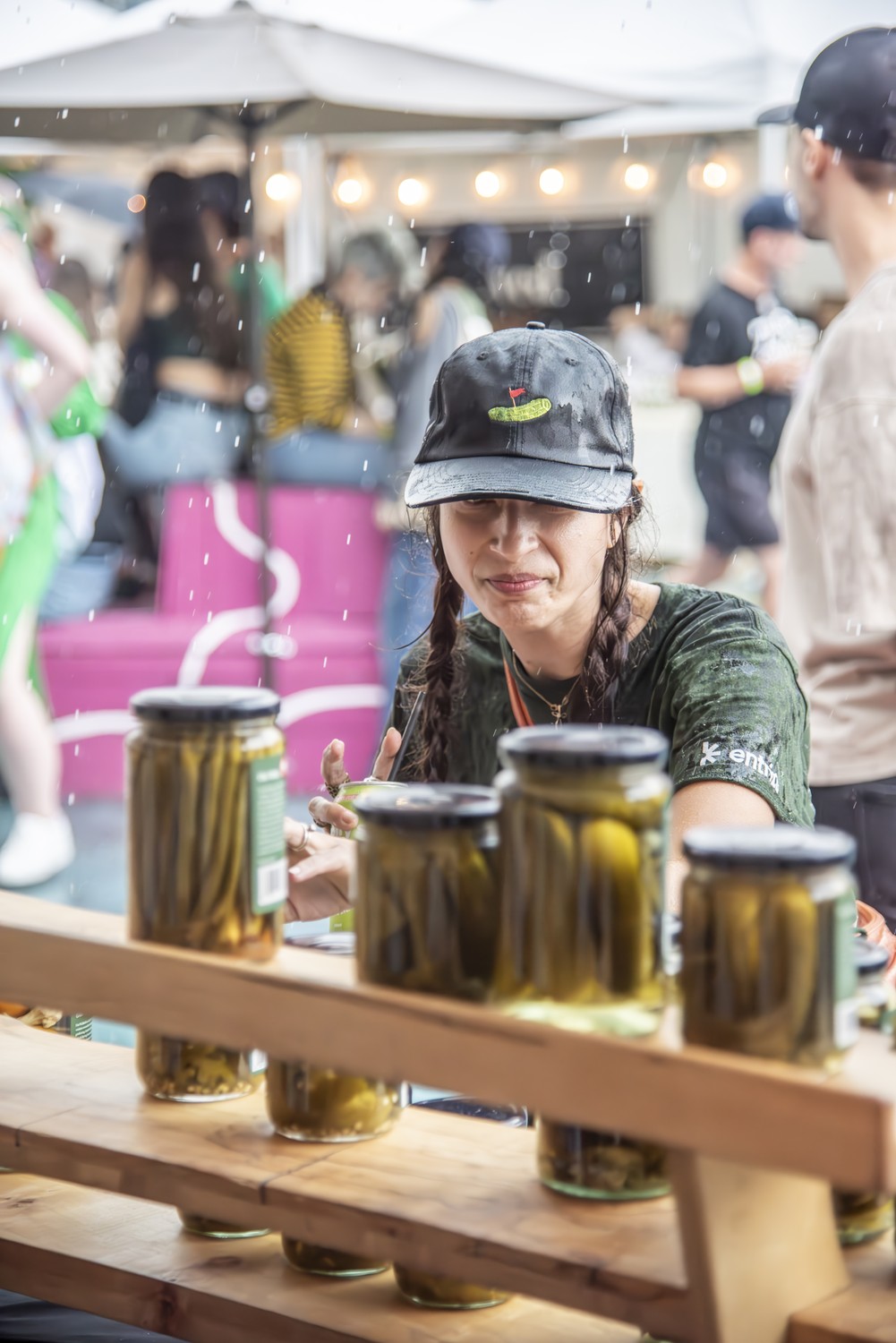
“I get asked a lot if we’ve hit peak pickle because pickles are so trendy,” he says. “And I like to say that when the bomb hits, it’ll be the cockroaches and the pickles, because pickles were always there, right? Pickles will have their moment, but they’ll always be there.”
The food festival, Wener admits, is a hard business. It’s chaotic and expensive, with ceaseless pressure to give attendees their money’s worth. But if there is one thing that sets pickles apart, he argues, it’s their ability to excite the palate without filling the stomach. Nobody wants to eat bagels or hot dogs for four hours, he argues, or stagger home after sampling 80 beers. But pickles?
At the Hobbs bar, a queue is forming in front of the attendant—in a crisp buttoned-down shirt and tie—as he hands out samples of full sours, half sours, kosher dills, sweet mustard chips, hot pepper, jalapeño, and horseradish spears. Most of the customers seem to be under the age of 10, despite the chocolates and doughnuts piled in full view a few stalls away. The children crave pickles.
Read more food and drink stories.