

When the tank barge Apex Houston spilled 25,800 gallons of crude oil into the ocean near San Jose in 1986, the disaster set the course for a legal battle that would determine the future of wildlife preservation and the environmental movement. In a new book, The Seabird Trials, B.C. author Briony Penn tells a story of legal intrigue, corporate warfare, and broken friendship on the way to saving the birds of the Pacific coast.
San Francisco, July 27, 1993
[U.S. prosecutor Valerie] Lee and [Canadian scientist Harry] Carter stepped off the elevator and entered the conference room that would be the setting for the battle between the two legal teams during six mini-marathons over the next eight months, from July 1993 to February 1994. Each expert would be cross-examined by the counsel from the opposite side in three consecutive sessions of three to five days each. This meant that evidence on a particular issue discussed by Carter early on might not reappear in the records until [George] Divoky was questioned on it eight months later. Carter was up first in July to defend the plan. Divoky would follow in October to defend his critique.
In the room, four bland walls with no windows surrounded a long table. Sitting opposite Carter was the co-counsel, Eric Swett, who had only had to travel from his law office across the corridor, and Divoky, who, like Lee, had travelled down from Seattle. Divoky kept his eyes on the notes in front of him. Carter, in the hot seat, was relaxed and confident, ready to go after two years of preparation. In fact, he’d been preparing since the mid-1970s, when he’d watched his father on his quixotic journey to stop oil tankers along the U.S.-Canadian border. Carter had left no stone unturned looking for evidence of injury to the seabirds. For Carter, this case was about how to stop the tankers dead or at the least enforce a better standard of care.
At the end of the table sat the shorthand reporter, whose considerable talent in accurately capturing 4,500 pages of technical arguments faltered only with the tendency to type “Sweet” instead of “Swett,” a sentiment not shared by Carter and Lee, who came to refer to the proceedings as the Swett Shop.
Although the depositions weren’t a court, Carter approached them like a court. He was sworn in, and Swett began his questions.
“Good morning, Mr. Carter. Could you please spell your name?”
“Harold R. Carter the third, but I go by Harry Carter. C-A-R-T-E-R.”
“Have you ever taken a deposition before? As you can see, we’re in an informal setting here in the conference room in a law office; however, you are under oath and that oath has the same weight and solemnity as an oath taken in a court of law.” Swett outlined Carter’s obligation to put forward the best testimony possible regarding the 500 exhibits of his evidence—including Carter’s own extensive published research on the status and populations of alcids and their restoration along the Pacific coast.
Carter’s main report laid out the argument and evidence by the plaintiff that the nearshore colonies of common murres in central California had declined by 60 per cent between 1980 and 1986 due to the impacts of gillnet fishing, El Niño events, and oil spills, most notably the Apex Houston oil spill, which killed a dozen endangered marbled murrelets, 6,287 common murres, and several thousand birds of various other species. Over 10,000 birds were killed in all. Carter characterized the spill as the final straw for the distinct subpopulation of 3,000 common murres that came from the Devil’s Slide Rock colony, which had been gathering to breed. He explained why this was an important subpopulation and what was significant about being on the southernmost range for breeding in the Pacific. The common murre range extended from south of Monterey Bay to Alaska, and Carter’s research into the differences between the murre colonies was entered into the depositions with excruciating detail. His argument to restore Devil’s Slide Rock to maintain the diversity—and therefore viability—of the larger population of common murres in the southernmost part of their range was delivered flawlessly.
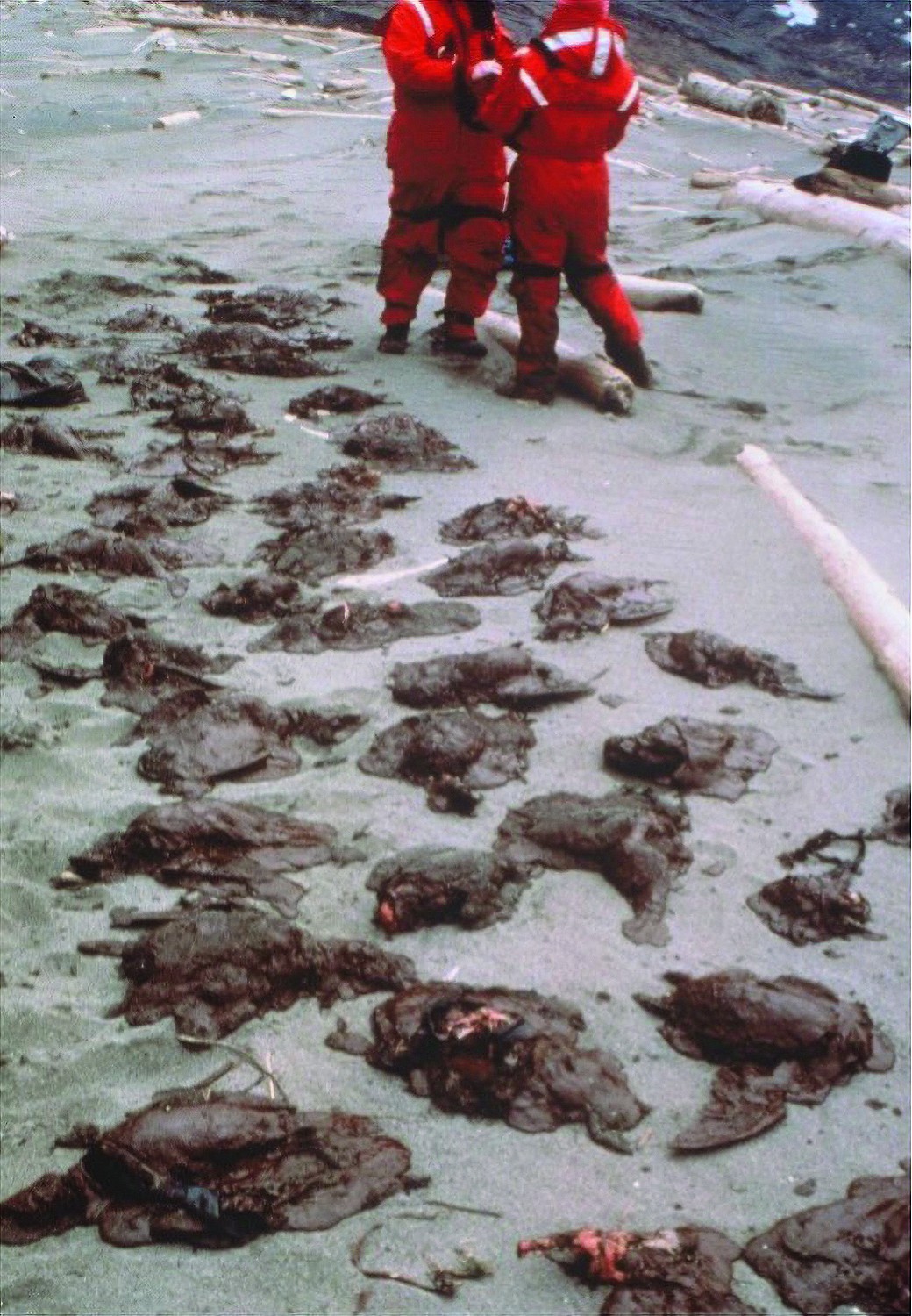
The 1986 Apex Houston oil spill killed an estimated 10,000 seabirds, including 3,000 common murres from Devil’s Slide Rock. Photo courtesy of NOAA Restoration Center.
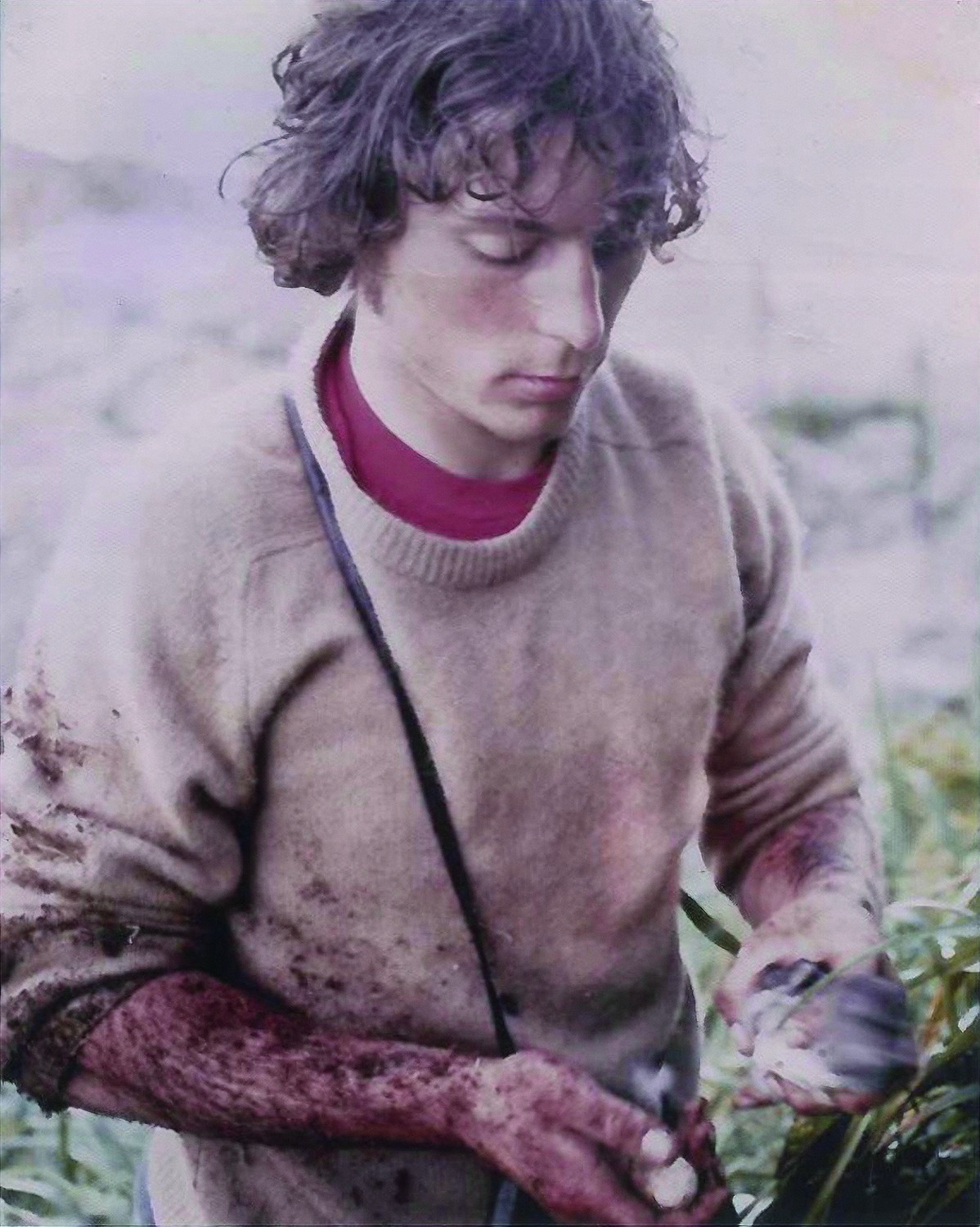
The opening strategy of the defendant’s counsel, Swett and co-counsel John Wall, was to dive deep into Carter’s life to unveil a long-standing and, as they called it, “overt attachment” to seabirds. That would reveal a subjectivity that could be used to discredit the evidence Carter provided. The key strategy of the plaintiff’s counsel, Valerie Lee, and her main co-counsel, James Nicoll, was to defend her expert witness from being harassed. Besides revealing his own “overt attachment” to limiting the damage to his client, Swett’s persistence set down in the court records the life and times of a young Harry and the network of scientists with whom he worked. He started in on the earliest days of Carter’s ornithological career at the age of 18.
“Can you take us back, Mr. Carter, to your first focus of studies?”
“My first focus was research on seabirds, and my first experience with alcids was as a field assistant to Charlie Guiguet with the B.C. provincial museum from 1974 to 1978. We essentially travelled to every seabird colony along the British Columbia coast during this period. My other supervisor was ornithologist Wayne Campbell. Most of the surveys were either driving around in small boats or actually being on the islands.”
“Have you ever studied a colony that has gone extinct?”
“I studied a small colony near Vancouver Island that went extinct, Cleland Island. There are only two confirmed murre colonies in B.C., both of which I have surveyed. Triangle Island is a colony of about 3,000 birds, but I don’t know the current status. Breeding birds have not been seen on Cleland Island since 1982.”
Swett asked about Carter’s early days because they were a formative time. His questioning about Carter’s early mentors and research continued for hours. He knew the significance of Carter’s first visit to the seabird colony of Cleland Island. Like Devil’s Slide Rock, it had been a vibrant seabird colony that had gone extinct in his lifetime.
In these opening days, Carter never revealed anything but a scientific objectivity based on the number of birds and any other data he had collected. Carter never talked about the beauty, or the companionship of his mentors, or the wonder, awe, or sense of exhilaration at being employed at the age of 18 to roam around in a small boat documenting the diversity of the B.C. coast. He didn’t even skip a beat talking about the extinction of a seabird colony on Cleland Island. It was data, and that was all he was giving to Swett.
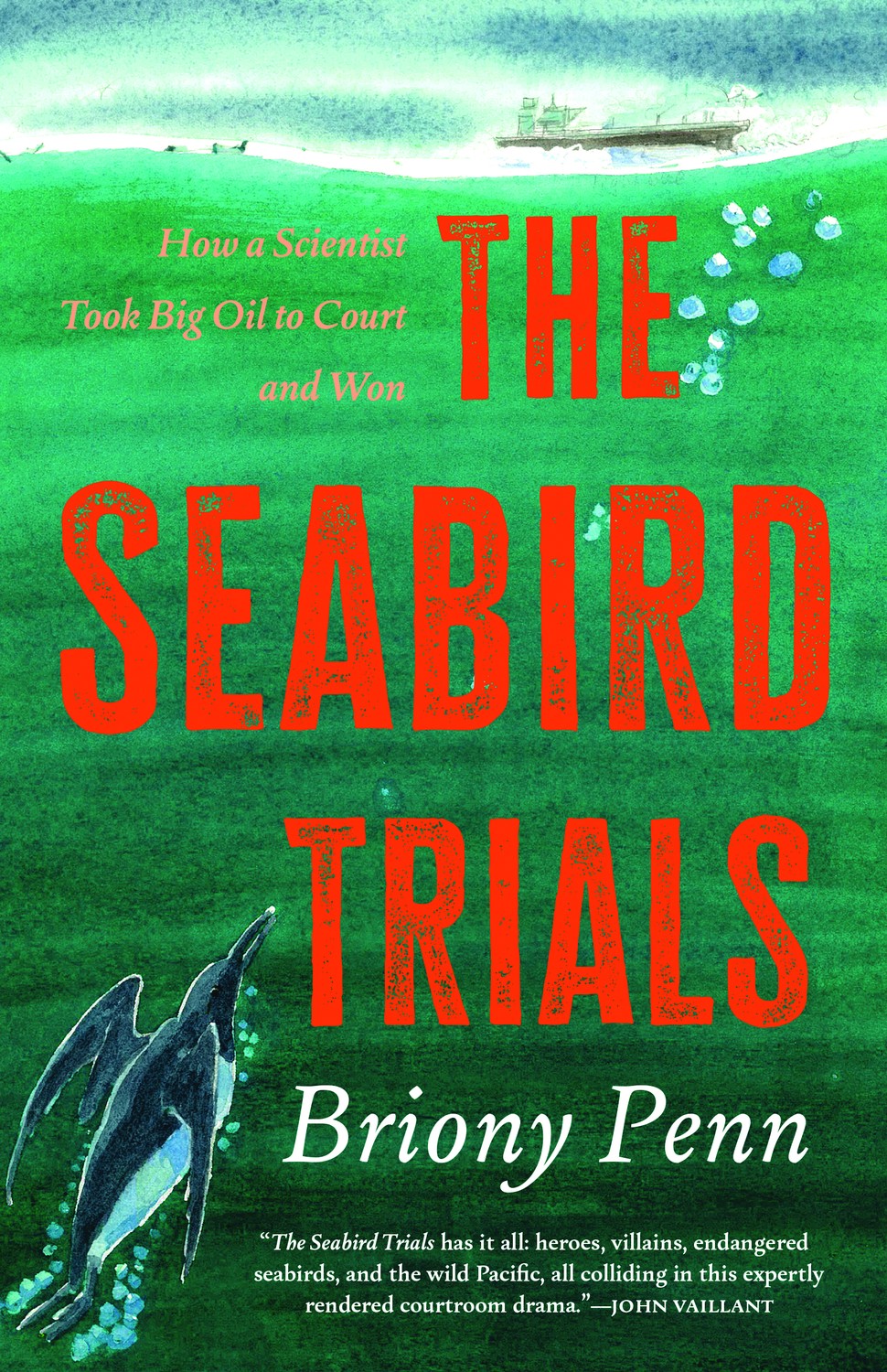
Excerpt from The Seabird Trials: How a Scientist Took Big Oil to Court and Won by Briony Penn, 2026, Harbour Publishing. Reprinted with permission from the publisher.