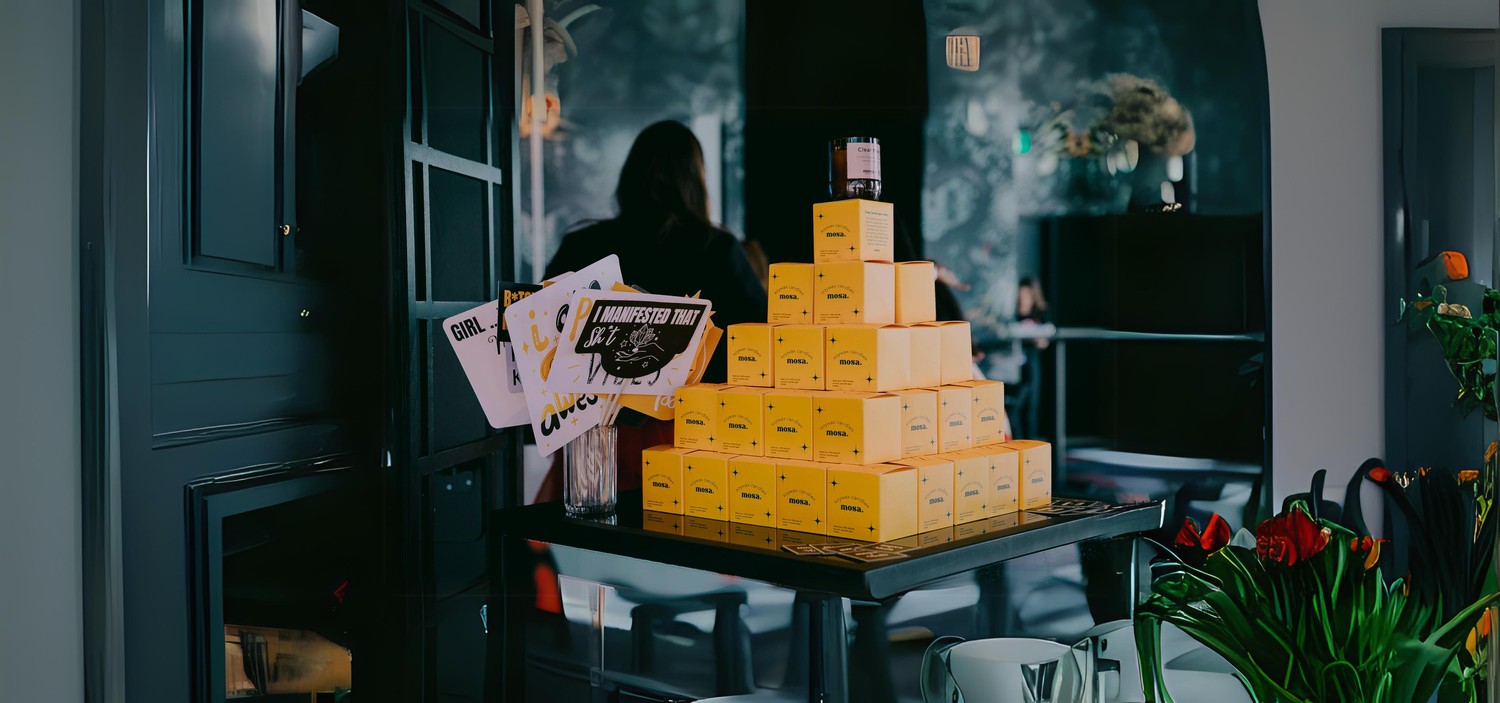


When Australia and Turkey kick off the first FIFA game in Vancouver in June, the usual merchandise will be on display—shirts, water bottles, posters—and with them recycled wine glasses etched with a FIFA logo. Well, not exactly recycled. A recycled glass might be made from crushed waste glass from a vast industrial hopper, melted down, and poured into a new shape. But these are simpler: amber glass wine bottles lopped off at the top with a diamond cutter, sanded smooth, and sold as a quirky new product.
The glasses are the products of a homegrown Vancouver company, Mosa, founded by two UBC business students after they stumbled on the idea while collecting empty liquor bottles after a party. Dorm-room experiments with cutting glass turned into a small Vancouver factory, which has since moved into international production, tens of thousands of glass bottles diverted from the garbage, and now a prestigious partnership with FIFA.
Mosa co-founder Prishita Agarwal, who grew up in Surat, on India’s Arabian Sea coast, says sustainable reuse of materials came naturally to her, watching her mother recycle dried orange peels into scrubs and face masks and stash away used plastic containers. “At the time, it didn’t seem like a way to help society or the environment. It was just a way of living,” she says. “We’re making really obvious for the customer to see that this glass was directly made from a bottle.”
The basic idea behind Mosa is an old one. Folk singer Pete Seeger pithily enjoined us that our goods should be “reduced, reused, repaired, rebuilt, refurbished, refinished, resold, recycled, or composted.” But since then, recycling—the reprocessing of old materials, often by crushing or pulping them and manufacturing something new—has taken much of the spotlight. It’s common to see packaging tout recycled or “postconsumer” materials, but the original materials remain invisible, reduced to a homogeneous slurry. Reuse, repair, rebuilding, refurbishing, refinishing, and reselling have remained the uglier, less reputable stepsisters of sustainable production—more suited to garage sales and second-hand shops.
But Agarwal says that recycling can be improved upon. “There’s still a lot of energy that goes into that process. Sustainability-wise it’s not the best because you’re still putting a lot of energy in to make something new. On the consumer end, when you see that recycling tag at the bottom, you know it’s recycled, but you can’t really connect and see what it was recycled from. People like to see the story behind it,” she says.

To use a more recent term, coined in the 1990s, what Mosa does is “upcycling,” reusing waste to produce new products with higher value. That means turning glass bottles into tasteful candleholders, drinking glasses, and even (cut crosswise) serving platters. What allows the company to upcycle at scale is the vast and consistent stream of identical waste products tossed out around the world. Whether Mosa manufactures in Canada or India, there is no shortage of identical Bombay Sapphire bottles to be sourced, cut, and repurposed as chic cocktail tumblers.
“A wine bottle, for example, is pretty standard,” Agarwal says. “You can have a lot of different labels on them, different stickers, but the base bottle itself is standard. There are a few shapes and colours that are easy to find.”
As Mosa continues to scale up, 24-year-old Agarwal, who is a finalist for an entrepreneurship award from champagne maker Veuve Clicquot this week, is looking to more streams of waste to improve upon, including waste fabric and wood.
It can be difficult, Agarwal admits, to convince people that a sliced-up wine bottle has real value. But that, she believes, is her job as an entrepreneur, and once the market is there, the possibilities of reuse are an open field.
“It takes a lot of marketing effort to educate customers, and not everyone wants to do that,” she says. “But when the customer sees value in it, they come back to you because you’re the only one making it.”