

Jungle’s London rehearsal studio feels like a breath of calm before the storm goes live. Gleaming banks of keyboards, mic stands, percussion kits, and logo-stamped flight cases are all immaculately arranged around the floor in preparation for the band’s biggest international tour to date, including a hotly anticipated return to Vancouver on October 2.
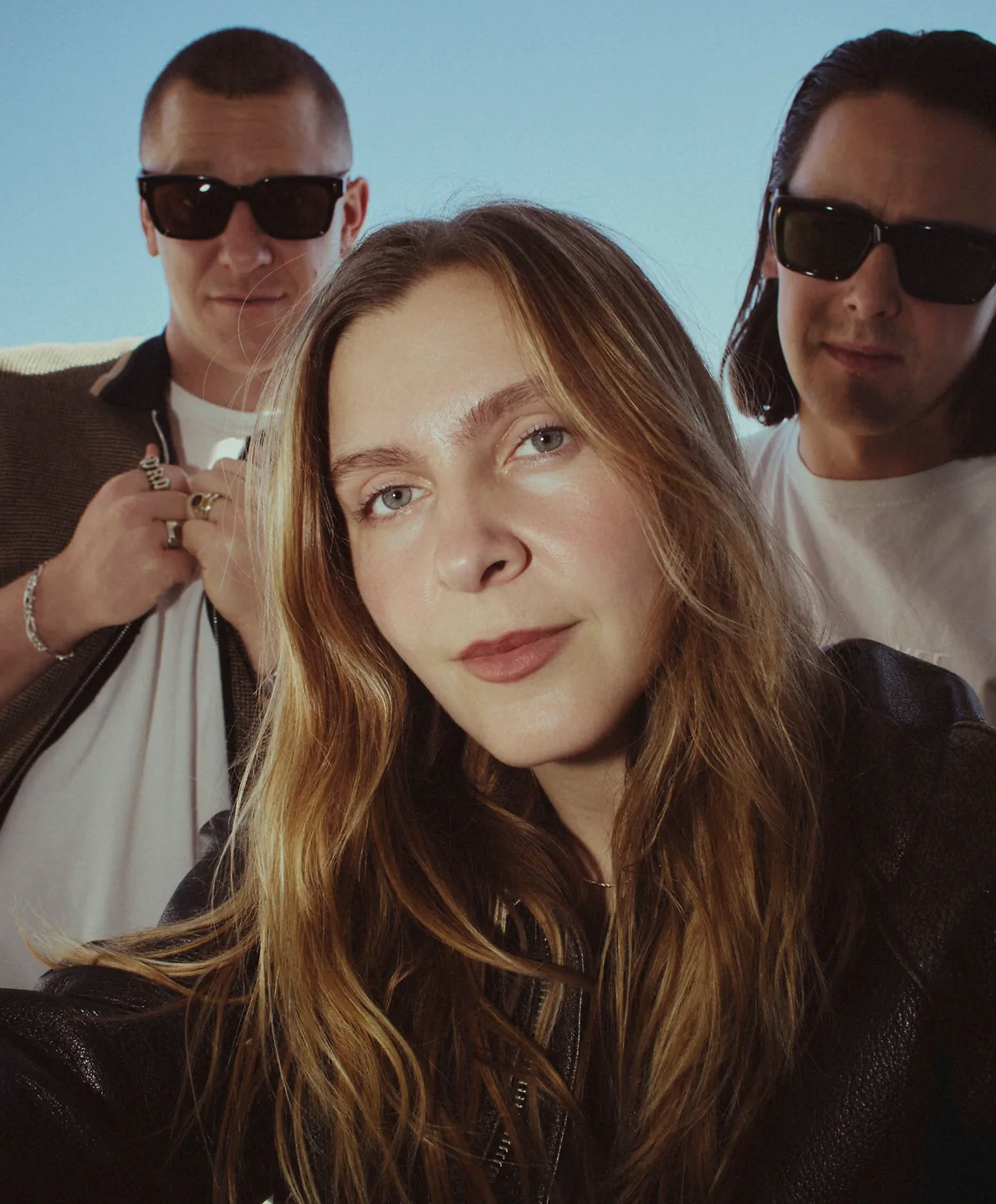
Onstage, Jungle have forged their rep for exhilaratingly high-energy shows, fuelled by insistently funky, soulful grooves (from 2014’s brassy breakthrough hit “Busy Earnin’” through retro-styled melodies such as “Heavy, California” and the deliciously bittersweet “Dominoes”), and featuring snazzy extended lineups of musicians and dancers. In a break from rehearsals, the band’s multi-instrumental core members—co-founders Josh Lloyd-Watson and Tom McFarland (who originally met as West London schoolmates) and newest addition Lydia Kitto—are amiably laid-back company. Their upcoming concerts will showcase tracks from their fifth and latest album Sunshine (including the radiantly catchy lead single “Someday, Somewhere”). Jungle seem irrepressibly in their element as live performers, so it’s surprising to learn the original plan was to keep themselves very much offstage.
“There’s always been music in our houses growing up, as either a thing to do or a tool for connecting with other people.” —Tom McFarland
Jungle “was intended to be an anonymous ‘bedroom project,’ akin to something like The Child Of Lov [indie artist Cole Williams’s enigmatic viral music project] or something from the blog era of 2013,” Lloyd-Watson says with a smile. “But the natural progression dragged us into the live environment. I think Glastonbury was the first point where it hit us [Jungle made their acclaimed debut at the festival in 2014, just before the release of their first album]. We had to retroactively make the music work as a live project.”
That sounds like a steep, sudden learning curve. “It was fun,” he replies. “And I think the only time you can meet Jungle as music makers is in the live environment. We’re not in our music videos. We’ve kind of had these separate worlds that exist in their own right.”
True enough. Jungle have always presented a bold visual aesthetic—the distinctive band logo; the slickly dazzling choreography of their one-take videos (regularly involving dance talents such as Shay Latukolan, Will West, and Mette Linturi)—while retaining a fluid identity. Their music chimes with audiences on a massive scale, especially evident when you witness the joyously roaring crowds at their shows. It’s immediate yet often experimental, old-school yet keenly contemporary. And while the decision to become a trio feels significant, Kitto’s lushly mellow vocals have long been a key component of Jungle’s sound, including the blissed-out anthem “Back on 74.”
“Obviously, from an external perspective, it looks very purposeful,” McFarland says. “But I guess we’ve been a trio since we did a session between albums three and four [2021’s Loving in Stereo and 2023’s Volcano], where we wrote ‘Good Times’ and ‘Problemz’ and released those as standalone singles.”
“Lydia’s been a part of it for a long time,” Lloyd-Watson says, nodding. “Her ability to hear pitching and harmony—she could create these sounds and nostalgic feelings that were like, oh wow, we’ve got this ‘sampled’ sound that is not just other people’s music. That was something we wanted from the beginning—for people to go, what’s that sample? And for us to be like, oh, it’s us.”
“For Josh and I, it’s that deep, long-standing connection of having known each other since we were 10 years old,” McFarland adds. “I think there’s that almost brotherly, familial relationship that we have—and obviously, having grown up playing music together, being able to do it on this scale is like a dream come true. And then, Lydia just inspires us so much and brings a whole new level of emotion to the vocal performances. Like, she can hear and add vocal harmonies to tracks that we would just never believe in writing. She can produce it all. So we’re blessed to have that as part of the arsenal in some respects, right? You know, we’re getting old and weary.”
“I feel like I’ve been let into a very long-term marriage,” Kitto quips. “It’s like a throuple, you know?”
But has it been tricky to find her place in such an established dynamic? Kitto shakes her head, breezily: “We vibe together. There’s no other project I’ve been involved with that’s been so easy. Songs have come so effortlessly.”
Both Kitto and Lloyd-Watson (who are real-life partners as well as bandmates) have also co-written emotive melodies as Loaded Honey, a side-project developed while McFarland raised his own young family.
“We make a lot of music together because we live in the same house,” Lloyd-Watson says. “It’s born out of deep friendship; the romance comes way later. If I pick up the guitar, Lydia might start singing over it. Some of those songs didn’t really feel like Jungle. They’re a little slower or more introspective, and it just felt like the right thing to do. Loaded Honey is more of a Sunday-morning thing, and Jungle is a Friday-Saturday-night disco thing.”
On Sunshine, Jungle have also presented a soul-baring contrast to the multilayered and pitched vocals used on early material. “This album’s almost a retort to that, where it’s kind of stripped back those effects,” Lloyd-Watson says. “We’re always like, how can we do it differently? How can we fuck it up next time—can we get really electronic and dark?”
The bandmates tend to write separately, passing the tracks around, individually adding elements, and gradually fashioning the finished picture. “It’s always little moments of time,” Lloyd-Watson says. But everything is there to tell the story.
Jungle’s music has soundtracked numerous projects: video games, commercials, and screen soundtracks, as well as personal narratives. “It’s the moment when people have gone through something either traumatic or deeply emotional, and they’re like, ‘Your album saved my life’—that hits on a different level,” Lloyd-Watson says. “You start to realize that, as artists, we can get caught up in our own importance. But it’s actually healing other people. We start to really understand, oh wow, we have this gift—to share that inspiration and for that to affect other people and change their lives.
“I think when you get older in music, and you’ve been through the ringer, you have to take yourself back to that 14-year-old in your mind that was so inspired by listening to The Strokes,” he adds. “You’ve got to kind of remember that place that young people are in.”
McFarland also looks to the band’s older peers. “We previously did some shows supporting Gorillaz in America, and I was watching Damon [Albarn] doing one of their soundchecks, and he’s still having a really good time,” he says. “Because in my head, I’ve always been like, ‘I’m not doing this past the age of 40. Like, that’s going to be lame, and I’m going to feel really stupid singing ‘The Heat’ and ‘Busy Earnin’’ when I’m feeling like a bit of an old man. But then you look at Damon, who’s a generation older than us, and you’re like, ‘Oh, maybe there isn’t an end.’”
Given that the band members are in their 30s, their reflections on aging might seem a tad premature, but music really has been a lifelong pursuit for all of them (wholesome pop fact: McFarland and Lloyd-Watson’s first band, aged 14, was called The L-Shaped Room, named after Lynne Reid Banks’s feminist novel).
“There’s always been music in our houses growing up, as either a thing to do or a tool for connecting with other people,” McFarland recalls. “When you have that sort of upbringing, it is deep-rooted in you, and there’s a connection with the art and with making it that satisfies your soul.”
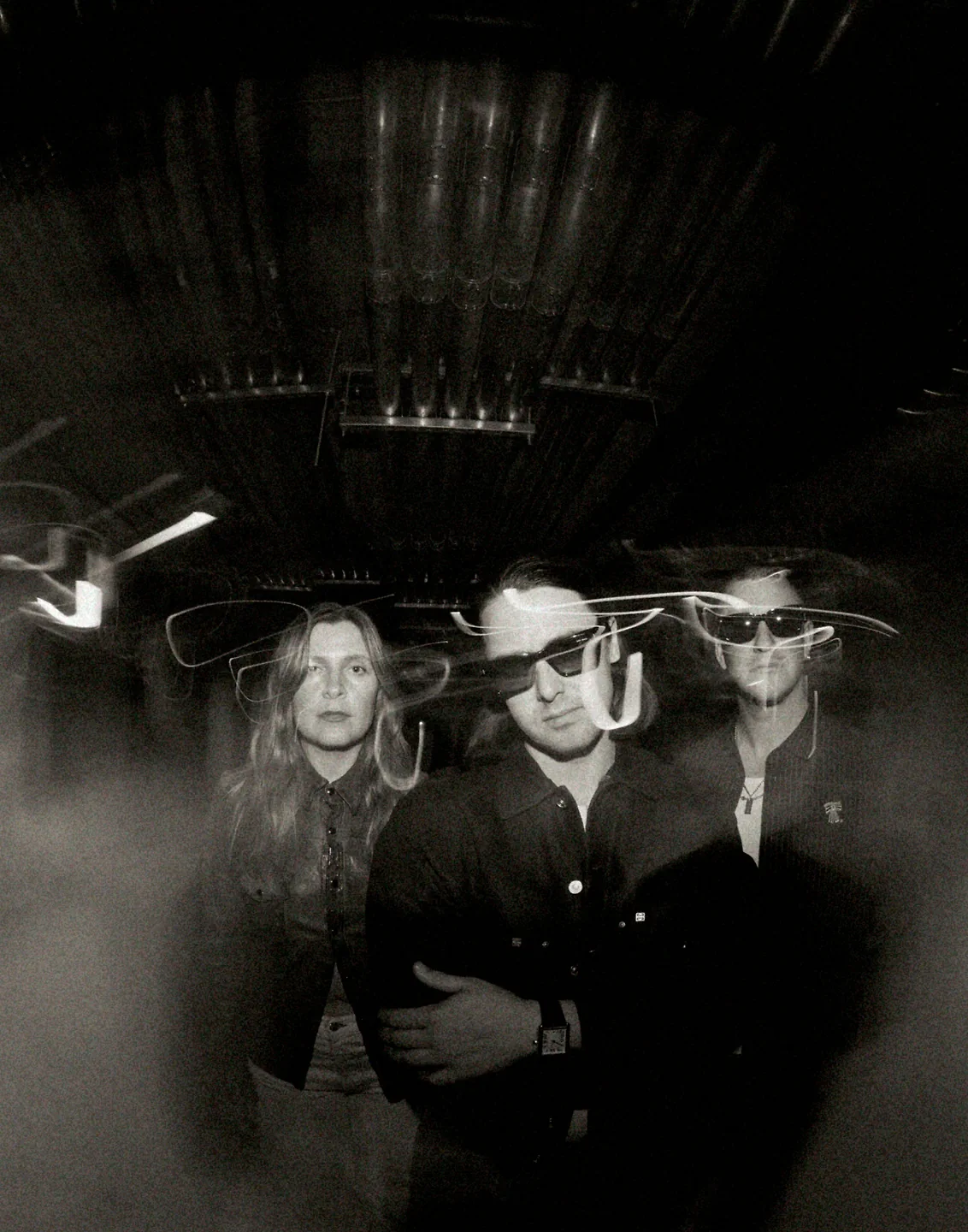
From left to right: Lydia Kitto, Josh Lloyd-Watson, and Tom McFarland.
Kitto also comes from a musical family. “My nan was a singer, my dad, my uncles,” she explains. “When you see that as a kid, you think, ‘Oh, that’s what I’m meant to be doing.’ To actually be doing that, it’s pretty crazy.” She still regards “old music” as a particular inspiration: “A lot of modern music has removed all of the soul because of how it is created these days. The songs are written with 12 professional writers in the room so it all gets overthought. A lot of artists are almost like a factory. They’re all polished and ready to to to be a brand ambassador for a major label.”
Much of Jungle’s work has been a reaction to this point. The band first emerged amid a heady music scene buzz, signing to seminal dance label XL Recordings (which also made them Adele’s labelmates), but they went their own way after releasing two albums, and they’ve remained independent ever since. “We had a stamp of approval within the industry,” Lloyd-Watson says. “But it’s a machine that takes all your money, and it is a corporation that gets swallowed up by another corporation, which becomes a conglomerate.”
He says that, as much as he appreciated the experience, “The amazing thing about coming off the label was we’re not answering to a teacher. It’s not a nice feeling to make music and then present it to someone and then: ‘no.’” He relates a stinging setback after the second album: “We got kind of ushered in to show some demos a bit too early. You can’t really show a label a demo. You need to show them something shiny. So they were like, ‘Have you thought about starting a new band?’ It took us a long time to recover from that. We suffered for years, psychologically.”
He swiftly brightens: “Personally, I feed off rejection. I think that’s what it is. You’re quite defiant. That’s probably because of my parents splitting up, and that feeling. When we came off XL, I was like: ‘Let’s go! We’re going to show them,’ you know what I mean? Let’s show the industry how good we are.”
They’re looking forward to returning to Vancouver following memories of their “really sweaty” packed-out previous date in the city. “You know, we haven’t toured since the end of 2024, and there is a little itch that starts to need to be scratched in terms of connecting with the fans,” McFarland says.
“The most satisfying aspect of touring is watching people having a great time with their friends, forgetting about what else is going on in their lives—and singing our songs back to us,” he adds. “The skill now is appreciating the space of the rooms we’re going into, playing to that occasionally, but then also trying to bring everyone in, give them a little cuddle.”
Kitto makes a lavish promise: “To make it more intimate, we’re going to strap ourselves to a zip wire, and pulley around the audience whilst playing.”
Lloyd-Watson grins: “As artists, you’re always trying to reinvent yourself. That’s what breathes life into us.”