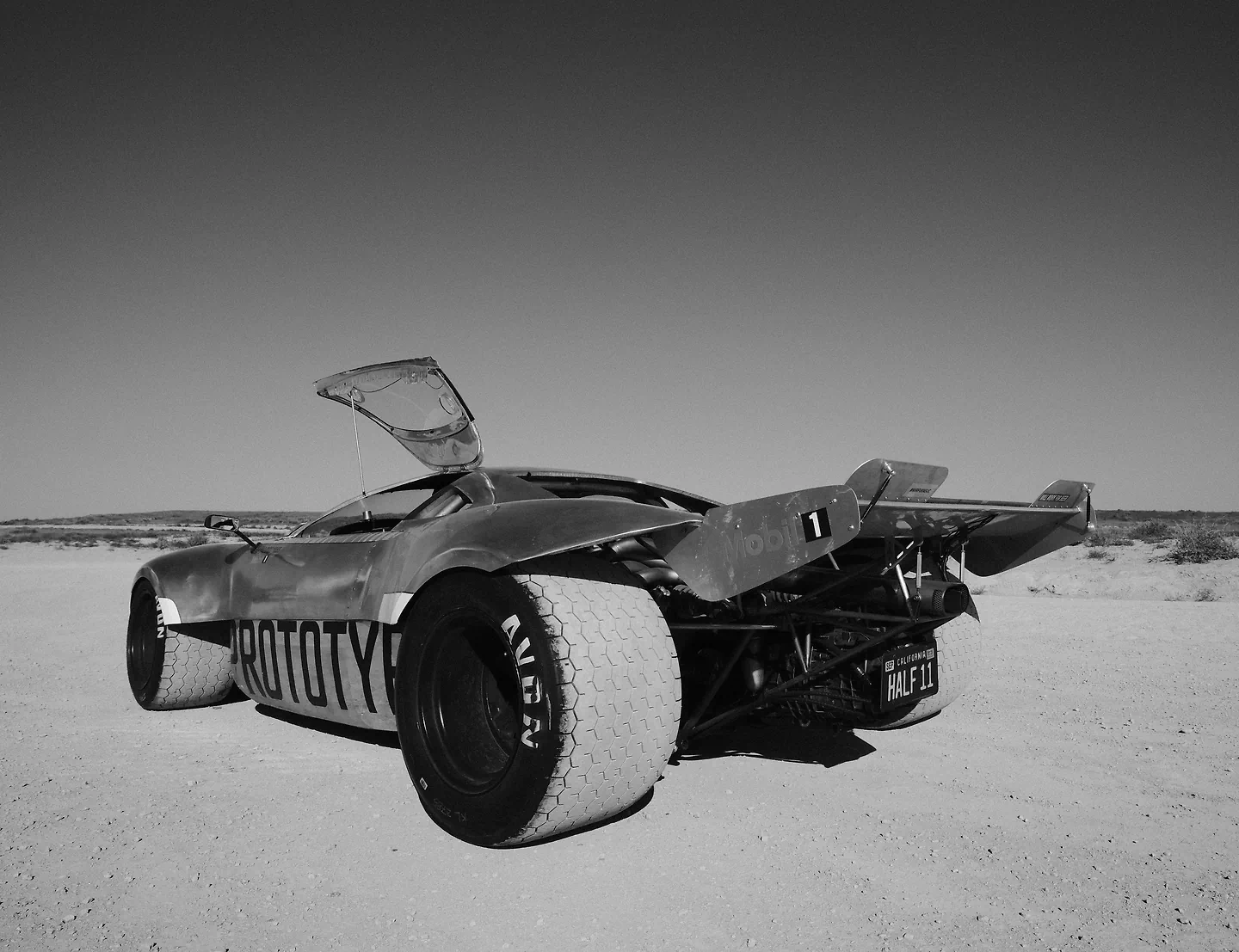


In the back garage of a dealership in Vancouver’s supercar-rich Armoury District, twin designers Nikita and Iliya Bridan open a door and reveal two monstrous creations sitting back-to-back. The first is called the Half-11, and it combines the friendly-faced vibe of a vintage Porsche 911 with the skeletal rear of an IndyCar racer. It’s Richard Scarry up front, H.R. Giger out back.
The other is the HF-11 concept, and it is nearing production as Canada’s first hypercar. The Bridans’ company, Oilstainlab, is headquartered in Los Angeles, where the brothers have lived and worked for years, but the production facility is in Quebec. The HF-11 will be crafted in very limited numbers, and it includes such mind-bending technological features as a modular drivetrain that can be swapped between battery-electric or a screaming flat-six combustion engine.
“There’s a number of things that basically drew us back to Canada,” Nikita says. “We have some very good people that we trust and have known now for a decade. The business goes where the good people are.”
On the West Coast, Nikita notes Daigl Composites, a Vancouver carbon-fibre specialist that builds the composite portions of the furniture that the twins also design and sell. FYi Design in Squamish, specializing in textiles and technology, is also assisting with interior solutions for the production HF-11. Bringing the car to life will include partnerships across Canada.
Born in Ukraine, raised in Nova Scotia and Ontario, and educated in Italy and California, the 37-year-old twins are themselves contradictions. Despite never having completed high school, they are both instructors at arguably the best automotive design school on the planet and have worked at large automakers from Acura to Cadillac.
The Half-11 and HF-11 concept were on display at this year’s Vancouver Auto Show, along with examples of the twins’ furniture. The Half-11 was never supposed to be an actual prototype, rather a design experiment and dream car. But its fearless combination of joy and blistering speed had enthusiasts clamouring to buy it. Too wild for a showroom, the car has evolved into the HF-11 that is set for its first production shakedown testing this fall.
The Half-11 began as a project to build a dream car that existed in an alternative reality, something unfettered by the chains of safety guidelines.
The twins’ education and parentage may help explain how they ended up with machines of such lunatic speed. Both parents have PhDs—their mother in complex wave physics. Her sons chewed through the high school curriculum at an advanced rate.
“She was teaching us precalculus and calculus on the side when we were 10, 11, 12,” Nikita says. After doing well on SAT tests, they headed to college without graduating from high school.
Initial design schooling happened in Italy as the pair were too young for the U.K. postsecondary schools, and their dream school in the U.S. was too expensive. At 15, they moved to Italy. At 17, they went to study at California’s ArtCenter College of Design.
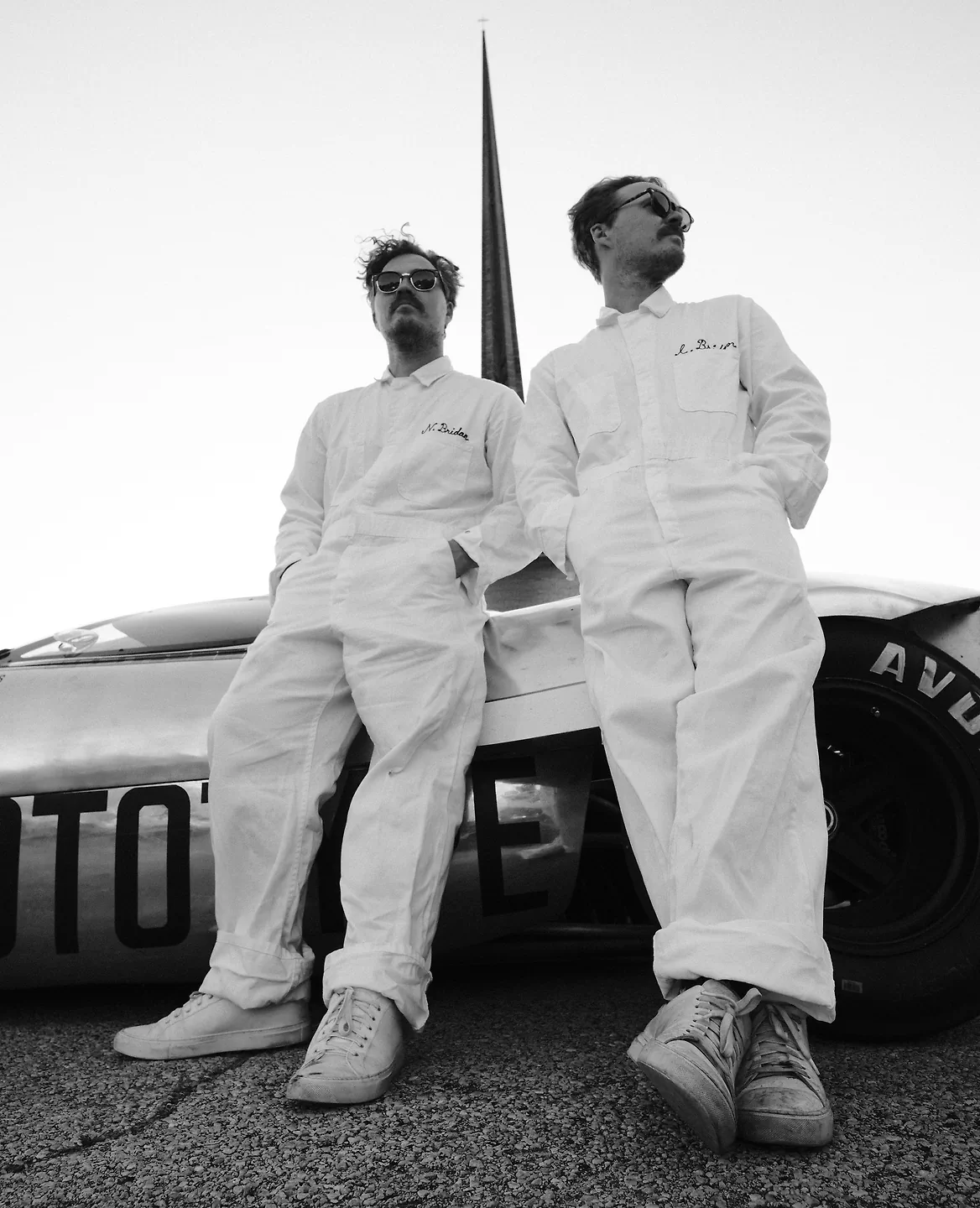
Since establishing Oilstainlab in California, the Bridan brothers have now launched a production facility in Quebec. Photo courtesy of Oilstainlab.
ArtCenter has consistently produced some of the greatest automotive stylists in the industry. Alumni include luminaries Frank Stephenson, the pen behind Ferraris and McLarens, and Luc Donckerwolke, former head of Lamborghini and Bentley design and currently leading Genesis’s cutting-edge efforts. Frequently, ArtCenter graduates work for Mattel—both Matchbox and Hot Wheels brands have a long association with the school. Those frustrated by the regulatory red tape that can stifle production car design can dream up anything they desire and see it rendered in scale model form.
By contrast, the Bridans have taken the Hot Wheels approach but kept their fantasy design at full scale. The Half-11 began as a project to build a dream car that existed in an alternate reality, something unfettered by the chains of safety guidelines. Iliya’s initial 2017 sketch married the front end of a roofless Porsche 911 with a back half based on Porsche’s short-lived Indycar racer. Oilstainlab as a design studio was registered in 2018.
The Half-11 build began shortly after, with reliable small block Chevrolet V8 power paired with the manual gearbox from a 996-chassis Porsche 911 GT2. With 650 horsepower and weighing roughly 800 kilograms, it has more power than the just-launched Corvette Grand Sport’s 6.7-litre V8 and weighs about 400 kilograms less than a Mazda MX-5. At some point, the brothers reasoned that kind of performance probably deserved a roof.
During construction of the Half-11, the twins also hit upon the idea of car seats as furniture. They are designers beyond cars, after all. This kernel of an idea grew in the greenhouse of their spinoff design studio, House Dé Stains, eventually realized as the aptly named Maniac Chair. Crafted of leather and carbon fibre, it’s like the saddle of an unhinged beast you can put in your sitting room.
By the time the Bridans and their Half-11 began turning up at events such as the Goodwood Festival of Speed, the public reaction provoked an accidental business case. In 2021, the twins started conceiving what a production car could look like. And that would lead them back to Canada.
The problem with Southern California being the locus of so much car culture is the oversaturation. It’s a market that’s as filled with restomod builders as it is with sunshine. Whereas Quebec is a destination that’s often overlooked. With distinct French Canadian culture and history, an F1 race in Montreal, growing access to racetracks for high-speed lap days, and some properly wonderful driving roads around the likes of the Laurentians, La Belle Province can provide HF-11 owners a proper je me souviens experience. It helps, too, that it’s the home province of Canada’s F1 racing dynasty, Gilles and Jacques Villeneuve.
“We see a very interesting client journey and product opportunity that doesn’t exist here in California,” Nikita explains. By default, he’s ended up doing most of the talking about the HF-11, but the ability for twin designers to collaborate is a key strength for Oilstainlab.
Building cars in Canada also allows the Bridans to tap cross-country Canadian craftsmanship. In the East, partners include EV racing specialists Scalar Performance outside Toronto and Porsche experts EP9 Autosport near Quebec City.
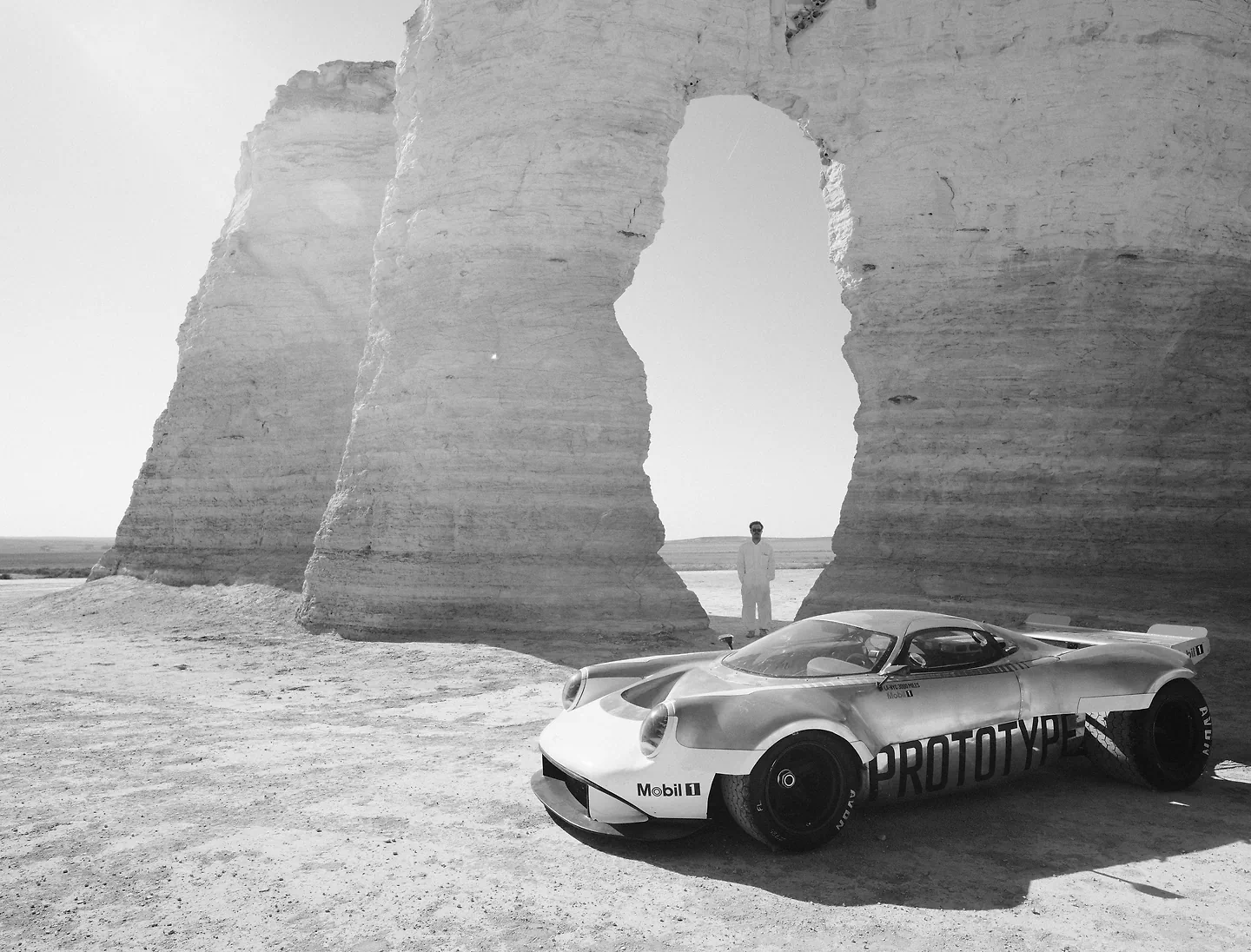
The Half-11 prototype started as a design experiment but has evolved into the HF-11, slated for production testing this fall. Photo courtesy of Oilstainlab.
The HF-11 will feature two powertrains: a flat-six engine that’ll rev to a heady 12,000 rpm and 650 horsepower, or an 800-horsepower battery-electric driveline. Buyers won’t necessarily have to choose, as both options will be modular and swappable. You can have a flat-six soundtrack for track days, and EV responsiveness for the road.
Like the Half-11, the HF-11 will be very light—around 900 kilograms. It’s benchmarked against the likes of the Bugatti Chiron for chassis stiffness and the Aston Martin Valkyrie for downforce. Only 25 will be built, at a cost of $2.5 million each, with what Nikita says is a very broad envelope for customization.
It’s a bold plan, and it’s in motion. The Half-11 and the HF-11 shown at this year’s Vancouver Auto Show are prototype and concept respectively, but the carbon-fibre tub for the first production car is already in Quebec and undergoing assembly. Testing is planned in the coming months, with customer delivery to begin next year.
Italy has Pagani. The U.K. has Gordon Murray. California has Singer. By 2027, Canada will have a place on the front row of the performance grid with the HF-11—the country’s first hypercar.
Read more from our summer 2026 issue.