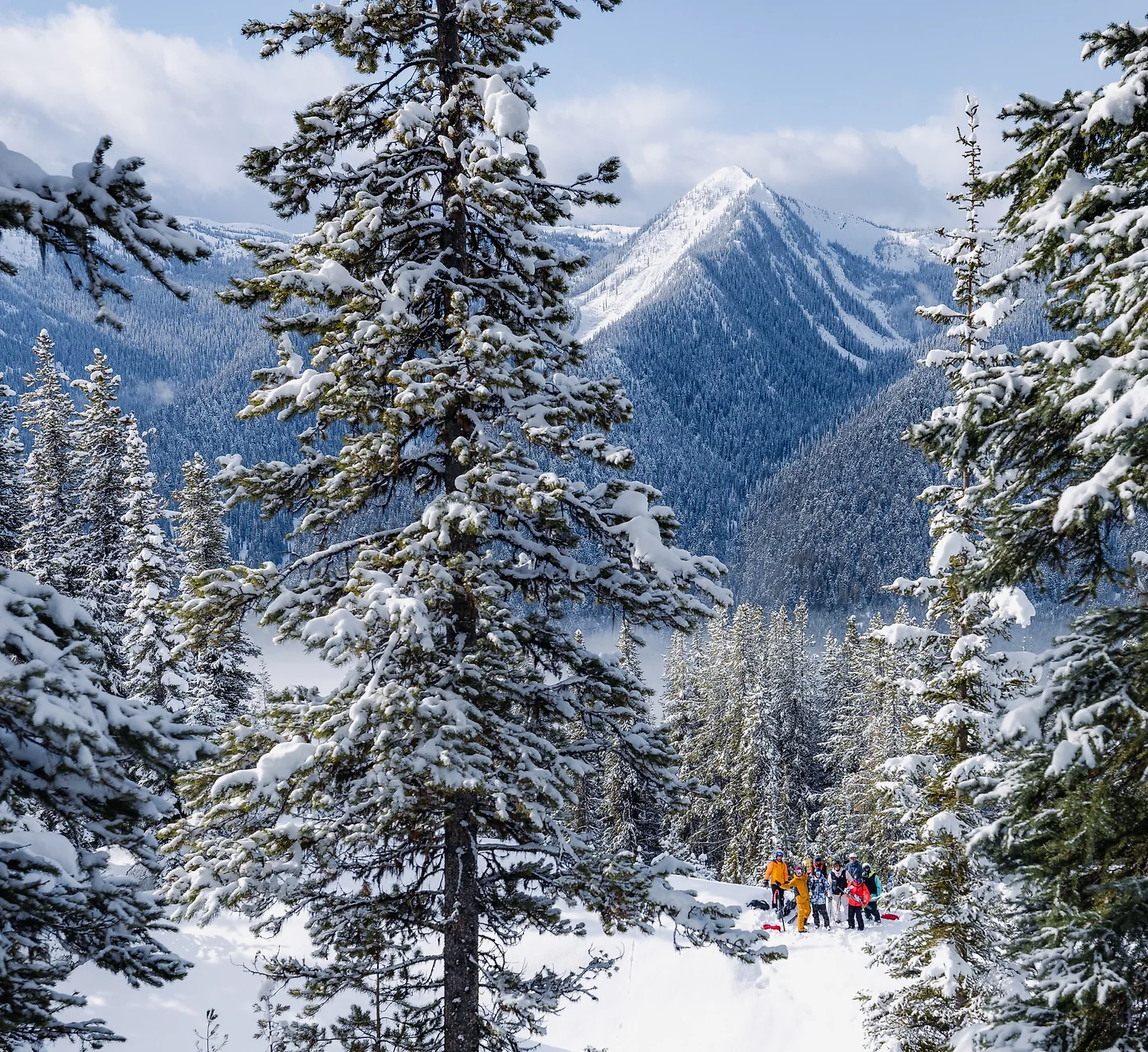


Sixty years ago, a group of powder lovers flew by helicopter to a 9,000-foot ridge of Northpost Spire in the Bugaboos and then skied down 4,000 vertical feet through untouched snow on Vowell Glacier. They flew up again to 11,000 feet on Mount Conrad and then to 10,000 feet at Pigeon Spire. “We were in ecstasy” is how the inventor of heli-skiing, Hans Gmoser, described those first trial runs in “unbelievably beautiful” backcountry. That OG April 1965 tour in B.C.’s Purcell Mountains started a new industry in adventure tourism.
Ecstasy is an apt word for the sensory rush—a mix of elation and frenzy—I felt six decades later in similar backcountry with CMH Heli-Skiing, the company Gmoser founded. To be in the otherwise-inaccessible high alpine was exhilarating—and terrifying. I’m a black-run resort skier, but as a heli-skiing novice—and woman with impostor syndrome—my nerves thrummed. The experience pushed my perceptions of what I was capable of and who heli-skiing is for.
For the uninitiated, heli-skiing can be “a nebulous experience,” says Julia LoVecchio, a lifelong skier and CMH’s VP of marketing. It’s something she and the industry are trying to demystify for skiers like me. Until I did it, heli-skiing had seemed too daunting, delusional, delirious (in the early morning before committing and getting in the helicopter, I scribbled an impromptu will and goodbye note). I thought of it as an exclusive club of hardcore and fearless Evel Knievel types jumping off cliffs and doing epic stunts in wild terrain—the arena of bro culture and daredevil pros who feature in cult director Warren Miller’s films.
But that image is changing. The industry is working to be inclusive and bring in more women as both guides and guests. As the first and largest heli-ski operator in the world (with a tenure in B.C.’s interior that’s almost a third the area of Switzerland), CMH is also the largest employer of professionally certified guides. Of those 146 guides, only 26 are women. And although that’s within the industry standard of 15 to 20 per cent, the goal is to boost that number. The company is now building a long-term 50/50 guiding team.
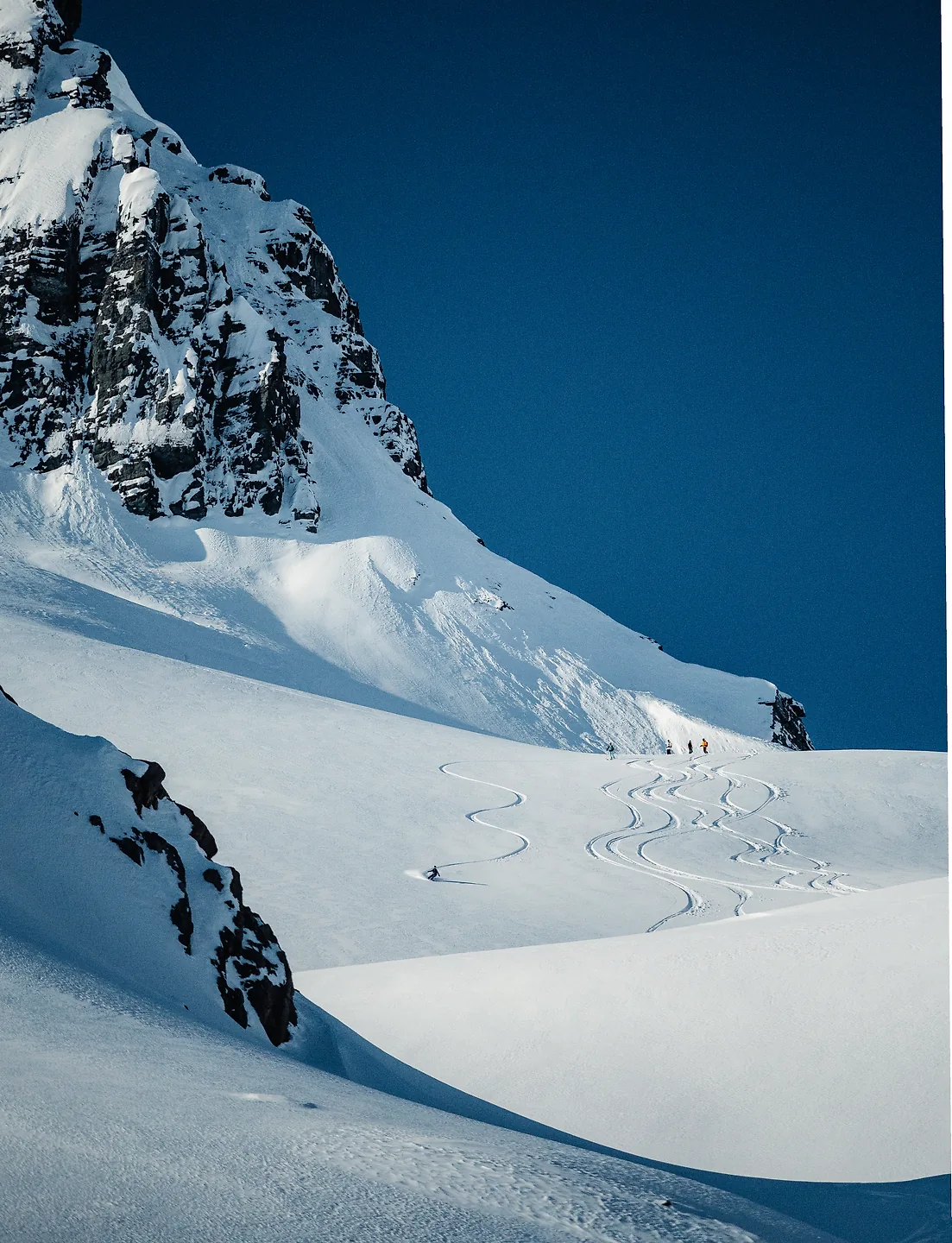
CMH Heli-Skiing’s 3,000,000 skiable acres cover a range of pristine terrain. Photo by Justin Taylor Smith, courtesy of CMH Heli-Skiing.
And organizations such as the Canadian Ski Guide Association are encouraging more women to certify as guides. “We have a bursary specifically for women pursuing a career in guiding in memory of Lisa Korthals, a CSGA guide and huge advocate for inclusivity and getting after your dreams,” says CSGA president Erin Tierney. She’s also the GM of Whistler Heli-Skiing (celebrating its 45th season this year) and proud that almost half of her guide team there are women.
Throughout the 28 years Tierney’s worked in the heli-ski industry, it’s been male-dominated with “ebbs and flows” in the number of women. “Some years, I have been the only woman in an operation, and others, I’ve had the pleasure of working with a bunch. Having more of a balanced representation definitely changes the team dynamic for the better, and not just male and female but a range of personalities and backgrounds.” And women in leadership roles, like Tierney and LoVecchio, help to foster that.
Still, there’s more to do. “Diversity beyond gender will take even longer,” Tierney says. There’s an inherent privilege to skiing, from the gear to learning skills, and then going even further to complete professional guide certification. “Guiding operations and associations like the CSGA should be looking at how we can support that access and progression to more people. Guiding is an industry, but the components of the course that develop a good guide also teach life skills: responsibility, leadership, and confidence that serve anyone anywhere in life.”
The heli-ski industry is also increasing community outreach in the rural and remote places where it operates. Whistler Heli-Skiing has developed programs and workshops to introduce Indigenous neighbours to the industry, as have CMH and most members of the trade association HeliCat Canada. The CSGA also supports backcountry skills development for First Nations members, as well as youth and women.
To offset some of the intimidation women skiers may feel, there are “low-pressure” intro-to-heli-skiing packages and other programs to hone and develop skills and confidence.
Spaces and opportunities for women are growing throughout adventure tourism and sports. Sister Summit was started in 2023 by female pro athletes, including freerider Lexi Dupont (who’s featured in six of Miller’s films and can huck off cornices and send it down chutes as well as any guy). The all-women backcountry ski and snowboard event’s mission has been to “amplify the feminine frequency” in outdoor sports. Everyone involved, from the athletes to the camera operators, is a woman.
Stats shared by Sister Summit are appalling, from 90 per cent of sponsorship money in sports going to male athletes to just seven per cent of sports figures represented in the media being women. It’s long been a boys’ club, economically and culturally. But inside and outside the competitive skiing sphere, women are slowly and steadily changing that. Professional big-mountain skier Lynsey Dyer gave a TEDx Talk “Ski Like a Girl” and produced and directed the first all-female ski film, Pretty Faces, which led to her co-founding SheJumps, a nonprofit that encourages girls and women to take part in outdoor adventure.
“Women tend to underestimate their abilities,” Tierney says, “which makes them hesitant to take that step.” (And men overestimate theirs, according to every guide I spoke to.) To offset some of the intimidation women skiers may feel, there are “low-pressure” intro-to-heli-skiing packages and other programs to hone and develop skills and confidence, like Whistler Blackcomb’s Dawn Patrol, which gets skiers out on early-morning runs onto untracked snow with heli-ski guides before the resort opens.
“Heli-skiing is not what you see in ski movies,” Tierney says. “Those lines you see take hours, even a full day, to set up and shoot safely.” That extreme skiing and riding by elite athletes is far from any line set by my guide when I heli-skied with CMH out of Golden, B.C. After the whir of the helicopter faded into quiet, it was a surprisingly serene descent. And as a single-day tour, it’s a more approachable and accessible way to try heli-skiing without a multiday investment or commitment—and get a taste of that pristine pow.
CMH has also designed and added more women-only and/or powder-intro trips for strong-intermediate to advanced resort skiers and snowboarders who have never experienced true backcountry powder conditions. Ellie Crabb, a Panorama-based outdoor-adventure influencer whose mantra is “Take up space in the outdoors,” tried heli-skiing for the first time on an all-women powder-intro trip with CMH that had “a huge range of age, size, shape, ability.” A self-proclaimed “fatlete,” she’s part of the groundswell of women promoting inclusive outdoor adventure.
Turns out, heli-skiing might be the easiest (if most expensive) “in” to outdoor adventure in the backcountry, whatever gender or age. CMH has had the oldest heli-skier ever—a 100-year-old man—and octogenarian female skiers who’ve skied a million-plus vertical feet (making them part of different kind of club, the so-called Million Footers). Two out of three people come back for another heli-ski trip after their first and keep returning for the rest of their skiing life, LoVecchio says. CMH has regular return guests who have been heli-skiing for 35-plus years.
Gmoser’s vision was for people who had a shared love of skiing and the backcountry to come together. As Margaret Gmoser, a mountain-touring trailblazer herself, remembers of her late husband, “Hans loved the idea that anyone, whether a Wall Street banker or a ski bum, could sit together, share a meal, and talk.” And heli-ski.
“Heli-skiing attracts people from all avenues of life,” Tierney says. “Over the years, I have skied with royalty, sports legends, CEOs of world corporations, honeymooners, families, and staff who are here for a season and saved all winter for the experience. In the mountains, we are all just skiers and riders who have a passion for adventure and beautiful places—and we all put our snow pants on one leg at a time.”
It’s about camaraderie and joy, LoVecchio says, and a humility that’s found in the “transformative power” of mountains. “You’re your best self when you’re there. Check your ego, check your mobile device, check everything at the door, and just be present.” Whoever you are.
My small slice of heli-skiing in the Purcells—11,155 feet of vertical over seven runs, including the aptly named Neophyte—delivered all the above. Plus a bluebird sky and cheek-flushing sun, the resiny scent of subalpine trees, the soft spray of thigh-high powder, and the swoosh of fat skis. Timeless sensations that I imagine echo the experience of the first woman to heli-ski 60 years ago with Gmoser on that inaugural trip. After a few floaty turns, any nebulousness and unknown factor went poof. I skied like a girl and was ecstatic.
Read more from our Winter 2025 issue.