

It may have been the increase in shipping traffic that first signalled something was changing. As a boy harvesting seaweed with his family near Campania Island in the early 1990s, Gitxaała councillor Elliot Moody learned to keep one eye on the water. Cargo ships and fishing boats that once passed by only occasionally became a steady procession. Their wakes grew large enough to knock him off the rocks.
The changes didn’t stop there. “I watched the sockeye stocks go from where my dad was catching hundreds a set to where he’s catching 10,” he says.
Moody’s experience wasn’t unique. Farther south on the Central Coast, families in Heiltsuk, Kitasoo Xai’xais, Nuxalk, and Wuikinuxv communities were noticing similar changes. In spring, the herring spawns that once turned the water a milky-turquoise became less reliable. The roar of sea lions and shrill call of gulls that used to announce the spawn each year fell quiet more often. Eulachon runs collapsed, leaving riverbanks that had been crowded with people, smoke, and rendered fish suddenly still. Salmon came back in smaller, patchier runs. Out on the reefs, elders pointed to thinning kelp beds and invasive green crabs scuttling in ever increasing numbers through eelgrass and clam beds.
These weren’t simply environmental losses. They affected food gathering, ceremonies, teaching young people on the water, and the confidence that future generations would inherit the same abundance their grandparents had known.
The challenge, though, wasn’t sounding the alarm—the nations knew there was something very wrong. The problem was finding a way to get the provincial and federal governments to listen. The answer, they discovered, was to pull together. They formed the Central Coast Indigenous Resource Alliance, sharing science, Indigenous knowledge, and marine stewardship across territorial boundaries. And in 2010, they jointly called for coordinated protection of the Central Coast’s marine ecosystems.
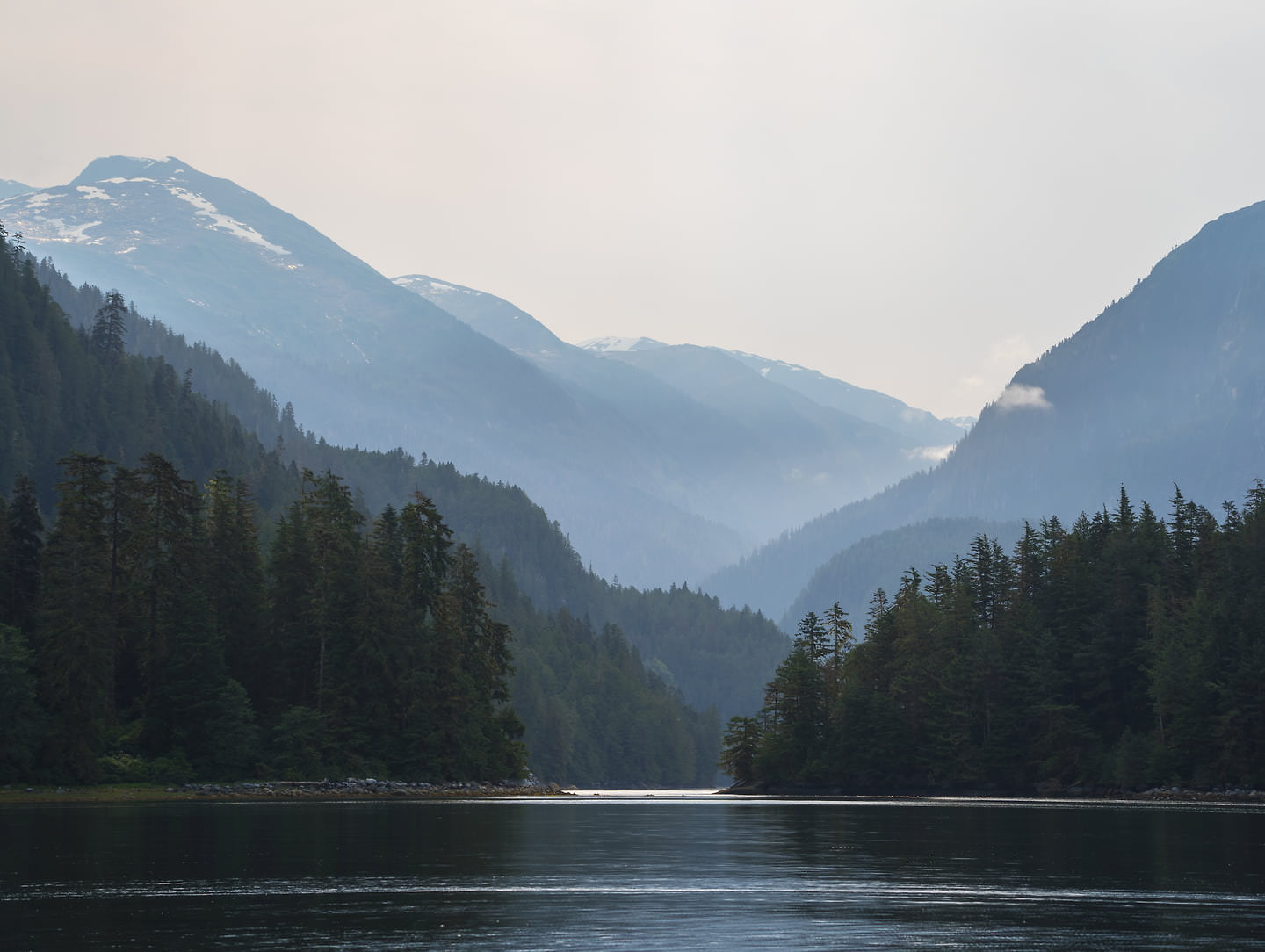
Rainforests cloak the islands, and kelp forests sway beneath the surface as whales and salmon migrate through waters that form part of the Great Bear Sea.
The vastness of British Columbia’s Central Coast can be difficult to grasp. Even the luckiest among us will often see little more than its edges while travelling the Inside Passage by ferry or cruise ship. But leave that corridor near Calvert Island and begin weaving north through the maze of blue-green waterways toward Gil Island, and the scale quickly becomes apparent. Dozens of named islands dissolve into countless rocky islets. Broad sounds narrow into winding channels before curving into steep-sided fjords where mountains rise almost directly from the sea.
It is easy to understand why visitors describe this place as pristine. Rainforests cloak the islands, and kelp forests sway beneath the surface as whales and salmon migrate through waters that form part of the Great Bear Sea, one of the world’s richest temperate marine ecosystems. Yet appearances tell only part of the story.
For the Wuikinuxv, Nuxalk, Kitasoo Xai’xais, Heiltsuk, Gitxaała, and Gitga’at Nations, these waters are not simply beautiful—they are the web that connects their living homelands. That relationship goes back at least 14,000 years, to when continental ice sheets covered most of what is now British Columbia, leaving only scattered ice-free refuges along the outer coast. As glaciers retreated, the sea rose and fell, and rivers formed, salmon travelled to newly emerging watersheds, while kelp forests spread through sheltered channels. People adapted alongside these evolving landscapes, building enduring relationships with the land and sea.
That stewardship is still written across the landscape. Ancient clam gardens, stone fish traps, pictographs, and village sites record generations of carefully managed marine resources. Rather than separating people from nature, Indigenous governance has long recognized that healthy communities and healthy ecosystems depend on one another.
This is the history that provides the context for Mia-yaltwa Ha’lidzogm hoon (pronounced Me-ah-yall-twa Ha-lee-joh-gom hOH-own)—“Realm of the Salmon”—the newly announced 6,700-square-kilometre National Marine Conservation Area Reserve and Indigenous Protected and Conserved Area on the Central Coast.
While many Canadians see the announcement of a new protected area as a federal or provincial initiative, the partner nations describe it differently. “Our nations have always carried the responsibility to care for these waters,” says Jean Sargeant, Mia-yaltwa Ha’lidzogm hoon project manager, speaking in support of the Heiltsuk, Kitasoo Xai’xais, Nuxalk, and Wuikinuxv Nations. “While the process has taken time, our commitment never changed.”
Parks Canada describes a national marine conservation area reserve as a protected zone that includes submerged lands, the water above them, and the species that live there. It can also encompass wetlands, estuaries, islands, and other coastal land. The aim is to manage the area in a way that meets conservation goals while still allowing ecologically sustainable use of the marine environment.
On British Columbia’s Central Coast, that responsibility will be shared. Mia-yaltwa Ha’lidzogm hoon will be overseen by a collaborative management board made up of representatives from the six partner nations, the federal government, and the Province of B.C. The board will work from guiding documents—a management plan, an infrastructure plan, a visitor experience plan—and will be advised by a committee that includes local communities, interest holders, and members of the public. That advisory committee will help shape key decisions, including the management plan itself.
Recognizing Indigenous law can sound abstract. On the Central Coast, the nations say it changes how decisions are made. Instead of treating fisheries, tourism, shipping, and conservation as separate files, choices will be weighed against ecological health, Indigenous knowledge, the natural sciences, cultural responsibilities, and community needs. The goal is not simply to protect an individual species or habitat but also to maintain the relationships that keep the whole ecosystem—and the communities within it—thriving.
Economic development is still part of that vision, but not at any cost. The partner nations describe healthy ecosystems as the foundation of sustainable local economies rather than an obstacle to them. Fisheries, tourism, cultural activities, and community livelihoods all depend on healthy marine environments capable of supporting future generations.
Visitors to the region may not notice dramatic changes. Indigenous guardian programs already monitor wildlife, educate visitors, record environmental shifts, and act as the first eyes and ears along vast stretches of remote coastline. The agreement doesn’t change these programs; it strengthens them, improving coordination among Indigenous guardians, Parks Canada, and the province, and formally recognizing the expertise nations have built over centuries.
Instead, the aim is to develop over time even more opportunities for visitors. Education, collaboration, and shared responsibility often produce stronger long-term stewardship than enforcement can. When visitors understand why these places matter—to wildlife, to communities, to cultures—they are more likely to become partners in protecting them.
When Parliament formally establishes the National Marine Conservation Area Reserve in law, the Canada National Marine Conservation Area Act will apply. Oil and gas exploration and development, seabed mining, ocean dumping, and bottom-trawl fishing will be prohibited throughout the protected area. At the same time, sustainable fisheries, tourism, recreation, and cultural practices will continue under the shared governance framework.
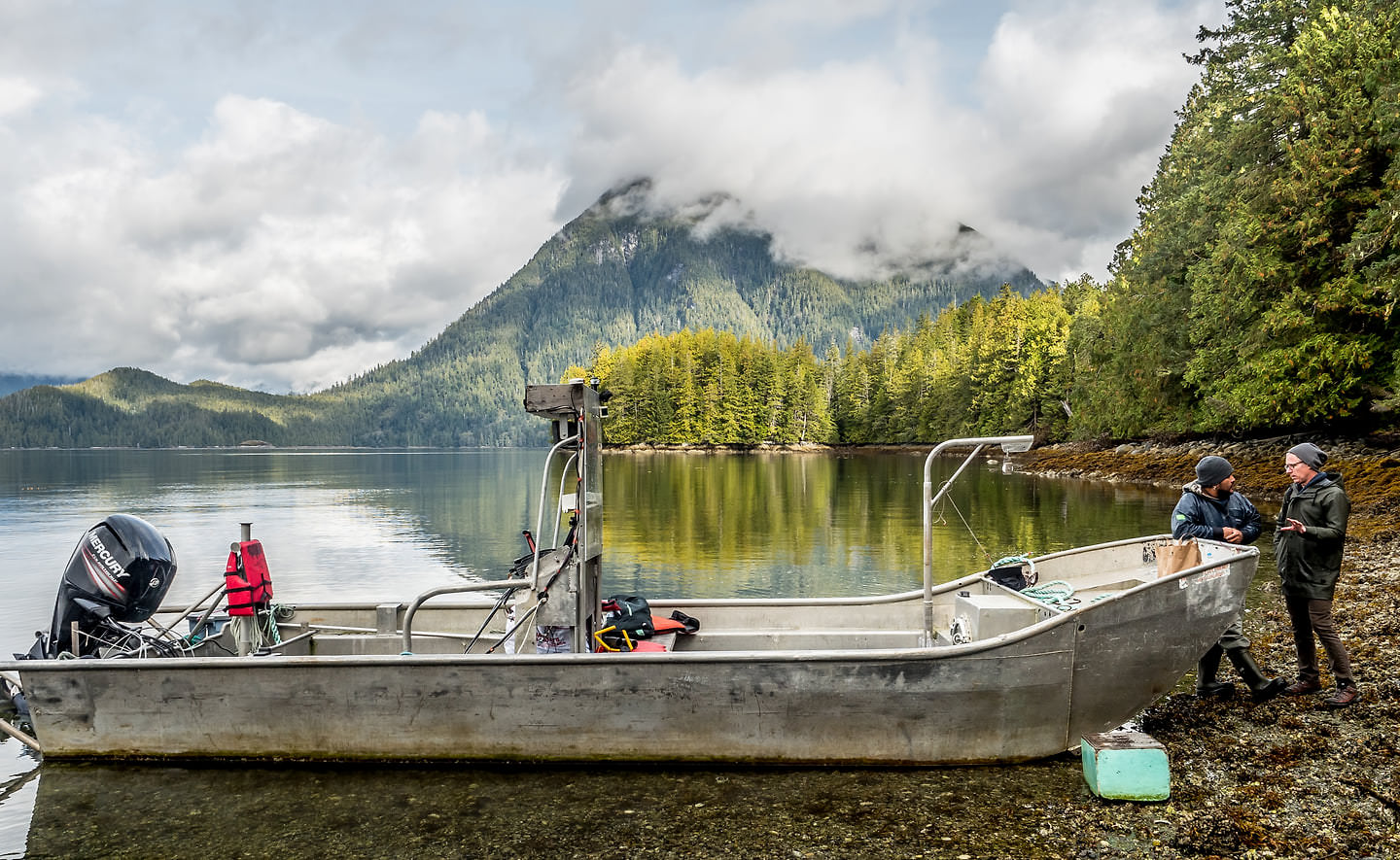
Exploring Heiltsuk territory waters.
The agreement also offers something increasingly rare in modern conservation: continuity. Political priorities shift with elections. Governments come and go. The Central Coast nations argue that stewardship responsibilities do not. Their obligations to these waters existed long before Canada and will continue regardless of political cycles. By embedding shared governance among Indigenous nations, British Columbia, and Canada, the agreement aims for protection that is both durable and adaptable.
Trust, the nations acknowledge, has been built slowly. After more than two decades of negotiations and disappointments, optimism comes not from a single announcement but from the relationships that made the agreement possible. Those relationships, the nations say, will ultimately determine whether the conservation area succeeds.
Their vision extends well beyond lines on a map. A decade from now, they hope to see healthier salmon runs, recovering kelp forests, thriving herring populations, and stronger marine ecosystems. They also hope to see Indigenous guardians with greater capacity, communities supported by sustainable economies, and young people continuing cultural practices rooted in these waters. As Moody puts it, “I’m hoping, as a fisherman and as a dad, that in 10 years everything I grew up with is still going to be there for my son.”
In a country where conservation, Indigenous rights, and resource development are often cast as competing priorities, Mia-yaltwa Ha’lidzogm hoon offers another possibility. It suggests that protecting nature and supporting communities need not be opposing goals when both are guided by long-term responsibility for place.
The negotiations that created the agreement lasted more than 20 years. The stewardship behind it stretches back more than 10,000 years, according to the Central Coast nations. Long before provincial boundaries or federal legislation, families travelled these waters knowing how many salmon should return, where herring would spawn, and when seaweed could be gathered from the rocks. They knew how much to take, how much to leave, and how to nurture the systems that fed them. Those responsibilities never disappeared. Mia-yaltwa Ha’lidzogm hoon does not create new laws. It acknowledges ancient ones—and offers the possibility that future generations will inherit a healthy coast, even as our planet continues to change.