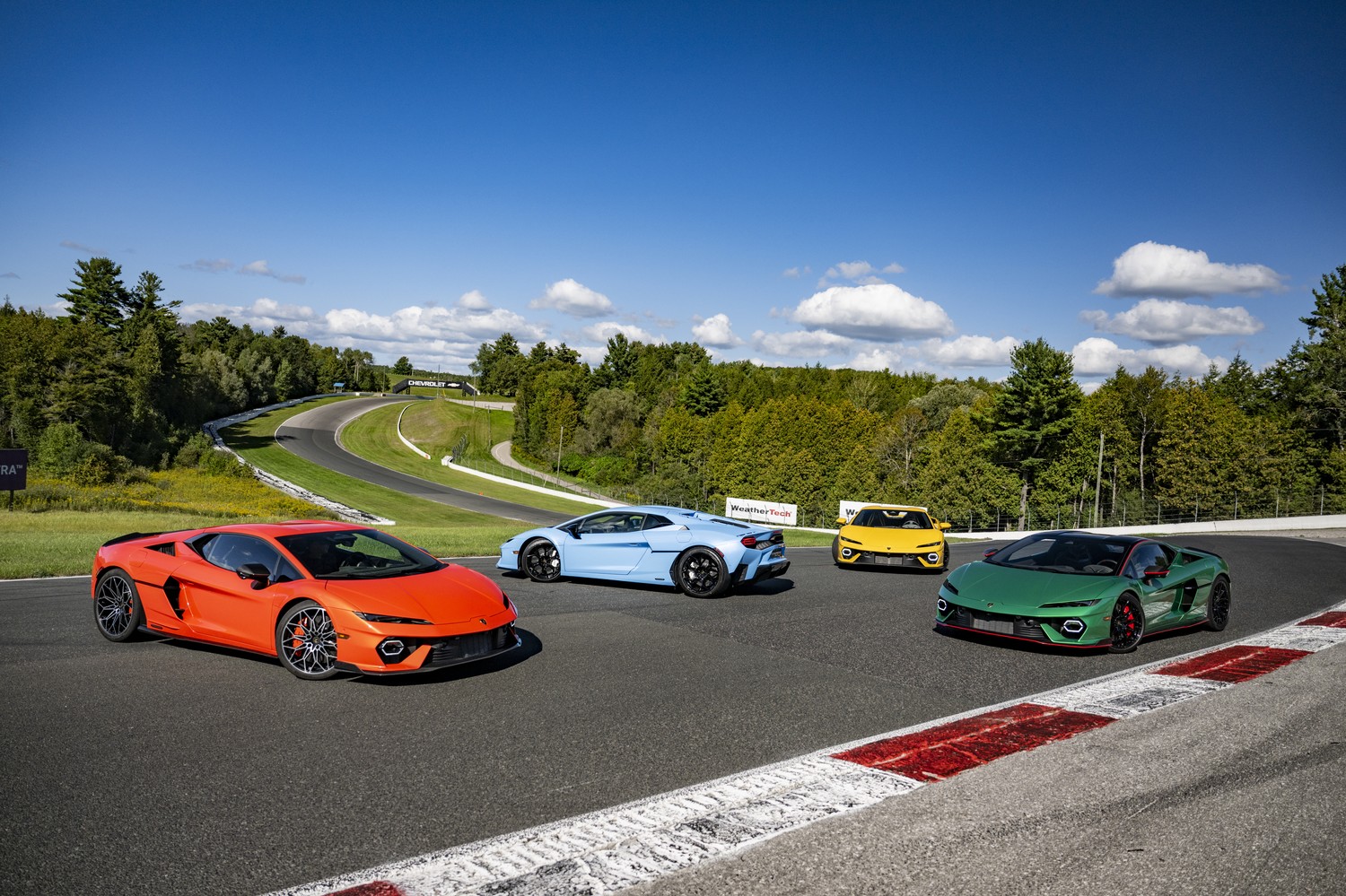


Lamborghini’s iconic naturally aspirated V10 engine holds a special place in the hearts of auto enthusiasts, so it was no surprise critics cringed when the exotic Italian automaker bid farewell to the V10 era and its legendary Huracán supercar. It was replaced by an all-new entry-level supercar: the Temerario plug-in hybrid powered by a twin-turbo V8 with three electric motors. That’s right—a plug-in hybrid. Even I was skeptical. Unsure. Confused. That is, until I hit the track with this new breed of raging bull.
With more than 20 years as an automotive journalist, I’ve tested incredible rides ranging from the 2011 Lamborghini Gallardo Superleggera at Circuito Monteblanco near Seville, Spain, to the 2020 Lamborghini Huracán EVO on the Bahrain International Circuit and the 2024 Lamborghini Revuelto at the Vallelunga circuit north of Rome. But this time, it’s different. It’s extra special because I’m on home turf at one of Canada’s top tracks, the Canadian Tire Motorsport Park in Bowmanville, Ontario, about 75 kilometres east of Toronto.
Overcast and hot on this early September morning, the day begins with a technical briefing from Davide Bizzarri, Lamborghini’s head of vehicle motion and energy management. I’m one of eight North American journalists—and the only woman in the group—listening intently to his every word. After 30 minutes, it’s a wrap. Track time. And I’m up first.
As I approach pitlane, four shiny and pristine Temerarios are revving to go. Clean, pure, and athletic in design, they’re unapologetically Lamborghini. With a bold shark nose, short overhangs, and large air intakes on its body, it conveys power. One stands out from the crowd. It’s a Verde Mercurius (green-coloured) Temerario that resembles a menacing snake. It’s fitted with a new track-ready Alleggerita package, which is difficult to pronounce even for a Canadian Italian—it means lightweight in my mother tongue. The package shaves more than 25 kilos off the car’s weight thanks to lighter interior elements, carbon rims, a titanium muffler, recycled carbon fibre underbody panels, and lightweight glass.
For my lead-and-follow exercise, I’m assigned a private instructor. Gianmarco Raimondo is a 30-something Italian Canadian former race-car driver who was the first Canadian to race GP2, Formula 1’s feeder series. I grab my balaclava and helmet, fastening the straps securely below my chin. I attempt to gracefully enter the Temerario, but it doesn’t work. Once inside, I notice a big change: there’s more room than the previous Huracán—at least, for my helmet. I’m grateful. In the past, driving the Huracán Sterrato at Chuckwalla Valley Raceway in southern California, it was tight, my helmet ricocheting constantly off the driver’s window along the quick, sharp curves. A new spaceframe chassis creates more cabin space and provides extra storage behind the seats, too. It’s not much, but appreciated.
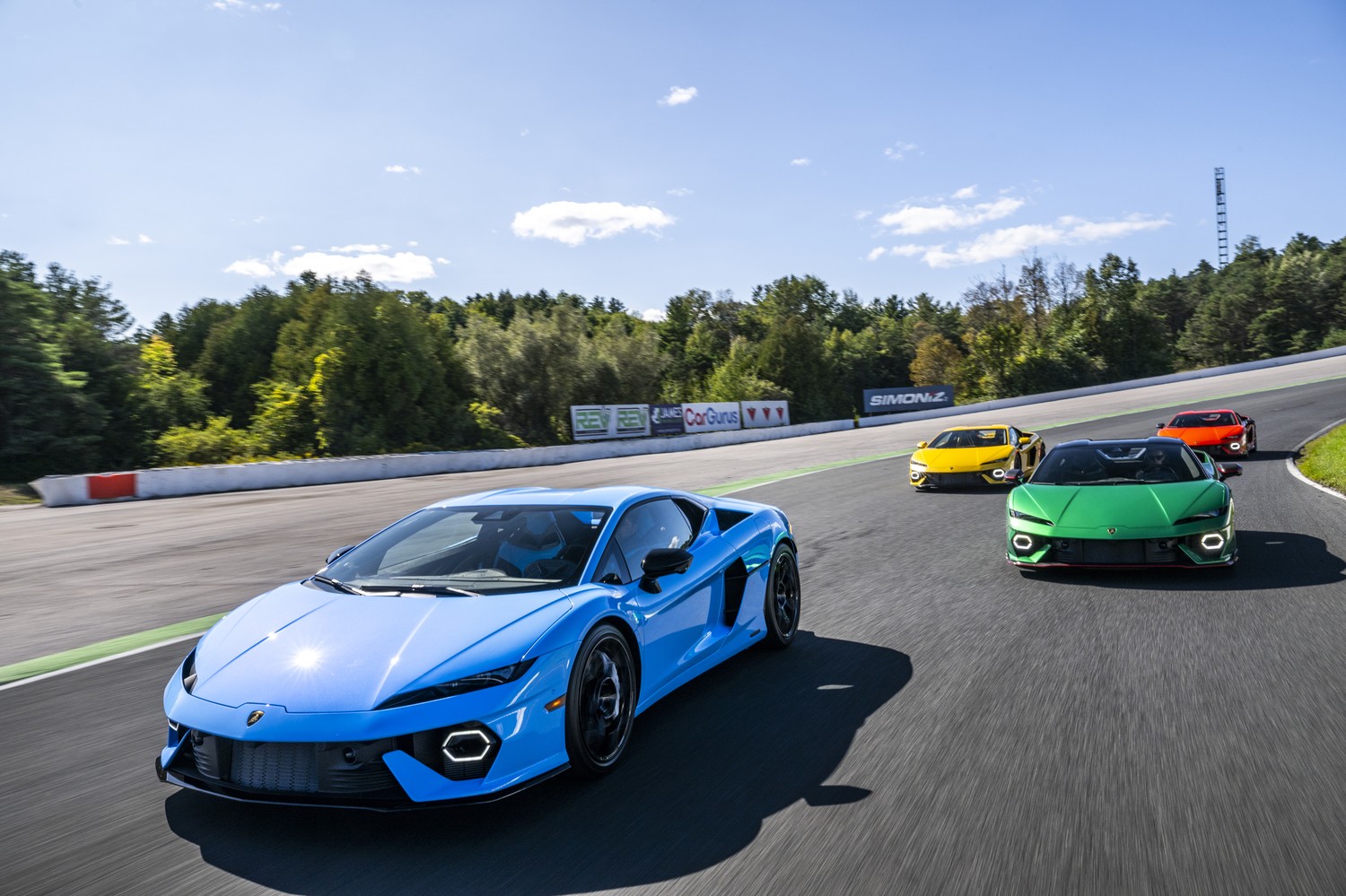
Over a walkie-talkie, Raimondo explains my task at hand. I’ll get two sessions, each with four laps, starting with the first one, which is slower, to familiarize myself with the intricacies of the track. After that, I can let loose and push this beast to its limits along the four-kilometre winding track filled with sharp curves, tricky blind corners, and long straightaways. It’s intimidating and not for the faint of heart, especially when you factor in the power—the Temerario’s twin-turbo V-8 and electric motors deliver a whopping 907 ponies and 1,106 lb-ft of torque—that’s a lot to tame on the track.
Lamborghini designed the car to “feel like a pilot” inside. And it does. It’s sophisticated, with dials, buttons, and rotors everywhere. I lift a red flap in the centre console and hit the start-stop button, and the engine roars to life. I twist the red rotor on the left-hand side of the steering wheel to select one of the driving modes: Città, Strada, Sport, Corsa, and Corsa Plus (ESC Off—electronic controls deactivated). As instructed, I select Corsa, which means race in Italian. On the right-hand side, another rotor lets me access three new modes for the plug-in: Recharge, Hybrid, and Performance. I turn to Performance.
“Give me a thumbs up” if you’re ready, Raimondo’s voice echoes over the intercom. I make the sign of the cross and gingerly exit pitlane. While it sounds simple, engaging drive can be tricky if you’ve never taken a Lamborghini for a spin. There’s no D near the gear shifter. To drive, you hold the brake and flick the right-hand paddle shifter to engage first gear. As promised, lap one is slow, but I use that term loosely—we’re still driving over 100 clicks. By lap two, it’s a different story. I nail the throttle hard, and I’m thrown back into my seat instantly: the torque from the electric motors immediate. Official numbers are 0 to 100 kilometres per hour in 2.7 seconds, but judging by the G-force, I’d wager it’s faster. Within seconds, I’m shifting through the eight gears quickly and smoothly, whipping around the track, hitting nearly 250 kilometres on the long straightaways.
Along a tricky blind corner, with no visibility, I hesitate, decelerate, and drop my speed to about 120 kilometres. Raimondo shouts over the intercom, “Faster, faster, faster. Use the entire track!” I listen to his command on the next lap, throwing caution to the wind and accelerating harder, hitting that dreaded blind corner quickly. With little steering input, pushing the gas pedal, and using the full track, the Temerario moves with ease into and out of the blind corner, hitting nearly 150 kilometres an hour as I briefly glance down at the speedo. Sweat pours down the small of my back. I’m travelling so fast, I can no longer hear Raimondo’s voice over the walkie-talkie—it’s drowned out by the menacing growl of the engine—a pleasant and unexpected surprise for a plug-in hybrid with about eight kilometres of electric range. When pushed, nearing the 10,000 rpm redline, the sound from the engine growls fiercely, in true Lamborghini form.
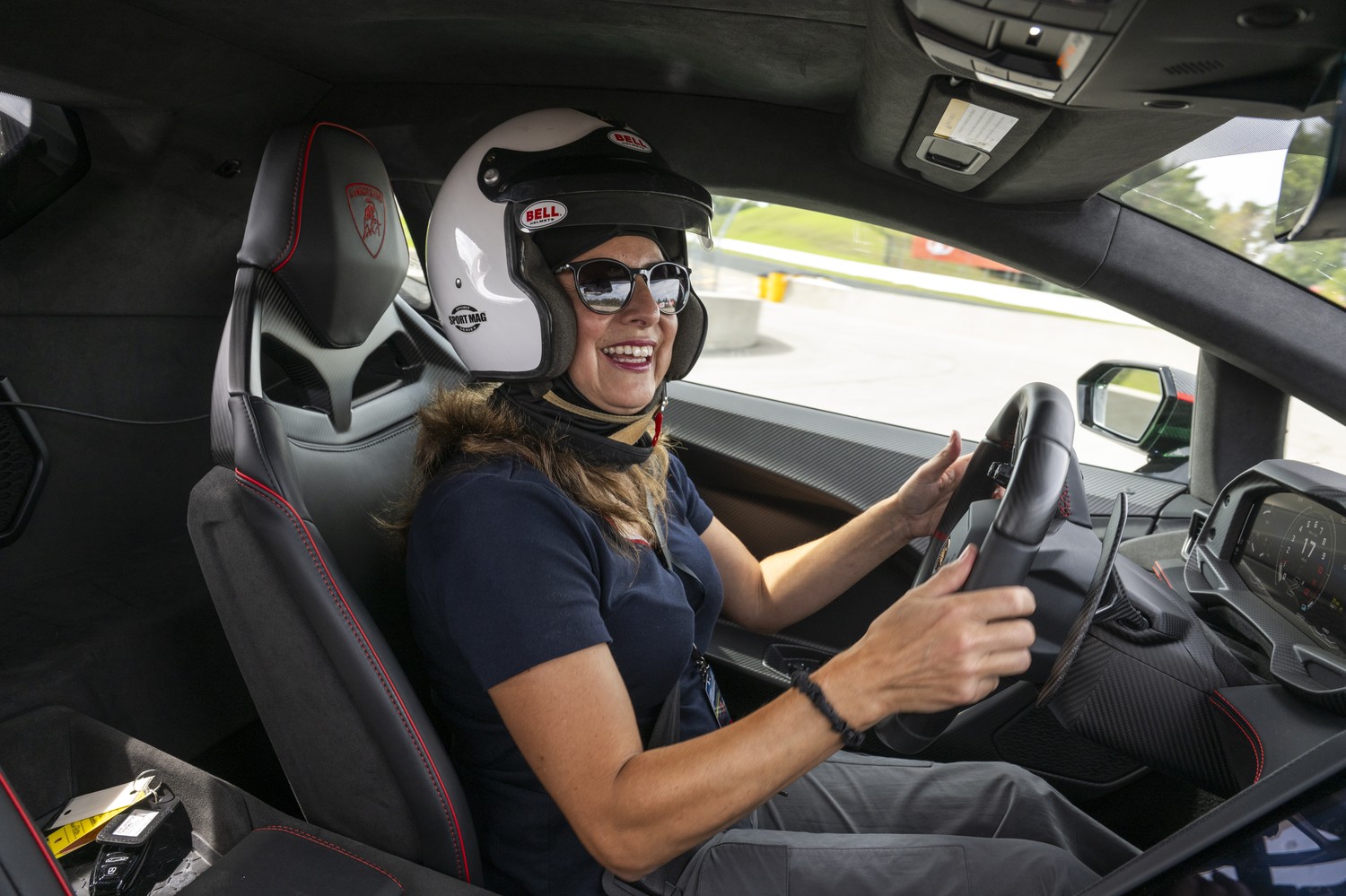
In the blink of an eye, it’s over. I’m back in pitlane, physically and mentally exhausted, engulfed by the stench of burnt rubber. Raimondo approaches. “You did fantastic. You improved every single session and every single lap, and you pushed your limits at the end,” he said. But I owe it to the Temerario. The driving dynamics and braking are far better than its predecessor. The handling is razor-sharp, the steering inputs instant and responsive, the all-wheel-drive vehicle well-balanced and stable at all times.
Lamborghini’s push for plug-in hybrids isn’t only about the optics and environmental benefits, it’s also about enhancing driving performance, emotion, and fun—and the Temerario delivers on all accounts. Clearly, Lamborghini is on the right track with its hybrid strategy. Earlier this year, the exotic automaker dumped plans to introduce its first all-electric vehicle, slated for 2028, while rivals such as Ferrari went full speed ahead, unveiling its first EV, the Luce, in May. Hats off to Lamborghini designers and engineers who retained the power, performance, thrill, and sound while staying true to its roots.
Read more transportation stories.